

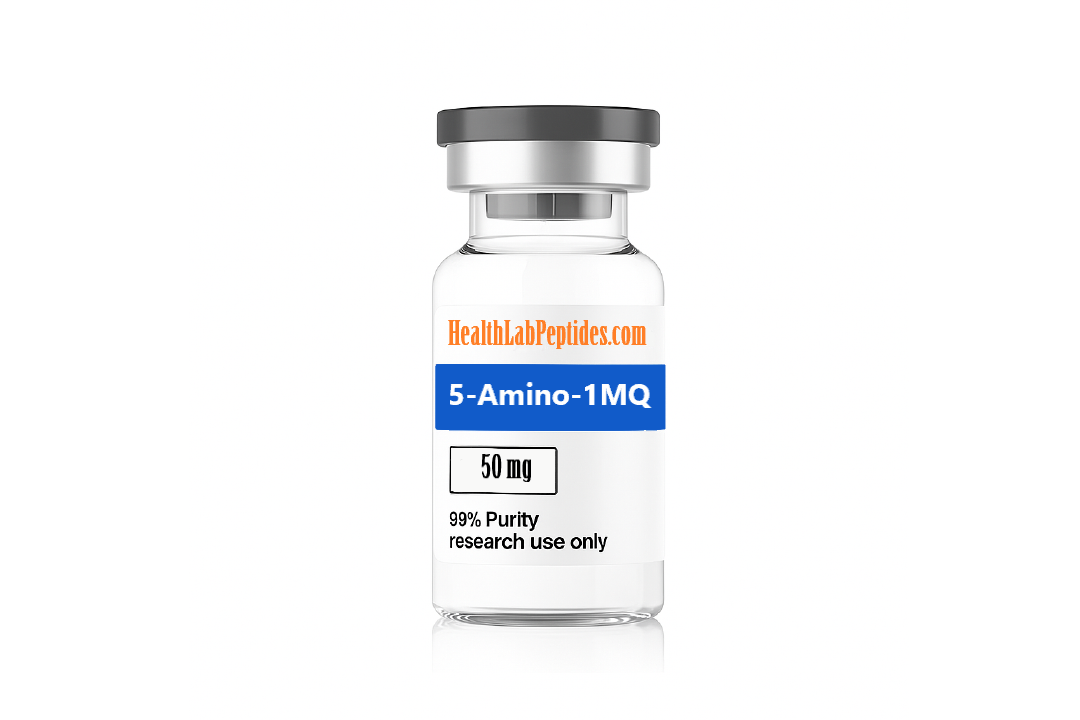
Research suggests: 5-Amino-1MQ is a compound currently being studied in laboratory settings for its potential role in cellular metabolism, energy regulation, and enzymatic pathways associated with fat metabolism. Scientists are particularly interested in how this molecule interacts with enzymes that influence metabolic activity inside cells.
Although research is still developing, 5-Amino-1MQ has attracted attention in experimental metabolic studies because of its interaction with nicotinamide N-methyltransferase (NNMT), an enzyme involved in cellular energy balance.
What Is 5-Amino-1MQ?
5-Amino-1MQ (5-Amino-1-methylquinolinium) is a small molecule investigated in metabolic research. It is not classified as a peptide but is frequently discussed in peptide research communities because of its potential relationship with metabolic signaling pathways.
In laboratory environments, researchers study this compound to better understand:
- Energy metabolism within cells
- Enzyme regulation linked to fat metabolism
- Molecular pathways associated with metabolic signaling
- Interactions with NAD-related metabolic systems
These biological processes are of significant interest in fields studying metabolic regulation and cellular energy balance.
The Role of NNMT in Research
A major focus of research involving 5-Amino-1MQ centers on the enzyme nicotinamide N-methyltransferase (NNMT).
NNMT plays a role in:
- Nicotinamide metabolism
- Regulation of cellular methylation processes
- Energy utilization within cells
Laboratory studies suggest that altering NNMT activity may influence metabolic pathways connected to fat storage and cellular energy expenditure. Because of this, researchers continue investigating molecules such as 5-Amino-1MQ that interact with this enzyme.
Metabolic Research Interest
Experimental models have examined how NNMT inhibition may affect metabolic processes. In these studies, researchers evaluate markers such as:
- Cellular energy utilization
- Fat cell metabolic activity
- NAD+ pathway interactions
- Mitochondrial efficiency
This research area overlaps with broader metabolic investigations involving compounds such as:
- NAD+ related molecules
- mitochondrial research compounds
- metabolic signaling peptides
Some laboratories also study metabolic signaling compounds alongside research peptides including:
- CJC-1295 without DAC 10 mg
- Hexarelin 5 mg
- Sermorelin 5 mg
- MOTS‑C 10 mg
These compounds are often investigated within the broader context of metabolic and cellular signaling research.
Why Researchers Study Metabolic Pathways
Understanding metabolic pathways helps scientists explore how cells regulate:
- Energy production
- Fat storage mechanisms
- Hormonal signaling interactions
- Mitochondrial efficiency
Research in these areas contributes to the broader scientific understanding of how metabolic processes function at the cellular level.
Compounds that interact with metabolic enzymes or signaling pathways may therefore become important tools in laboratory experiments designed to map these complex biological systems.
Relationship to Cellular Energy Systems
Another reason 5-Amino-1MQ is studied involves its potential influence on NAD+ metabolism, which plays an essential role in cellular energy systems.
NAD+ participates in processes including:
- Cellular respiration
- DNA repair mechanisms
- Mitochondrial function
- Energy production pathways
Because NNMT interacts with NAD metabolism, compounds affecting this enzyme may help researchers better understand how cells regulate energy balance.
Future Research Directions
Interest in metabolic regulation continues to grow in several research areas, including:
- cellular metabolism studies
- mitochondrial biology
- metabolic signaling research
- enzyme regulation pathways
As scientists continue exploring NNMT activity and related pathways, compounds like 5-Amino-1MQ may provide valuable insight into how metabolic systems operate at the cellular level.
However, much of the work remains in experimental stages. Further laboratory investigation is required to understand the full biochemical interactions involved.
Conclusion
5-Amino-1MQ is an experimental compound being explored in metabolic research, particularly in studies involving NNMT enzyme activity and cellular energy regulation. Scientists remain interested in how modulation of these metabolic pathways may contribute to broader understanding of cellular metabolism.
Ongoing laboratory research will continue to explore the molecular mechanisms behind these interactions and their potential relevance to metabolic science.
Important RUO Disclaimer
All compounds sold by HealthLab Peptides are RUO (Research Use Only) products. They are not intended for human or veterinary use and are strictly supplied for laboratory research and scientific investigation.

 Tirz 40mg