
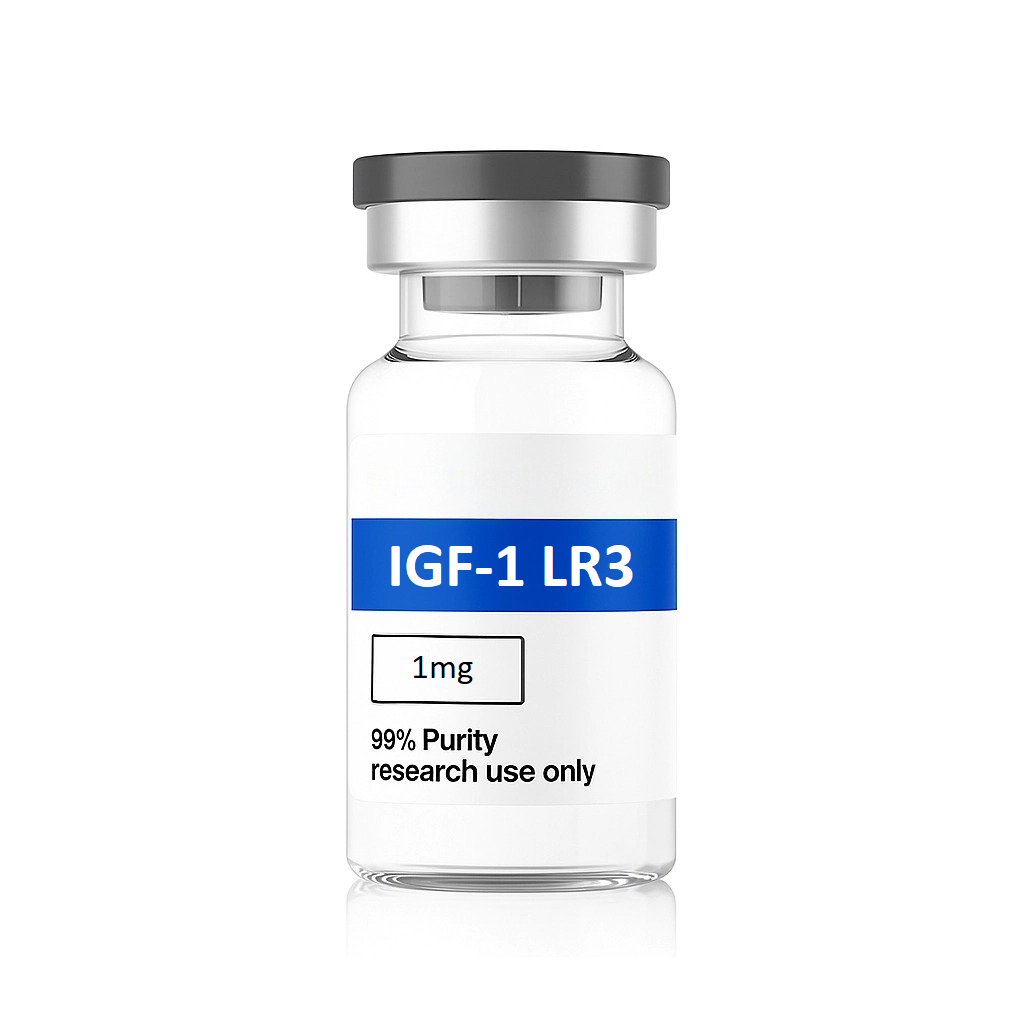
Introduction: What is IGF-1 LR3?
Research suggests:
In the world of performance enhancement and longevity, peptides have taken center stage. Among them, Insulin-like Growth Factor-1 Long Arg3 (IGF-1 LR3) stands out as a potent and widely discussed compound. But what exactly is it, and what does the scientific research say about its potential benefits?
IGF-1 LR3 is a synthetic, genetically engineered analogue of the naturally occurring Insulin-like Growth Factor-1 (IGF-1). The key difference lies in its extended half-life, making it significantly longer-acting and more potent than its endogenous counterpart. This article will delve deep into the researched benefits of IGF-1 LR3, separating fact from fiction and providing a clear, science-based overview.
### **How Does IGF-1 LR3 Work? Understanding the Mechanism**
To appreciate its benefits, we must first understand its mechanism of action. Naturally occurring IGF-1 is a primary mediator of the effects of Growth Hormone (GH). It plays a crucial role in childhood growth and continues to have anabolic effects in adults.
IGF-1 LR3 is modified to have a weaker binding affinity to its binding proteins in the blood (IGFBPs). In its natural form, IGF-1 binds tightly to these proteins, which limits its bioavailability and activity. **IGF-1 LR3’s reduced binding allows it to circulate freely for longer periods, leading to enhanced and prolonged anabolic effects** on muscle, fat, and other tissues.
### **The Researched Benefits of IGF-1 LR3**
The theoretical advantages of a long-acting IGF-1 analogue have been explored in various *in vitro* (lab) and *in vivo* (animal) studies. Here are the key potential benefits supported by research.
#### **1. Enhanced Muscle Hypertrophy and Growth**
This is the most sought-after benefit of IGF-1 LR3. IGF-1 is a powerful stimulator of muscle protein synthesis and a key player in muscle cell (satellite cell) activation and proliferation.
* **Research Insight:** Studies have consistently shown that IGF-1 signaling is crucial for skeletal muscle hypertrophy. By systemically increasing bioavailable IGF-1, LR3 can promote nitrogen retention and create a highly anabolic environment, leading to significant increases in lean muscle mass. Its localized effect, when injected site-specifically, is also believed to promote growth in that specific area—a phenomenon often referred to as “site growth.”
#### **2. Accelerated Muscle Recovery and Repair**
Intense training causes micro-tears in muscle fibers. The recovery and repair of these tears are what lead to muscle growth. IGF-1 LR3 can dramatically speed up this process.
* **Research Insight:** IGF-1 is a known regulator of muscle regeneration. It helps activate satellite cells, which are essential for repairing damaged muscle tissue. By enhancing this process, IGF-1 LR3 can significantly reduce muscle soreness (DOMS) and decrease the time needed between intense training sessions, allowing for more frequent and productive workouts.
#### **3. Promotion of Fat Loss (Lipolysis)**
While building muscle, many users also report a reduction in body fat. IGF-1 plays a role in metabolism and can enhance the body’s ability to utilize fat for energy.
* **Research Insight:** IGF-1 has been shown to stimulate lipolysis (the breakdown of fats) and inhibit lipogenesis (the creation of new fat stores). By improving insulin sensitivity and shifting the body’s energy substrate preference, IGF-1 LR3 can create a favorable environment for fat loss, especially when combined with a proper diet and exercise regimen.
#### **4. Potential Neuroprotective and Cognitive Benefits**
Emerging research points to the role of IGF-1 beyond just muscle and bone. The brain has receptors for IGF-1, and it is believed to play a role in neuroprotection and cognitive function.
* **Research Insight:** Some animal studies suggest that IGF-1 can support neuron survival, promote the growth of new neural connections (synaptogenesis), and may have therapeutic potential for neurodegenerative conditions. While more human research is needed, this points to a fascinating broader application for peptides like IGF-1 LR3.
#### **5. Improved Skin Health and Collagen Synthesis**
IGF-1 is a potent stimulator of collagen production, which is vital for skin elasticity, strength, and wound healing.
* **Research Insight:** The anabolic properties of IGF-1 extend to fibroblasts, the cells responsible for producing collagen and other structural proteins. This can lead to improved skin quality, faster healing of wounds and injuries, and stronger connective tissues like tendons and ligaments.
### **Crucial Considerations and Potential Side Effects**
It is imperative to approach IGF-1 LR3 with caution. It is a powerful research chemical, not an FDA-approved medication for human or animal use.
**Potential Side Effects Include:**
* **Hypoglycemia:** As the name implies, IGF-1 has insulin-like effects and can significantly lower blood sugar levels. Users must be vigilant about their diet, often requiring complex carbohydrate intake around the time of administration.
* **Organ Growth:** Since IGF-1 promotes growth systemically, there is a theoretical risk of visceral organ enlargement (e.g., heart, kidneys, liver) with prolonged or high-dose use.
* **Acromegaly-like Symptoms:** Overuse can lead to features resembling acromegaly, a condition of excessive GH/IGF-1, including bone growth in the hands, feet, and jaw.
* **Increased Cancer Risk:** IGF-1 is a growth factor. It can potentially accelerate the growth of pre-existing malignancies. Its use is contraindicated in individuals with a history of or active cancer.
### **IGF-1 LR3 vs. IGF-1 DES: What’s the Difference?**
A common point of confusion is the difference between LR3 and the shorter peptide IGF-1 DES.
* **IGF-1 LR3:** Long-acting (12-20 hours), systemic effects, better for whole-body growth and recovery.
* **IGF-1 DES:** Very short-acting (20-30 minutes), extremely potent localized effects, often used for “site enhancement” immediately post-workout.
### **Conclusion: A Potent but Powerful Research Compound**
The research into IGF-1 LR3 paints a picture of a remarkably potent peptide with significant potential benefits for muscle growth, fat loss, and recovery. Its long-acting nature sets it apart and makes it a subject of great interest in the research community.
However, its power is matched by its risks. The potential for serious side effects, including hypoglycemia and organ enlargement, cannot be overstated. **It is crucial to consult with a qualified healthcare professional before considering the use of any research peptide.** Understanding the legal status, sourcing from reputable research chemical companies, and having a thorough grasp of the pharmacology is essential for anyone conducting scientific inquiry into this compound.
—
**(FAQ Section with Schema Markup – to be placed in HTML)**
<div itemscope itemtype=”https://schema.org/FAQPage”>
<div itemscope itemprop=”mainEntity” itemtype=”https://schema.org/Question”>
<h3 itemprop=”name”>Is IGF-1 LR3 legal?</h3>
<div itemscope itemprop=”acceptedAnswer” itemtype=”https://schema.org/Answer”>
<div itemprop=”text”>
<p>IGF-1 LR3 is not approved by the FDA for human consumption or for the treatment of any disease. It is sold as a research chemical for laboratory use only. Its legal status for human use is typically prohibited by most sporting authorities and may be regulated under controlled substance analog laws in some countries.</p>
</div>
</div>
</div>
<div itemscope itemprop=”mainEntity” itemtype=”https://schema.org/Question”>
<h3 itemprop=”name”>What is the half-life of IGF-1 LR3?</h3>
<div itemscope itemprop=”acceptedAnswer” itemtype=”https://schema.org/Answer”>
<div itemprop=”text”>
<p>The half-life of IGF-1 LR3 is significantly longer than natural IGF-1, estimated to be between 12 to 20 hours due to its reduced binding to IGF-binding proteins.</p>
</div>
</div>
</div>
<div itemscope itemprop=”mainEntity” itemtype=”https://schema.org/Question”>
<h3 itemprop=”name”>Can IGF-1 LR3 cause cancer?</h3>
<div itemscope itemprop=”acceptedAnswer” itemtype=”https://schema.org/Answer”>
<div itemprop=”text”>
<p>IGF-1 is a growth factor, and elevated levels have been associated with an increased risk of certain cancers in epidemiological studies. While it does not directly cause cancer, it can potentially stimulate the growth of existing cancer cells. It is absolutely contraindicated for individuals with a history of or active cancer.</p>
</div>
</div>
</div>
</div>
—
**Internal Linking Suggestion:** *For more information on peptide basics, check out our “Ultimate Guide to Research Peptides.”*
 DSIP 10mg