

Wolverine
Abstract
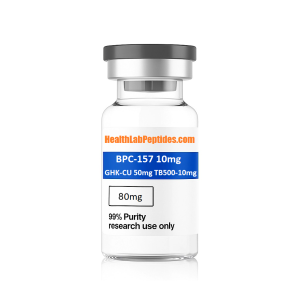
KLOW80 is commonly marketed as an 80 mg, multi-component “research peptide” blend that combines GHK-Cu (50 mg), BPC-157 (10 mg), TB-500 (10 mg), and KPV (10 mg) in a single vial or lyophilized preparation. (Peptide Sciences) This article synthesizes (1) what KLOW80 is in the marketplace, (2) what the peer-reviewed literature says about the individual peptides’ investigated biological activities (primarily mechanistic, preclinical, or exploratory), and (3) the regulatory and research-ethics context relevant to these compounds. The review is descriptive and does not assert clinical outcomes or health benefits.
Keywords: research peptides, GHK-Cu, BPC-157, TB-500, KPV, quality control, regulation, anti-doping
1. Introduction
Across online research-chemical vendors, KLOW80 (also written “KLOW 80” or “Klow Blend”) is presented as a pre-measured combination of four peptides that are frequently discussed in lab-research and “biohacking” communities. (Peptide Sciences) Parallel to this commercial availability, major media and public-health sources have noted a broader trend: unapproved injectable peptides are widely promoted online while quality, purity, and safety controls can vary, and many purported uses lack robust human clinical evidence. (The Washington Post)
This paper focuses on:
- What KLOW80 contains (as described by vendors),
- What has been studied about each component in scientific literature (mechanisms and models), and
- Compliance and ethics considerations relevant to research and communication.
2. Methods (Desk Review)
Sources were gathered via targeted searches of:
- Vendor product pages describing KLOW80 composition and labeling conventions, (Peptide Sciences)
- Government/authority sources on peptide regulatory considerations and prohibitions, (U.S. Food and Drug Administration)
- Peer-reviewed articles (open access where available) describing peptide biology and experimental findings. (PMC)
No clinical recommendations, protocols, or dosing discussions were included.
3. What KLOW80 Is (Marketplace Definition)
Across multiple listings, KLOW80 is described as:
- A blended vial totaling 80 mg peptide content, commonly allocated as:
- GHK-Cu 50 mg
- BPC-157 10 mg
- TB-500 10 mg
- KPV 10 mg (Peptide Sciences)
Vendors typically frame these products as “research” or “in-vitro” use only and include disclaimers that they are not approved medicines. (Paramount Peptides)
Interpretive note: “KLOW80” is not a single standardized pharmacopeial entry; it is a commercial blend name used across sellers, so specifications (purity claims, analytic documentation, excipient choices, storage guidance) may differ by supplier even when the milligram breakdown matches.
4. Evidence Landscape by Component (What the Literature Actually Covers)
4.1 GHK-Cu (Copper tripeptide complex)
GHK (glycyl-L-histidyl-L-lysine), often complexed with copper (GHK-Cu), appears in the literature as a peptide studied for diverse cellular and gene-expression effects, including in skin-related contexts and other experimental systems. Reviews have discussed proposed mechanisms and gene-modulating observations across models. (PMC)
What this means for KLOW80: the GHK-Cu portion of the blend aligns with an existing body of mechanistic and preclinical exploration, but translating those observations into product-level claims requires controlled human data specific to the formulation.
4.2 KPV (α-MSH–related tripeptide)
KPV is frequently described in the scientific literature as a C-terminal tripeptide related to α-melanocyte-stimulating hormone (α-MSH). Research has examined KPV (and related peptides) in relation to inflammatory signaling pathways such as NF-κB in experimental settings. (PMC)
What this means for KLOW80: KPV has a mechanistic literature footprint, but study settings, endpoints, and formulations vary widely, and such findings are not equivalent to establishing effects in people for a blended commercial vial.
4.3 TB-500 (commonly referenced as a thymosin-β4–related fragment)
TB-500 is widely discussed online as related to thymosin beta-4 biology; importantly, it also appears in anti-doping governance: WADA’s Prohibited List explicitly includes thymosin-β4 and derivatives (e.g., TB-500) under prohibited substances. (Wada Ama)
What this means for KLOW80: independent of any claimed purpose, TB-500’s presence can raise compliance issues for tested athletes and underscores why communications should be strictly non-promotional and research-bounded.
4.4 BPC-157 (a synthetic peptide widely sold online)
BPC-157 is a prominent example of a peptide with substantial online promotion alongside regulatory scrutiny. The U.S. FDA has publicly discussed BPC-157 in the context of compounding policies and concerns about limited safety information and characterization complexities for certain routes of administration. (U.S. Food and Drug Administration)
Additionally, Operation Supplement Safety (OPSS) describes BPC-157 as an unapproved drug and not a lawful dietary ingredient, emphasizing that it is not in FDA’s approved drugs database. (OPSS)
What this means for KLOW80: if a blend contains BPC-157, communications and handling should account for heightened regulatory sensitivity and quality-assurance expectations.
5. Qu
6. Regulatory and Ethics Context (Communication Without Health Claims)
Several facts shape how KLOW80 can be responsibly described:
- Not FDA-approved as a drug product (and at least one component—BPC-157—has been specifically highlighted by FDA/OPSS as problematic in consumer contexts). (U.S. Food and Drug Administration)
- Anti-doping relevance: TB-500 is named on WADA’s prohibited list. (Wada Ama)
- Market risk signals: major reporting has documented concerns about unregulated peptide powders marketed online (purity inconsistency, contamination risk, and limited human evidence). (The Washington Post)
Practical implication for “no health claims” writing:
Appropriate wording stays in the lane of composition, intended research context, and literature description (e.g., “has been studied in models of…”, “is discussed in the literature regarding…”, “vendors market it as…”), and avoids statements that a product prevents, treats, mitigates, or cures conditions—or that it reliably produces outcomes in humans.
7. Discussion: What KLOW80 Represents Scientifically
KLOW80 is best understood as a commercially assembled research mixture that bundles four peptides with distinct research histories. The strongest literature base among components (in open scientific reviews) is arguably for GHK-Cu’s broad experimental literature and α-MSH–related peptide signaling discussions, while BPC-157 and TB-500 sit in a more contentious zone due to regulatory attention and anti-doping implications. (PMC)
A blend format also introduces an interpretability challenge: even if each component has standalone mechanistic studies, mixtures create interaction questions (compatibility, degradation, assay interference, concentration-dependent effects) that are rarely established to the same standard as single-agent experiments.
8. Conclusion
KLOW80 is widely sold as an 80 mg blended peptide reagent (GHK-Cu, BPC-157, TB-500, KPV) positioned for “research use.” (Peptide Sciences) The scientific literature contains mechanistic and preclinical discussion relevant to each peptide, but that literature does not automatically validate product-level claims—especially for multi-peptide blends. Regulatory and compliance considerations are material, particularly for BPC-157 (FDA/OPSS scrutiny) and TB-500 (WADA prohibition). (U.S. Food and Drug Administration)
References (selected)
- Vendor composition examples: PeptideSciences Klow Blend and other listings. (Peptide Sciences)
- FDA compounding safety risk note (includes BPC-157). (U.S. Food and Drug Administration)
- OPSS: BPC-157 described as unapproved/prohibited in wellness products. (OPSS)
- WADA Prohibited List (includes thymosin-β4 derivatives such as TB-500). (Wada Ama)
- Peer-reviewed background: GHK-Cu review articles; α-MSH/KPV signaling discussions. (PMC)
- Context reporting on unapproved peptide trend and risks. (The Washington Post)
 AOD-9604 10mg