



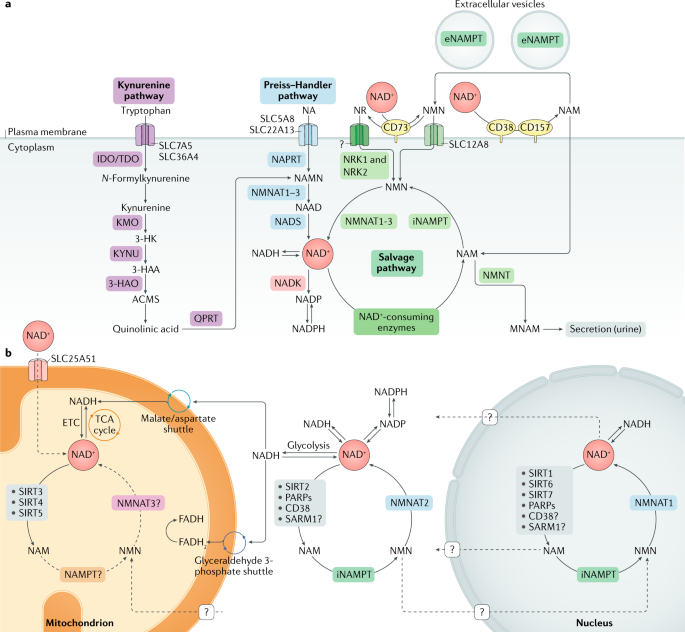

NAD+ (nicotinamide adenine dinucleotide) is a coenzyme found in every living cell. Researchers study NAD+ because it plays a central role in cellular metabolism, mitochondrial activity, and enzymatic signaling pathways. Interest in NAD+ has increased in longevity research, metabolic studies, and cellular stress response investigations.
Below is a research-focused overview of what NAD+ is and the primary biological processes it is associated with in scientific literature.
What Is NAD+?
NAD+ is a redox coenzyme that helps transfer electrons during metabolic reactions. It cycles between two forms:
- NAD+ (oxidized form)
- NADH (reduced form)
This cycling supports energy production and numerous biochemical reactions required for cell function.
NAD+ Benefits Explored in Research
1. Cellular Energy Production
NAD+ is essential for ATP production inside mitochondria. It participates in:
- Glycolysis
- The Krebs (citric acid) cycle
- Oxidative phosphorylation
Without adequate NAD+, cells cannot efficiently generate ATP, which is why NAD+ is central to metabolic research.
2. Mitochondrial Function Research
Mitochondria rely on NAD+ to maintain redox balance and metabolic efficiency. Researchers examine NAD+ levels in studies related to:
- Cellular aging
- Metabolic stress
- Oxidative damage
Changes in NAD+ availability may influence mitochondrial signaling pathways.
3. DNA Repair Mechanisms
NAD+ serves as a substrate for PARP (poly ADP-ribose polymerase) enzymes, which are involved in DNA repair processes.
When DNA damage occurs, PARP enzymes consume NAD+ to help coordinate repair responses. This relationship has made NAD+ a topic of interest in genomic stability research.
4. Sirtuin Activation
Sirtuins are NAD+-dependent enzymes that regulate:
- Gene expression
- Stress resistance pathways
- Metabolic signaling
Because sirtuins require NAD+ to function, researchers explore how NAD+ availability may influence cellular regulation and aging biology models.
5. Metabolic Pathway Studies
NAD+ is studied in relation to:
- Glucose metabolism
- Fatty acid oxidation
- Insulin signaling pathways
It acts as a central metabolic regulator, making it important in laboratory research focused on metabolic systems.
6. Cellular Stress Response
In laboratory models, NAD+ is involved in cellular responses to oxidative stress. Researchers evaluate how NAD+ influences:
- Redox balance
- Inflammatory signaling pathways
- Cellular survival mechanisms
Why NAD+ Levels Matter in Research
Scientific literature suggests that NAD+ levels may decline with age in certain biological models. Because of this, NAD+ metabolism has become an area of interest in:
- Longevity research
- Neurobiology studies
- Metabolic disorder models
Researchers often investigate NAD+ precursors such as nicotinamide riboside (NR) and nicotinamide mononucleotide (NMN) in experimental settings.
NAD+ in Laboratory Context
In controlled research environments, NAD+ is examined for its role in:
- Bioenergetics
- Enzyme activity
- Signal transduction
- Cellular maintenance pathways
It is important to distinguish between experimental research applications and clinical use, as regulatory approval varies by compound and intended use.
Final Notes on NAD+ Research
NAD+ remains one of the most studied coenzymes in cellular biology due to its foundational role in energy metabolism and enzymatic signaling. Ongoing research continues to examine how NAD+ interacts with mitochondrial pathways, DNA repair systems, and metabolic regulation networks.
⚠ Research Use Only Disclaimer
All peptide and research compounds sold by HealthLab Peptides are strictly Research Use Only (RUO). They are not for human or veterinary use, not intended for diagnosis, treatment, cure, or prevention of any disease, and must be handled only by qualified research professionals in appropriate laboratory settings.

 AOD-9604 10mg