
Research suggests: peptide-based compounds are being explored in laboratory settings for their potential interaction with metabolic and renal pathways involved in fat accumulation within kidney tissue. While the condition is not as widely discussed as fatty liver disease, emerging studies are examining how lipid deposition in renal cells may affect kidney structure and function over time.
Understanding Fatty Kidney Disease in Research
Fat accumulation in the kidneys—sometimes referred to in studies as renal lipotoxicity—is an area of growing interest in nephrology and metabolic research. Scientists are investigating how excess lipids in kidney cells may influence inflammation, oxidative stress, and cellular signaling pathways.
This condition is often studied alongside:
- Obesity-related metabolic dysfunction
- Insulin signaling pathways
- Lipid metabolism imbalance
Why Peptides Are Being Studied
Peptides are of interest in kidney-related research due to their role in cellular signaling. Researchers in molecular biology are examining how peptides may interact with receptors and pathways involved in fat metabolism and cellular stress responses.
Areas of investigation include:
- Regulation of lipid storage and breakdown
- Cellular communication within kidney tissue
- Inflammatory signaling modulation
- Mitochondrial activity in renal cells
Key Mechanisms Under Investigation
1. Lipid Metabolism in Kidney Cells
Studies explore how peptides may influence how fats are processed within renal cells. Accumulation of lipids can disrupt normal cell function, making this a key area of interest.
2. Inflammation and Cellular Stress
Fat accumulation is often associated with increased inflammatory signaling. Researchers examine whether peptides interact with pathways that regulate cellular stress responses and inflammatory markers.
3. Mitochondrial Function
Mitochondria play a central role in energy metabolism. In kidney research, scientists are studying how peptides may affect mitochondrial efficiency when excess lipids are present.
4. Fibrosis and Tissue Remodeling
Some studies focus on how lipid buildup may contribute to structural changes in kidney tissue. Peptides are being investigated for their interaction with signaling pathways involved in tissue remodeling and fibrosis.
Peptides Commonly Explored in Metabolic and Renal Research
Several peptides are frequently included in studies related to metabolic and kidney function:
- GLP-related peptides (studied for metabolic signaling pathways)
- IGF-related peptides (investigated for cellular growth signaling)
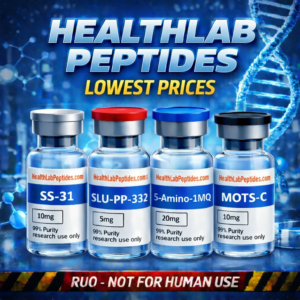
- Mitochondria-targeted peptides such as SS-31
- Experimental metabolic regulators like 5-Amino-1MQ
These compounds are studied strictly in controlled research environments to observe their interaction with biological systems.
Research Limitations
It is important to recognize that:
- Most findings are based on preclinical or laboratory research
- Human-specific outcomes remain limited
- Mechanisms are still being explored and are not fully understood
- Results vary depending on experimental models
Future Directions
Ongoing research aims to better understand:
- How lipid accumulation affects kidney function at a cellular level
- The role of peptide signaling in metabolic regulation
- Potential pathways for targeted research interventions
Advancements in imaging and molecular analysis are helping researchers study kidney tissue changes with greater precision.
Conclusion
Peptide research related to fatty kidney disease is still in early stages but continues to expand. Scientists are exploring how these compounds interact with metabolic, inflammatory, and cellular pathways within the kidneys. While findings are promising from a research standpoint, conclusions remain within experimental contexts.
Meta Description:
Research overview of peptides and fatty kidney disease, exploring lipid metabolism, renal signaling pathways, and emerging scientific studies.
RUO Disclaimer:
All products from HealthLab Peptides are intended for RUO (Research Use Only) purposes. Not for human or veterinary use. HealthLab Peptides makes no claims regarding medical, health, or therapeutic benefits.