


Research suggests:
Retatrutide is a synthetic peptide investigated in laboratory research for its interaction with multiple hormone receptor pathways involved in metabolic signaling. Scientists study this compound because it interacts with three distinct receptor systems associated with metabolic regulation, making it a subject of interest in peptide-based metabolic research.
Retatrutide is often discussed in scientific literature exploring peptide signaling, endocrine pathways, and cellular energy regulation. As peptide science continues to evolve, compounds like Retatrutide are frequently examined alongside other experimental peptides used in laboratory investigations of metabolic and hormonal signaling systems.
What Is Retatrutide?
Retatrutide is a synthetic peptide designed to interact with multiple hormone receptor pathways simultaneously. In research settings, it is studied as part of broader investigations into metabolic peptide signaling and receptor-mediated biochemical communication.
Unlike many peptides that interact with a single receptor, Retatrutide has been studied for its ability to interact with three hormone-related receptor systems involved in metabolic regulation.
This multi-receptor interaction has drawn attention in laboratory environments studying:
- Metabolic signaling pathways
- Hormone receptor communication
- Cellular energy regulation
- Peptide-based signaling networks
Understanding how peptides interact with multiple receptors may help researchers better understand complex endocrine signaling systems.
Peptide Structure and Receptor Interaction
Retatrutide belongs to a group of peptides studied for their potential ability to interact with glucagon, GLP-1, and GIP receptor pathways. Researchers explore these receptor systems because they are involved in metabolic signaling and endocrine communication.
Studying these interactions helps scientists analyze how peptide molecules can influence biochemical pathways that regulate cellular signaling and metabolic activity.
Many peptide studies attempt to map how these receptors communicate with each other through signaling networks, which is why compounds like Retatrutide often appear in discussions about advanced peptide receptor research.
Retatrutide and Metabolic Peptide Research
Research involving metabolic signaling often includes multiple peptides so scientists can compare how different molecular structures interact with biological systems.
For example, laboratory research exploring metabolic and cellular signaling sometimes includes compounds such as SLU-PP-332, which appears in discussions related to mitochondrial and metabolic pathway research.
Scientists also study molecules such as NAD+ because of its central role in cellular energy production and redox signaling pathways.
These compounds may appear alongside Retatrutide in broader research discussions examining metabolic signaling networks.
Peptide Signaling and Hormone Research
A large portion of peptide science focuses on molecules involved in endocrine signaling systems. Researchers examine peptides that influence hormone communication to better understand biological regulatory mechanisms.
For instance, compounds such as Sermorelin and Ipamorelin are often studied in laboratory environments exploring growth hormone signaling pathways.
Other peptides that appear in endocrine research discussions include CJC-1295 without DAC and Hexarelin, which scientists examine when investigating peptide-driven receptor signaling.
Researchers may also reference molecules like IGF-DES when studying growth-related signaling mechanisms within endocrine systems.
Retatrutide and Cellular Energy Signaling
Understanding cellular energy regulation requires studying multiple molecular systems. Researchers investigating mitochondrial and metabolic signaling sometimes explore compounds such as SS-31, which appears in laboratory discussions related to mitochondrial peptide research.
In metabolic peptide studies, compounds like AOD-9604 are also examined because of their relationship with metabolic signaling pathways.
These molecules help scientists investigate how peptide fragments interact with biochemical systems that regulate cellular energy balance.
Neurological and Signaling Peptide Research
Although Retatrutide research focuses primarily on metabolic signaling pathways, peptide science often overlaps with other research areas such as neurological signaling.
For example, laboratory investigations involving neuropeptides sometimes include compounds such as Semax and Selank when exploring peptide interactions with neurotransmitter-related systems.
Sleep-related peptide signaling studies sometimes reference DSIP (Delta Sleep-Inducing Peptide) when examining molecular pathways associated with circadian rhythm signaling.
Scientists may also examine compounds such as ARA-290 or experimental peptides like MT-11 when studying cellular communication and peptide signaling pathways.
The Expanding Field of Peptide Science
Peptide research continues to grow as scientists discover new ways that small amino-acid chains influence biological systems. Compounds like Retatrutide illustrate how peptide engineering can produce molecules capable of interacting with multiple receptor pathways.
Research into peptide signaling contributes to broader scientific understanding of:
- Hormone communication systems
- Metabolic signaling pathways
- Cellular energy regulation
- Neurological peptide signaling
- Molecular receptor interactions
By studying these molecular systems, researchers can better understand how biological communication networks function.
Conclusion
Retatrutide represents a notable development in peptide research because of its interaction with multiple hormone receptor systems. Scientists continue studying this compound in laboratory settings to better understand how peptides influence metabolic signaling networks.
As peptide science advances, compounds like Retatrutide remain valuable research tools for investigating complex biochemical communication systems within the body.
Research Disclaimer (RUO)
All compounds available from HealthLab Peptides are strictly RUO (Research Use Only).
They are not intended for human consumption, medical use, or veterinary use. These materials are supplied exclusively for laboratory research purposes by HealthLab Peptides.

 Tirz 40mg
 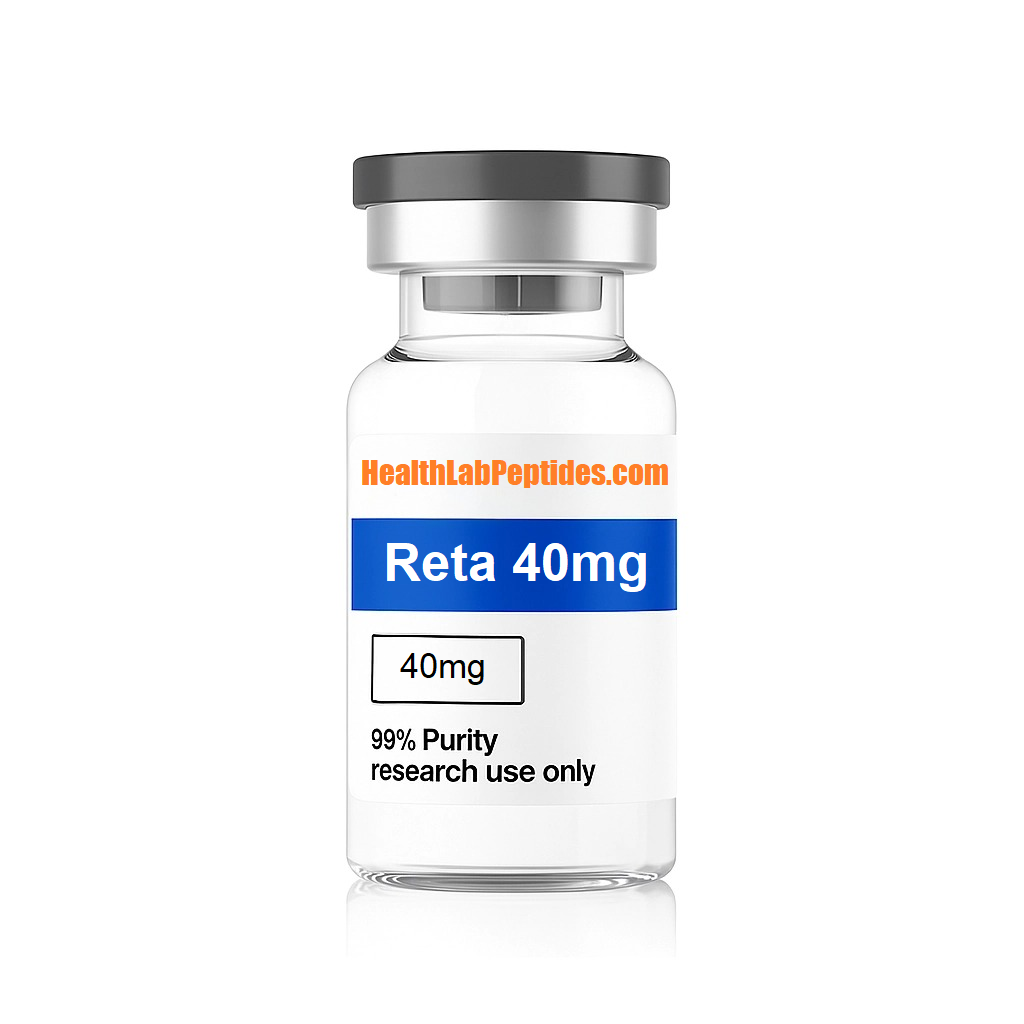 Reta 40mg
  GHK-CU 100mg