

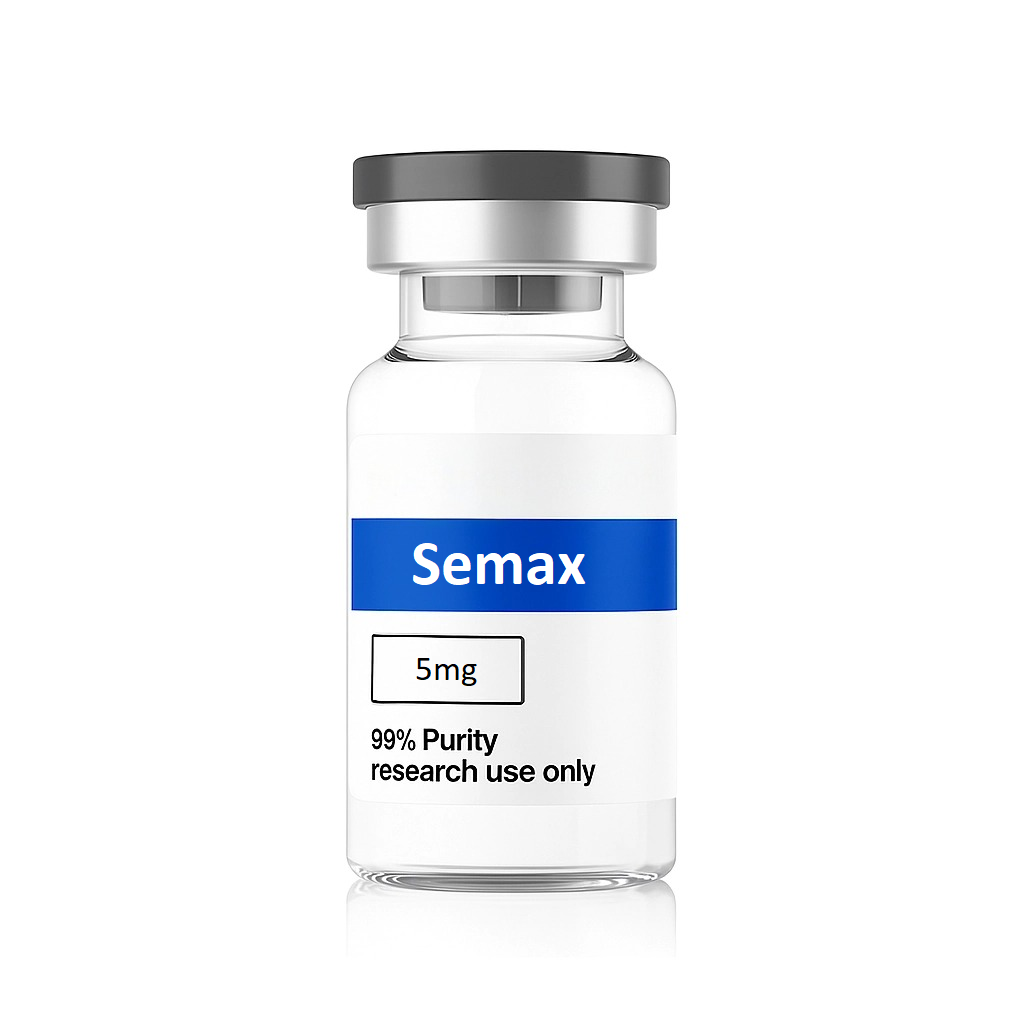
Research suggests: Semax is a synthetic peptide studied in laboratory environments for its interaction with neurochemical signaling pathways and brain-related communication systems. Researchers have shown interest in this peptide because it is derived from a fragment of adrenocorticotropic hormone (ACTH) and appears to influence molecular signaling within neurological networks.
As peptide research expands, Semax continues to be explored alongside other compounds that are studied for their role in cellular communication, neurotransmitter signaling, and cognitive-related pathways.
What Is Semax?
Semax is a synthetic heptapeptide developed for research purposes. It is derived from a modified sequence of ACTH, but it does not replicate the full biological function of the original hormone.
In laboratory settings, Semax is studied because of its interaction with:
- Neurotransmitter signaling pathways
- Brain-derived molecular communication systems
- Peptide receptor activity
- Cellular signaling networks
Because of these characteristics, it is often included in research examining neurological communication systems.
Semax and Neurochemical Signaling
Semax is frequently studied in connection with neurochemical signaling pathways. Researchers explore how peptide fragments interact with receptors involved in communication between neurons.
In many studies, Semax is discussed alongside compounds such as Selank, which is also examined in laboratory environments focused on neuropeptide signaling.
Other peptides that appear in neurological research include DSIP (Delta Sleep-Inducing Peptide), which is studied in relation to circadian signaling pathways.
These peptides help researchers explore how communication occurs within complex neurological systems.
Peptides Studied Alongside Semax
Peptide research often involves examining multiple compounds together. This allows scientists to compare how different molecules interact with signaling systems.
For example, endocrine-related research may include peptides such as CJC-1295 without DAC and Sermorelin when studying hormone-related communication pathways.
Other commonly studied peptides include Ipamorelin and Hexarelin, which appear in research focused on receptor-mediated signaling systems.
Growth-related signaling studies may also reference molecules such as IGF-DES when exploring molecular communication pathways.
Metabolic and Cellular Signaling Research
In addition to neurological research, Semax is often discussed in broader studies involving cellular signaling systems.
For example, metabolic signaling research may include compounds such as AOD-9604 and molecules like NAD+.
Researchers may also examine mitochondrial-related peptides such as SS-31 and experimental compounds like SLU-PP-332 when studying cellular energy signaling.
Other experimental peptides that appear in research discussions include ARA-290 and MT-11.
Why Researchers Study Semax
Semax continues to attract attention in scientific research because it represents a short peptide that interacts with neurological signaling systems. Its structure allows researchers to study how specific amino-acid sequences influence receptor activity and cellular communication.
Peptides like Semax provide valuable tools for investigating:
- Neurochemical communication
- Peptide receptor interactions
- Molecular signaling pathways
- Brain-related cellular communication
- Hormone and metabolic signaling overlap
Because of this, Semax is frequently included in research exploring how biological systems transmit signals at the molecular level.
Conclusion
Semax is a synthetic peptide studied in laboratory environments for its role in neurochemical signaling and cellular communication pathways. As research into peptide science continues to grow, Semax remains an important compound for understanding how small amino-acid sequences influence complex biological signaling systems.
Research Disclaimer (RUO)
All products from HealthLab Peptides are strictly RUO (Research Use Only).
They are not intended for human consumption, medical use, or veterinary use. These materials are supplied exclusively for laboratory research purposes by HealthLab Peptides.

 Tirz 40mg
  Selank 5mg