

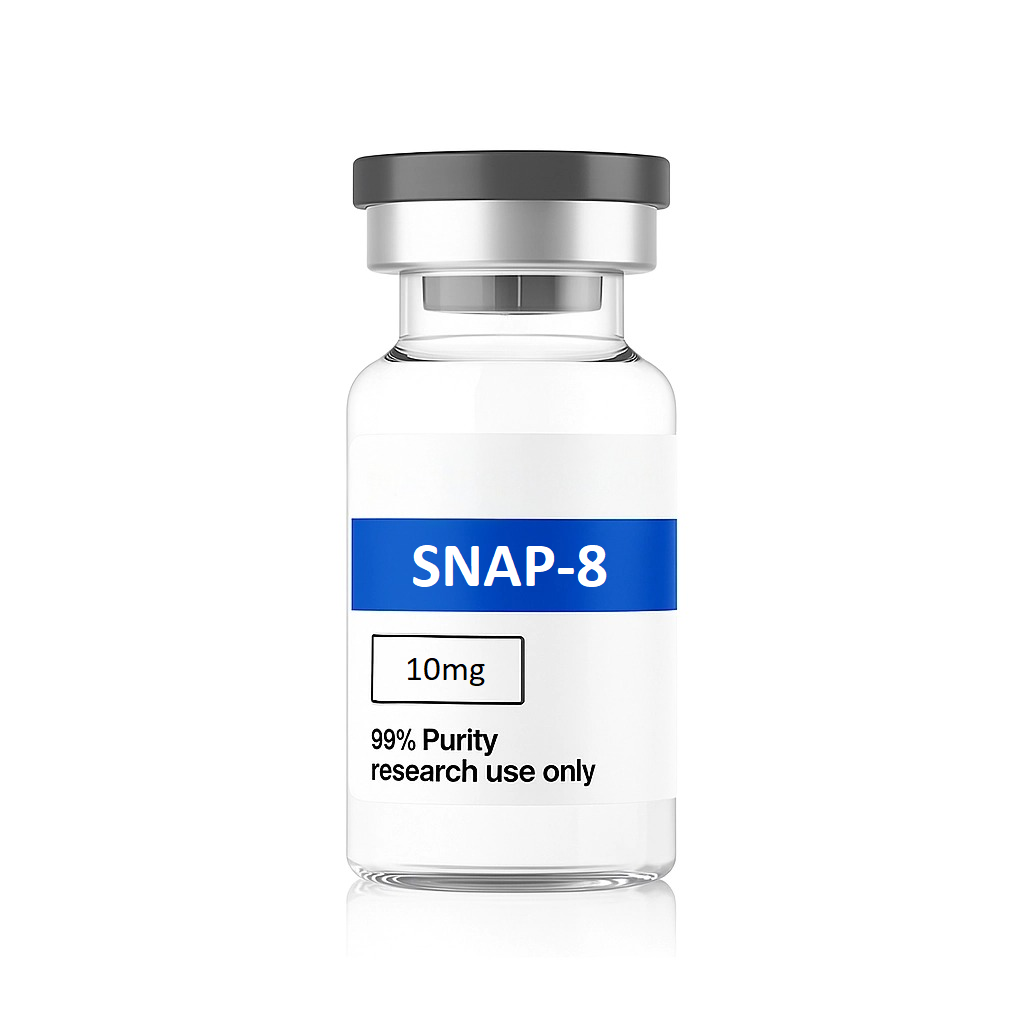
Research suggests:
SNAP-8 (Acetyl Octapeptide-3) is a synthetic peptide studied in laboratory environments for its interaction with signaling pathways involved in neurotransmitter release and cellular communication. Researchers investigate this peptide to better understand how short amino-acid chains may influence molecular signaling systems that regulate communication between cells.
SNAP-8 belongs to a category of small peptides used in experimental research to explore how peptide fragments interact with receptor systems, cellular signaling mechanisms, and biochemical communication pathways.
What Is SNAP-8?
SNAP-8, also known as Acetyl Octapeptide-3, is a modified peptide derived from a portion of the SNAP-25 protein involved in neurotransmitter signaling. Scientists study this peptide in research settings to examine how specific peptide sequences interact with molecular signaling pathways.
Because peptides like SNAP-8 contain relatively small amino-acid chains, they allow researchers to isolate and study specific communication mechanisms between cells.
In laboratory studies, peptides may be examined for their interaction with:
- Cellular signaling pathways
- Neurotransmitter communication systems
- Molecular receptor signaling
- Peptide-mediated communication networks
These investigations help researchers understand how peptide fragments influence biological signaling mechanisms.
Peptides Studied in Hormone Signaling Research
Peptide research often explores compounds associated with endocrine communication systems. For example, laboratory investigations into hormone receptor signaling frequently include peptides such as CJC-1295 without DAC and Sermorelin when studying growth hormone-related signaling pathways.
Researchers may also study peptides like Ipamorelin and Hexarelin to examine receptor-mediated endocrine communication.
Growth-related signaling studies sometimes include molecules such as IGF-DES and IGF-LR3 when researchers explore growth factor receptor pathways.
Another peptide studied in reproductive signaling research is KissPeptin-10, which appears in laboratory discussions involving hormonal communication networks.
Neurological Peptide Signaling
SNAP-8 research often overlaps with broader investigations into neurological signaling peptides. Scientists studying neurochemical communication sometimes examine peptides such as Semax and Selank when exploring receptor interactions in neurological pathways.
Sleep-related signaling research may also reference peptides such as DSIP (Delta Sleep-Inducing Peptide), which appears in studies examining circadian rhythm communication and neurological signaling pathways.
Another compound that appears in neurological peptide discussions is PT-141, which researchers study for receptor-mediated signaling interactions.
Metabolic and Cellular Signaling Peptides
In addition to neurological signaling research, scientists study peptides involved in metabolic communication systems. For example, laboratory studies sometimes investigate peptides such as AOD-9604 when exploring metabolic signaling mechanisms.
Researchers may also examine molecules such as NAD+ because of their role in cellular energy metabolism and biochemical signaling.
Additional metabolic research may involve compounds such as SLU-PP-332 and mitochondrial peptides like SS-31, which appear in studies investigating cellular energy communication systems.
Experimental peptides such as MT-11 and molecules like ARA-290 are also examined in laboratory environments studying cellular signaling pathways.
Research Blends and Laboratory Materials
Peptide research sometimes involves combinations of compounds and specialized laboratory materials. For example, research blends such as Glow70 (BPC-157 / GHK-Cu / TB500) appear in laboratory discussions exploring peptide signaling interactions.
Scientists may also investigate metabolic research compounds such as 5-Amino-1MQ in studies examining molecular communication related to cellular metabolism.
Some metabolic peptide research includes GLP-1 pathway compounds such as Sema 10mg, Sema 15mg, and Tirz 20mg or Tirz 30mg when exploring incretin-related signaling systems.
Laboratory preparation of peptides often involves sterile solutions such as Bacteriostatic Water used in research environments for peptide preparation.
SNAP-8 in the Expanding Field of Peptide Science
Peptide research continues expanding as scientists discover new ways amino-acid sequences influence biological communication networks. Small peptides such as SNAP-8 help researchers analyze how specific molecular fragments interact with cellular signaling systems.
Scientific investigations involving peptides contribute to research exploring:
- Hormone receptor communication
- Neurological signaling systems
- Metabolic peptide pathways
- Cellular communication networks
- Molecular receptor interactions
Studying these systems helps researchers map the complex biochemical networks that regulate biological signaling.
Conclusion
SNAP-8 is a synthetic peptide studied in laboratory environments to explore molecular signaling pathways involved in cellular communication. Research involving SNAP-8 contributes to broader investigations into how peptide fragments interact with receptors, enzymes, and biochemical signaling networks.
As peptide science continues evolving, compounds like SNAP-8 remain valuable research tools for studying molecular communication systems and peptide-based signaling mechanisms.
Research Disclaimer (RUO)
All compounds available from HealthLab Peptides are strictly RUO (Research Use Only).
They are not intended for human consumption, medical use, or veterinary use. These materials are supplied exclusively for laboratory and scientific research purposes by HealthLab Peptides.

 Tirz 40mg
  Reta 40mg
  Reta 15mg