

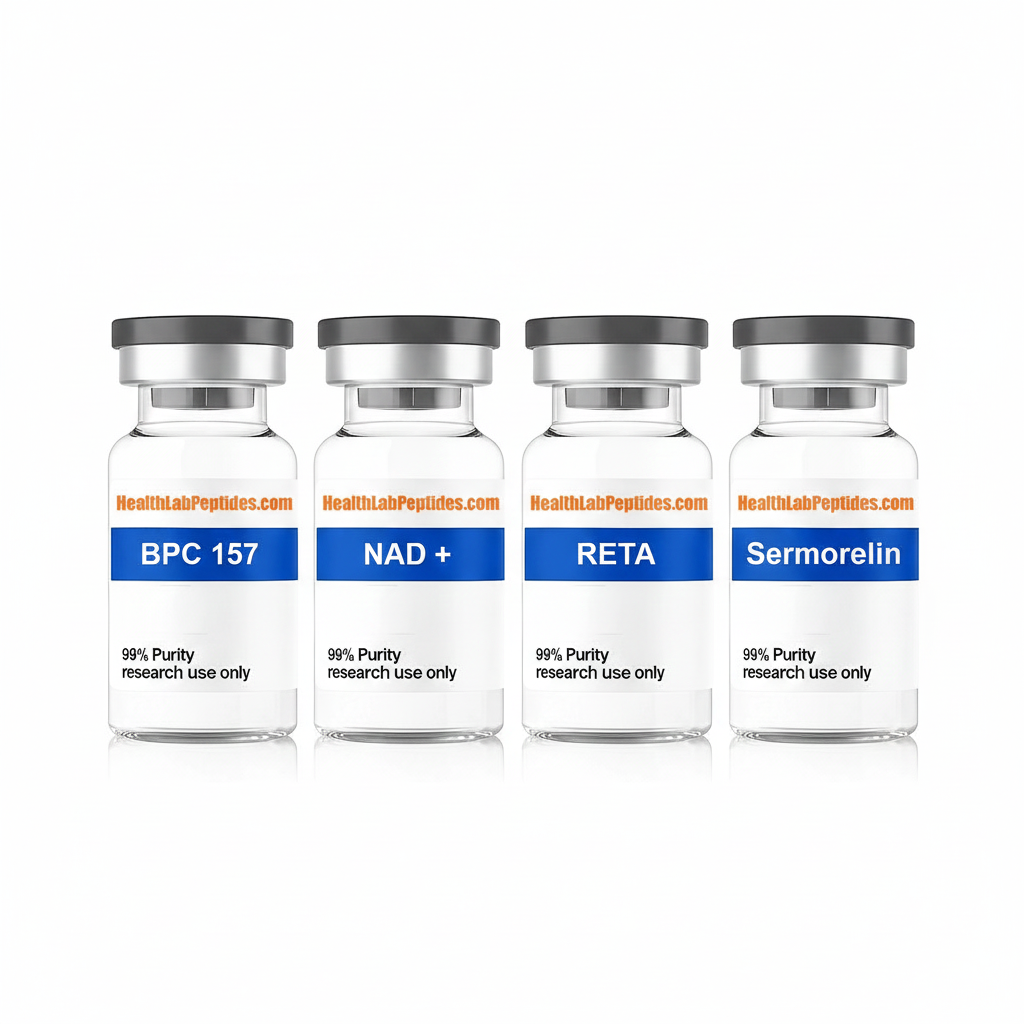
Research-Based Stability, Storage, and Peptide Handling Guidelines
Egrifta is the FDA-approved pharmaceutical formulation of tesamorelin, a synthetic growth hormone–releasing hormone (GHRH) analog. In laboratory research environments, tesamorelin is commonly supplied as a lyophilized peptide powder that must be reconstituted before experimental use.
One of the most frequently searched research questions is:
How long does tesamorelin last after it has been reconstituted?
This article reviews peptide stability research, storage science, and how tesamorelin compares to other commonly studied research peptides such as CJC-1295, Hexarelin, IGF-1 LR3, Sema, Tirz, Reta, MOTS-c, BPC-157, and GHK-Cu.
Why Reconstituted Peptides Are Less Stable
Tesamorelin, like many peptide therapeutics, consists of a chain of amino acids (44 in total). In its lyophilized state, it remains relatively stable for extended periods when stored properly. However, once mixed with a diluent:
- Hydrolysis risk increases
- Oxidation becomes possible
- Microbial contamination risk rises
- Temperature sensitivity becomes more significant
These same stability principles apply broadly to research peptides including:
- CJC-1295
- Hexarelin
- IGF-1 LR3
- Semaglutide
- Tirzepatide
- Retatrutide
- MOTS-c
- BPC-157
- GHK-Cu
Although molecular sizes and modifications differ, post-reconstitution handling principles remain consistent across peptide categories.
Research-Based Stability of Tesamorelin After Reconstitution
Refrigerated Storage (2–8°C / 36–46°F)
Peer-reviewed peptide stability research consistently shows that refrigeration significantly slows degradation kinetics.
Estimated laboratory stability window:
- With bacteriostatic water: approximately 21–28 days
- With sterile (non-preserved) water: shorter timeframe, often several days to 1 week
Refrigeration slows:
- Deamidation
- Peptide bond hydrolysis
- Aggregation
Similar cold-chain handling recommendations apply to GLP-1–related research peptides such as Semaglutide, Tirzepatide, and Retatrutide.
Room Temperature Storage
Peptide degradation rates increase exponentially with temperature. Research in peptide formulation science shows:
- Higher temperatures accelerate hydrolytic breakdown.
- Oxidative degradation increases.
- Microbial proliferation risk rises.
For tesamorelin and other injectable research peptides, extended room-temperature storage is generally not recommended.
Freezing After Reconstitution
While lyophilized peptides may be stored frozen prior to reconstitution, freezing after dilution is often discouraged due to:
- Freeze–thaw stress
- Aggregation risk
- Structural destabilization
This principle applies broadly to research compounds including IGF-1 LR3 and MOTS-c.
Diluent Choice and Its Impact
Bacteriostatic Water
- Contains benzyl alcohol (antimicrobial preservative)
- Reduces microbial growth risk
- May allow up to ~28 days refrigerated stability under controlled lab conditions
Sterile Water (No Preservative)
- No antimicrobial protection
- Greater contamination risk after first vial entry
- Typically shorter usable window
The same dilution considerations are relevant for peptides such as CJC-1295 and Hexarelin.
Visible Signs of Degradation
Research laboratories should discard reconstituted peptide solutions if any of the following are observed:
- Cloudiness
- Particulate matter
- Color change
- Evidence of contamination
However, absence of visible change does not guarantee full chemical integrity. Conservative timelines are recommended.
Why Pharmaceutical Labeling Is More Conservative
The branded formulation Egrifta follows strict pharmaceutical stability protocols. Regulatory standards require highly conservative post-reconstitution usage timelines to eliminate variability in handling.
Research-grade peptides are not governed by identical clinical packaging controls, so researchers must rely on:
- Certificate of Analysis (COA)
- Internal SOPs
- Controlled laboratory storage practices
Practical Research Guidelines for Tesamorelin
To preserve stability:
- Store lyophilized vials in freezer conditions if recommended
- Reconstitute using sterile technique
- Refrigerate immediately after mixing
- Avoid repeated temperature fluctuations
- Minimize repeated vial punctures
- Label with date of constitution
- Discard conservatively
These best practices apply broadly across peptide categories, including metabolic research peptides (Semaglutide, Tirzepatide, Retatrutide), growth hormone–related peptides (CJC-1295, Hexarelin), mitochondrial peptides (MOTS-c), tissue-related peptides (BPC-157), and copper-binding peptides (GHK-Cu).
Conclusion
Based on peptide stability research and pharmaceutical handling data, reconstituted tesamorelin stored under refrigeration with bacteriostatic diluent may remain usable in laboratory research settings for approximately 21–28 days. Stability decreases with improper handling, temperature fluctuations, or non-preserved diluents.
As with all research peptides, conservative storage and sterility practices are essential for maintaining compound integrity.
⚠️ Strict Research Use Only (RUO) Notice
All tesamorelin and other peptides offered by HealthLab Peptides — including but not limited to CJC-1295, Hexarelin, IGF-1 LR3, Semaglutide, Tirzepatide, Retatrutide, MOTS-c, BPC-157, and GHK-Cu — are Research Use Only (RUO) materials.
They are not for human or veterinary use, not intended for diagnosis, treatment, cure, or prevention of any disease, and must be handled exclusively by qualified research professionals in controlled laboratory environments.
Does tesamorelin need to be refrigerated after mixing?
How should reconstituted tesamorelin be stored in a research setting?
Is tesamorelin still stable after 30 days in the fridge?
Is tesamorelin still stable after 30 days in the fridge?
In most laboratory research settings, 30 days is at or slightly beyond the commonly referenced refrigerated stability window for reconstituted tesamorelin stored at 2–8°C (36–46°F).
Peptide stability research and pharmaceutical handling data indicate:
- 21–28 days is a typical research estimate when tesamorelin is reconstituted with bacteriostatic water and maintained under consistent refrigeration.
- After 30 days, the probability of gradual chemical degradation increases.
- Microbial contamination risk also rises, particularly if the vial has been accessed multiple times.
Key Factors That Influence 30-Day Stability
1️⃣ Diluent Used
- Bacteriostatic water: May support stability closer to the 3–4 week range.
- Sterile water (no preservative): Often associated with shorter usable timelines.
2️⃣ Temperature Control
Even minor temperature fluctuations can accelerate hydrolysis and oxidation of peptide chains.
3️⃣ Aseptic Handling
Repeated vial punctures increase contamination risk.
4️⃣ Physical Appearance
Discard immediately if you observe:
- Cloudiness
- Particulate matter
- Color change
However, even if the solution appears clear, unseen molecular degradation may still occur.
Pharmaceutical Reference Point
The FDA-approved product Egrifta follows conservative post-reconstitution usage timelines under regulated conditions. Research-grade materials may differ in formulation and preservative content, so laboratories typically adopt conservative discard practices to preserve integrity.
Research Conclusion
While tesamorelin may not show visible signs of instability at 30 days, it is generally considered at or beyond the recommended research stability window. Many laboratories choose to discard and prepare a fresh solution after approximately 3–4 weeks to maintain experimental accuracy and sterility confidence.
⚠️ Strict Research Use Only (RUO) Notice
All tesamorelin and other peptides offered by HealthLab Peptides are strictly Research Use Only (RUO) materials. They are not for human or veterinary use, not intended for diagnosis, treatment, cure, or prevention of any disease, and must be handled exclusively by qualified research professionals in controlled laboratory environments.
What affects tesamorelin stability after reconstitution?
Does bacteriostatic water extend tesamorelin shelf life?
 PT-141-10mg
 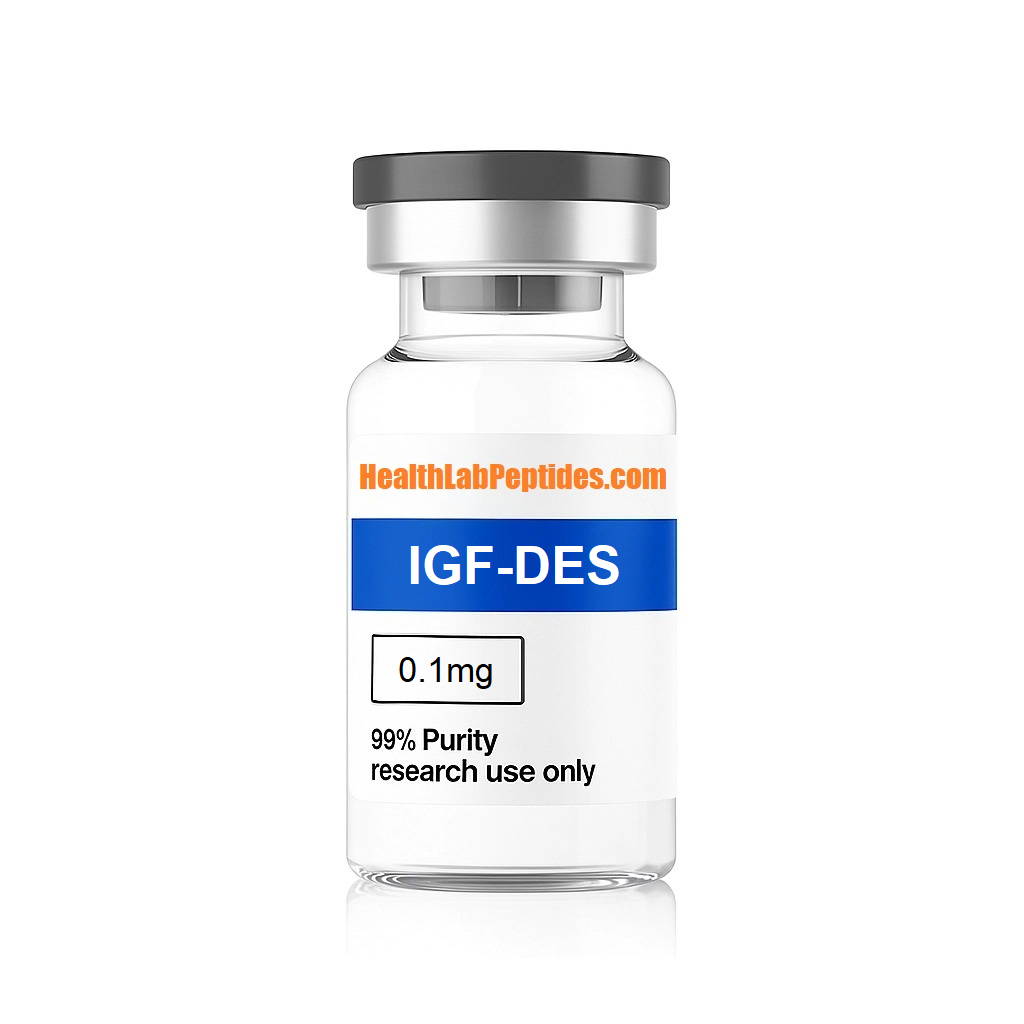 IGF-DES 0.1mg
  Tirz 30mg
  GHRP-6 5mg
  Tesamorelin 10mg