

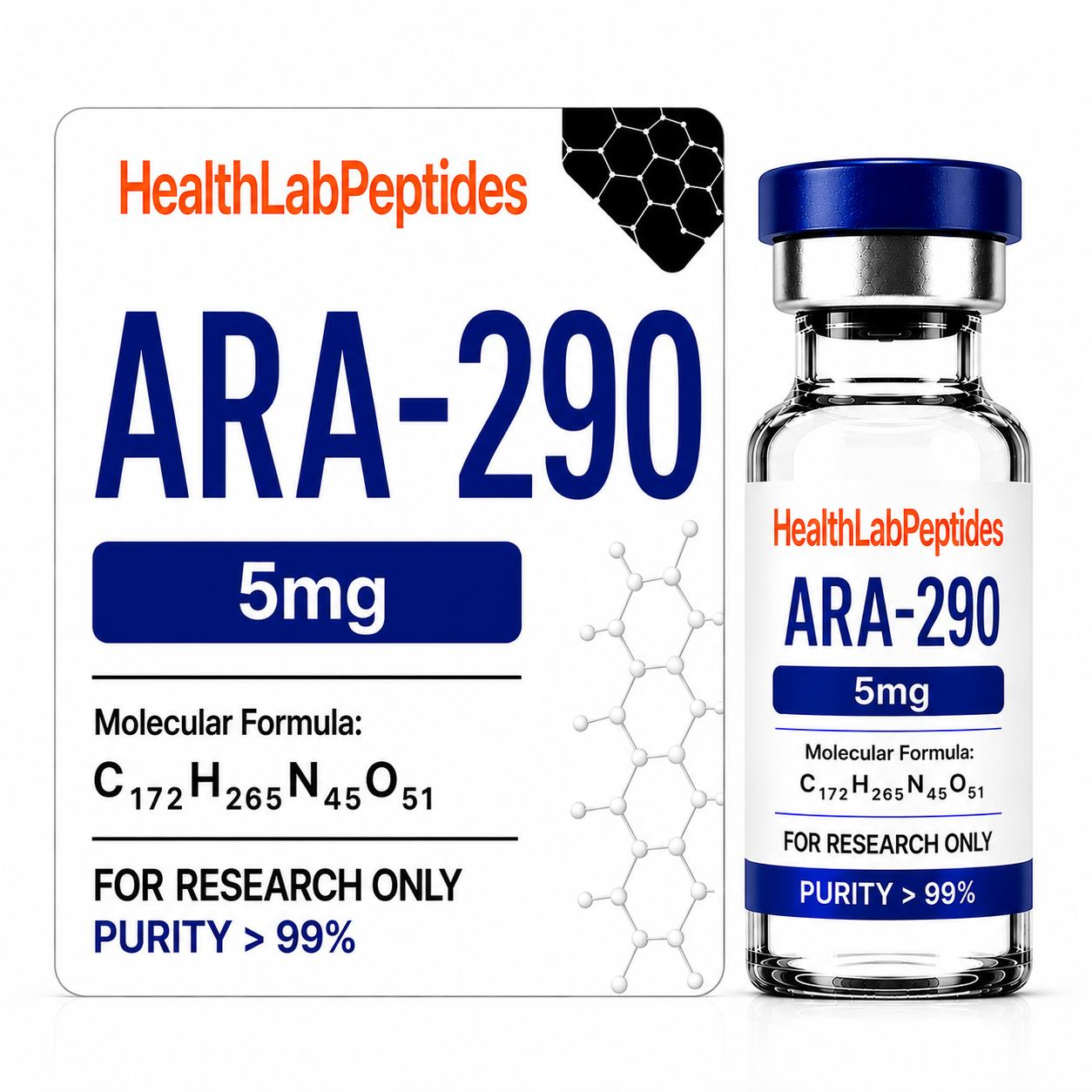
Research suggests that ARA-290 mechanism studies need direct evidence when assigning activity to a proposed CD131 and EPO-receptor complex. The ARA-290 Receptor-Complex Research product referenced here is intended exclusively for controlled RUO and in-vitro research.
Define the mechanistic question
The central question is whether both receptor components are present, physically or functionally associated, and necessary for the measured response. Search-friendly language should identify the research peptide, receptor or pathway, assay platform, and evidence boundary precisely.
Experimental strategy
Characterize component expression, use loss-of-function or blocking conditions, measure proximal signaling, and confirm the result with an orthogonal engagement or interaction approach. Researchers can find related materials in the HealthLab Peptides catalog, but catalog relationships do not establish biological equivalence.
Confounders
Antibody specificity, receptor overexpression, shared downstream pathways, incomplete knockdown, compensatory signaling, and cell-line drift can produce misleading support. Document material identity, sample history, cell passage, plate map, instrument settings, and analysis version.
Controls
Include parental or low-expression cells, single-component controls, isotype or reagent controls, viability, rescue when feasible, and an unrelated pathway-performance control. A product such as this related RUO material should be included only when it answers a prespecified comparative question.
- Confirm identity before functional testing.
- Use independent biological preparations.
- Predefine analysis and exclusion rules.
- Evaluate viability and direct assay interference.
- Archive raw results and all deviations.
Reporting
Report expression evidence, perturbation efficiency, reagent validation, proximal and downstream endpoints, timing, and residual response under each control. Show individual replicate values and uncertainty rather than relying on a representative trace alone.
Evidence boundaries
Reduced response after one perturbation supports necessity only if off-target effects and general cell impairment are excluded. Complex formation requires more direct evidence than shared signaling. Findings for a second research material require independent confirmation.
Reproducibility
Repeat the core result with a fresh preparation on another day. Confirm that controls pass, add a different measurement principle, and investigate disagreements among methods. An inconclusive run should remain inconclusive rather than being converted into a mechanistic claim.
Compliance-first SEO
Natural use of exact compound names and laboratory terminology improves search relevance. It should never be paired with dosing, administration, treatment, human outcomes, or promotional medical language.
Research Use Only disclaimer: This article and the referenced materials are intended strictly for laboratory research and in-vitro use. They are not for human or veterinary use, consumption, injection, diagnosis, treatment, or any therapeutic application.


