

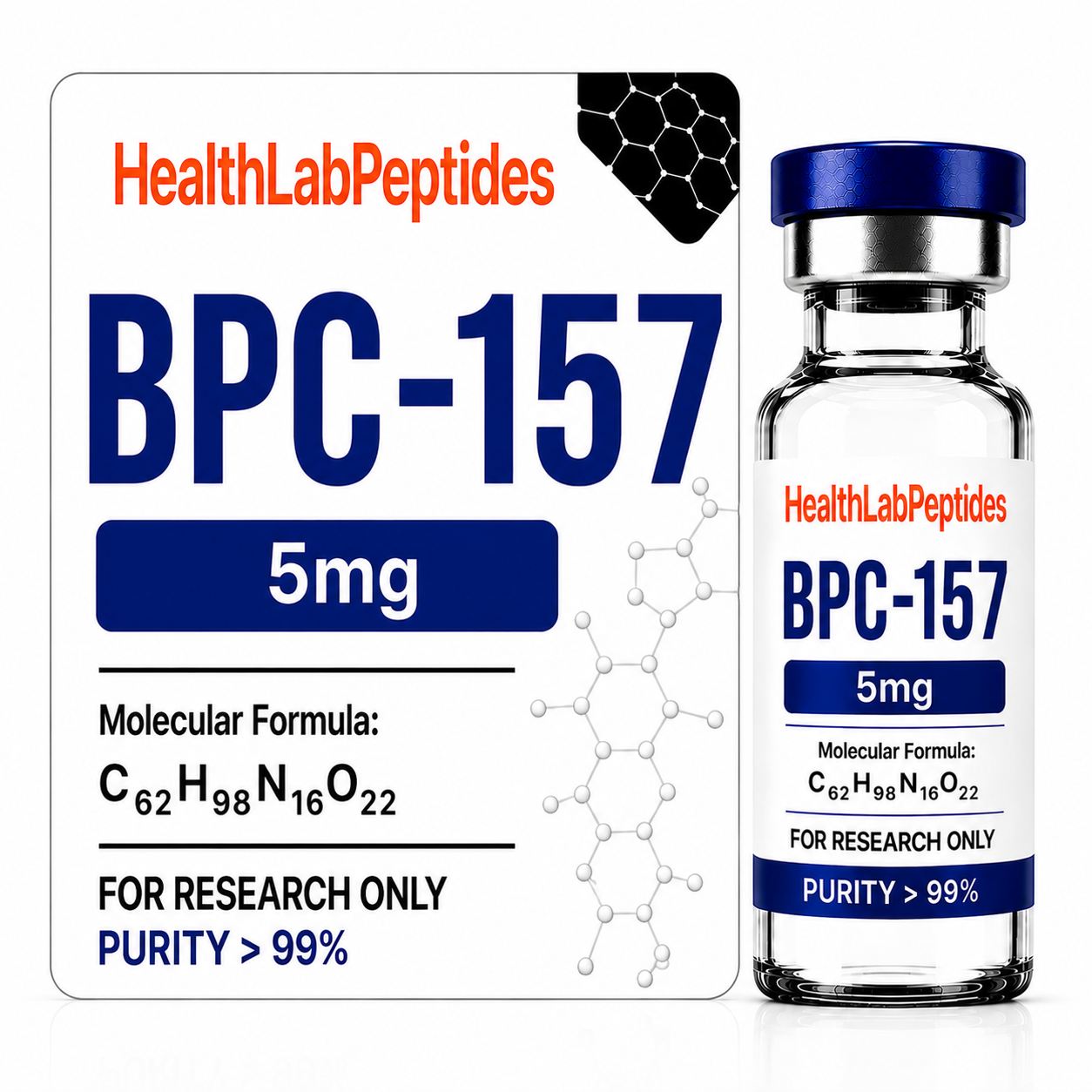
Research suggests that BPC-157 LC-MS research requires separate evidence for molecular identity, chromatographic specificity, extraction recovery, and quantitative performance. Researchers examining BPC-157 LC-MS Method Validation should keep the conclusion tied to the validated analytical or in-vitro model.
Research question and SEO focus
The core question is whether the method is intended for identity confirmation, relative comparison, or validated quantification in a defined matrix. Accurate use of research peptide names, analytical techniques, cell models, and laboratory endpoints helps researchers find relevant information without turning keywords into unsupported claims.
Experimental design
Establish precursor and product-ion behavior, retention-time criteria, calibration model, carryover, dilution integrity, recovery, matrix effects, precision, and accuracy. Use an appropriate internal standard when available. Related materials are available through the HealthLab Peptides RUO catalog, but each comparison must be qualified independently.
Potential confounders
Co-elution, in-source fragmentation, adsorption, low recovery, matrix suppression, and integration changes can produce apparently consistent but biased results. Record every material lot, consumable lot, operator, instrument setting, and sample-handling interval.
Controls and comparators
Use solvent and matrix blanks, system suitability, zero samples with internal standard, spiked controls, independently prepared calibrators, pooled quality controls, and carryover blanks. If this related research material is included, apply identical acceptance and reporting rules.
- Verify material identity and lot documentation.
- Use independent preparations and separate experimental days.
- Predefine endpoints, exclusions, and repeat rules.
- Check assay interference and sample recovery.
- Retain raw data, metadata, and deviations.
Reporting standard
Report transitions, retention windows, integration rules, calibration range, weighting, recovery, matrix factor, precision, accuracy, and sample stability. Present replicate-level data, effect-size uncertainty, failed controls, and method limitations.
Interpretation
Identity confidence and quantitative confidence are distinct. A correct mass does not prove accurate concentration, while an acceptable curve does not rule out interference. Findings cannot be transferred automatically to another HealthLab RUO product or to a blend containing related components.
Reproducibility and next experiments
Repeat from a fresh preparation, add an orthogonal readout, and verify that every system-suitability measure passes. When two methods disagree, investigate what each physically measures instead of selecting the preferred result.
Compliance-first research communication
Search visibility should follow scientific usefulness. Natural product terminology, method names, and precise evidence boundaries serve both readers and search engines. Human-use, dosing, treatment, and outcome language has no place in an RUO in-vitro article.
Research Use Only disclaimer: This article and the referenced materials are intended strictly for laboratory research and in-vitro use. They are not for human or veterinary use, consumption, injection, diagnosis, treatment, or any therapeutic application.


