

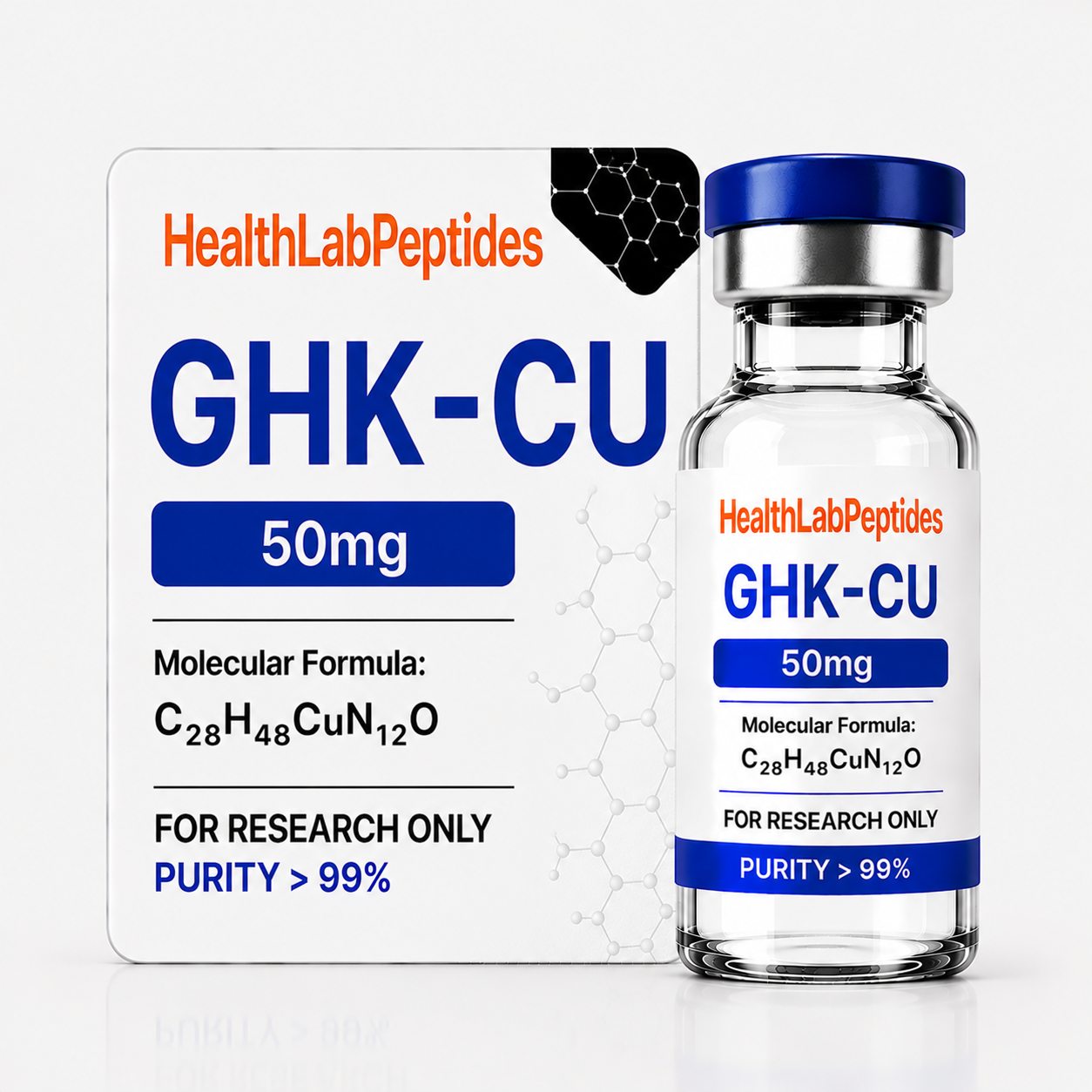
Research suggests that a mechanistic claim becomes credible when targeted perturbation, temporal order, and orthogonal measurement converge. Researchers examining GHK-Cu 50 mg Research Peptide should frame the work as Research Use Only, define the claim in advance, and separate target-dependent biology from measurement artifacts.
Correlation is a starting observation, not a completed mechanism
A changed phosphoprotein, transcript, and phenotype may move together because of a shared upstream event, stress response, or cell-state shift. Mechanistic research must show that the proposed node is engaged, occurs before the outcome, and is necessary or sufficient within defined limits.
For this laboratory question, the GHK-Cu 50 mg Research Peptide product reference belongs directly in the experimental context: confirm lot identity, matrix recovery, and the exact in-vitro endpoint before comparing results.
Define the causal model before the assay
Write competing causal diagrams and identify experiments that would discriminate among them. Favor interventions acting at different levels, such as genetic reduction, selective pharmacological perturbation, and rescue with an intervention-resistant construct. Diagram the proposed sequence from material exposure to proximal target event, intermediate signal, and final phenotype. Assign at least one measurement and one alternative explanation to each step.
Controls that make the conclusion testable
Non-targeting controls, multiple independent perturbations, expression checks, viability measurements, and matched timing reduce false attribution. Use vehicle, target-null or target-reduced systems when feasible, a qualified positive control, and a specificity-challenging comparator. Randomize samples and predefine exclusion criteria. A concentration series should span inactive through plateau behavior without relying on a single selected concentration.
Quantification and normalization
Use single-cell or imaging measurements when population averages could blend distinct subgroups. Normalization should preserve genuine changes in cell state. Report raw signal and justified normalization. Cell count, total protein, reporter abundance, receptor expression, and viable biomass are not interchangeable denominators. Verify that normalization does not create the apparent effect.
A controlled comparison may include the BPC-157 5 mg Research Peptide as a separate RUO research material, provided concentration, timing, analytical recovery, and assay conditions are matched rather than assumed equivalent.
- Confirm identity, lot, and analytical traceability of RUO material.
- Measure recovery or effective exposure in the experimental matrix.
- Use independent biological experiments across different days.
- Test detector interference and cell viability.
- Preserve raw data, plate maps, scripts, and deviations.
Orthogonal confirmation and related materials
Confirm key pathway events with different chemistries and measure the proposed proximal event directly. A second method should have a different failure mode, not merely a different brand of the same reporter. For comparison studies, researchers can review BPC-157 5 mg Research Peptide and ARA-290 5 mg Research Peptide, while the broader HealthLab Peptides RUO catalog can support hypothesis-led selection. Comparisons require matched recovery, timing, and assay context.
Interpretation boundaries
Mechanistic language should remain limited to the tested model and perturbation range; cell findings do not establish human outcomes. Phrase conclusions at the level demonstrated by the data. An in-vitro response does not establish clinical effect, safety, suitability, or any human or veterinary use. Avoid disease, dosing, treatment, and consumer language.
Minimum reporting standard
Provide the causal model, intervention validation, timing, effect sizes, off-target assessment, raw distributions, and replication across independent experiments. Provide concentration and time-course data, independent-experiment values, uncertainty, model equations, quality-control failures, and all prespecified analysis choices. Reproducibility improves when another laboratory can reconstruct both the experiment and the reasoning.
Where the hypothesis requires a third product-specific comparator, the ARA-290 5 mg Research Peptide should be evaluated with the same blanks, positive controls, interference checks, and independent replication.
Research Use Only disclaimer: This content is solely for lawful laboratory research and in-vitro analytical discussion. The materials discussed are not medicines, foods, cosmetics, or consumer products and are not intended for human or veterinary use, ingestion, injection, diagnosis, treatment, cure, mitigation, or prevention of disease. This is not medical advice and does not provide dosing, reconstitution, or administration instructions. Qualified researchers remain responsible for institutional review, validated methods, applicable law, and safe laboratory handling.


