

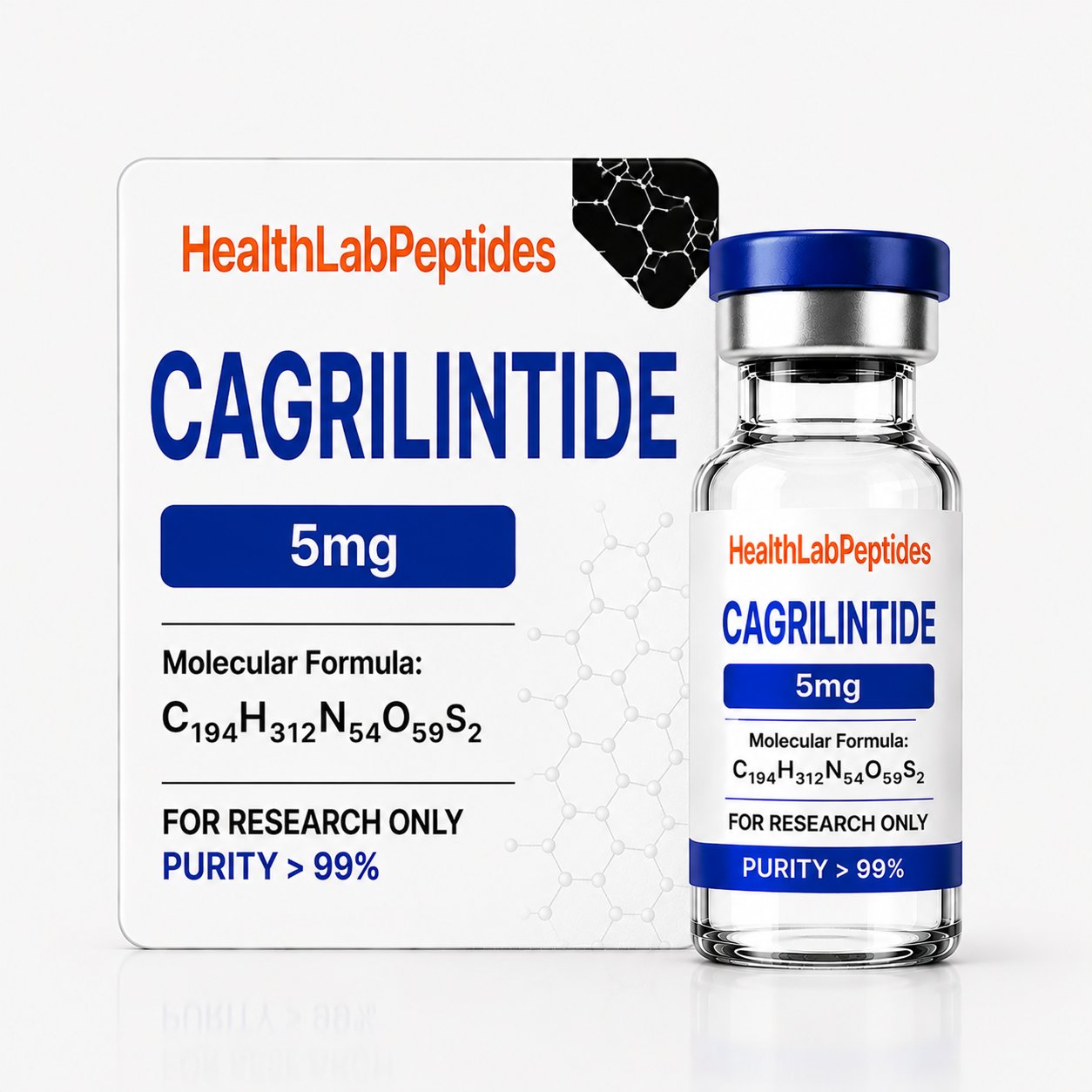
Research suggests that Cagrilintide aggregation research benefits from orthogonal methods because dye binding, particle sizing, and chromatographic separation detect different species. The linked Cagrilintide Aggregation Research material is presented strictly for RUO and in-vitro laboratory research.
Why this research question matters
The study should determine whether the sample develops dye-positive ordered structures, larger particles, soluble oligomers, or loss of monomer recovery under defined conditions. Search relevance comes from precise use of compound names, receptor systems, analytical methods, and laboratory endpoints.
Experimental framework
Use a controlled time course and concentration series, pair thioflavin-type fluorescence with DLS and SEC, and evaluate mass recovery and morphology when needed. The HealthLab Peptides RUO product catalog provides relevant internal links while every comparison remains material-specific.
Sources of bias
Dye self-fluorescence, inner-filter effects, dust, bubbles, lipidated-material adsorption, column loss, and dilution-induced dissociation can make methods disagree. Record material lot, matrix, container, sample history, cell passage, plate map, instrument settings, software, and analyst decisions.
Controls and internal comparators
Include dye-only and sample-only wells, filtered buffer, instrument standards, concentration controls, time-zero samples, recovery calculation, and independent preparations. A related product such as this HealthLab laboratory material must meet the same identity, recovery, and assay-performance criteria.
- Confirm identity and component composition.
- Use independent preparations and runs.
- Predefine primary endpoints and analysis.
- Evaluate recovery, viability, and interference.
- Preserve raw data, failed controls, and deviations.
Reporting standard
Report buffer, pH, temperature, agitation, concentration, dye conditions, DLS distributions, SEC recovery, kinetics, and method-specific limitations. Include individual results, effect sizes, confidence intervals, assay quality, and limitations.
Evidence boundary
A positive dye signal is not a complete aggregation identity. Agreement among size, recovery, kinetics, and orthogonal structure-sensitive methods supports a stronger conclusion. Findings should not be transferred automatically to another research product or blend.
Replication and interpretation
Repeat key findings with a fresh preparation and an orthogonal method. Require system suitability and valid controls before interpretation. When methods disagree, investigate the physical property each measures rather than selecting the preferred result.
High-quality SEO within RUO limits
Natural research keywords, internal product links, and specific assay explanations help readers and search engines. The article excludes dosing, administration, therapeutic claims, disease outcomes, human or veterinary use, and testimonials.
Compliance-first scientific content is strongest when it is useful enough to earn genuine references and links on its merits, without artificial backlink schemes.
Research Use Only disclaimer: This article and the referenced materials are intended strictly for laboratory research and in-vitro use. They are not for human or veterinary use, consumption, injection, diagnosis, treatment, or any therapeutic application.


