

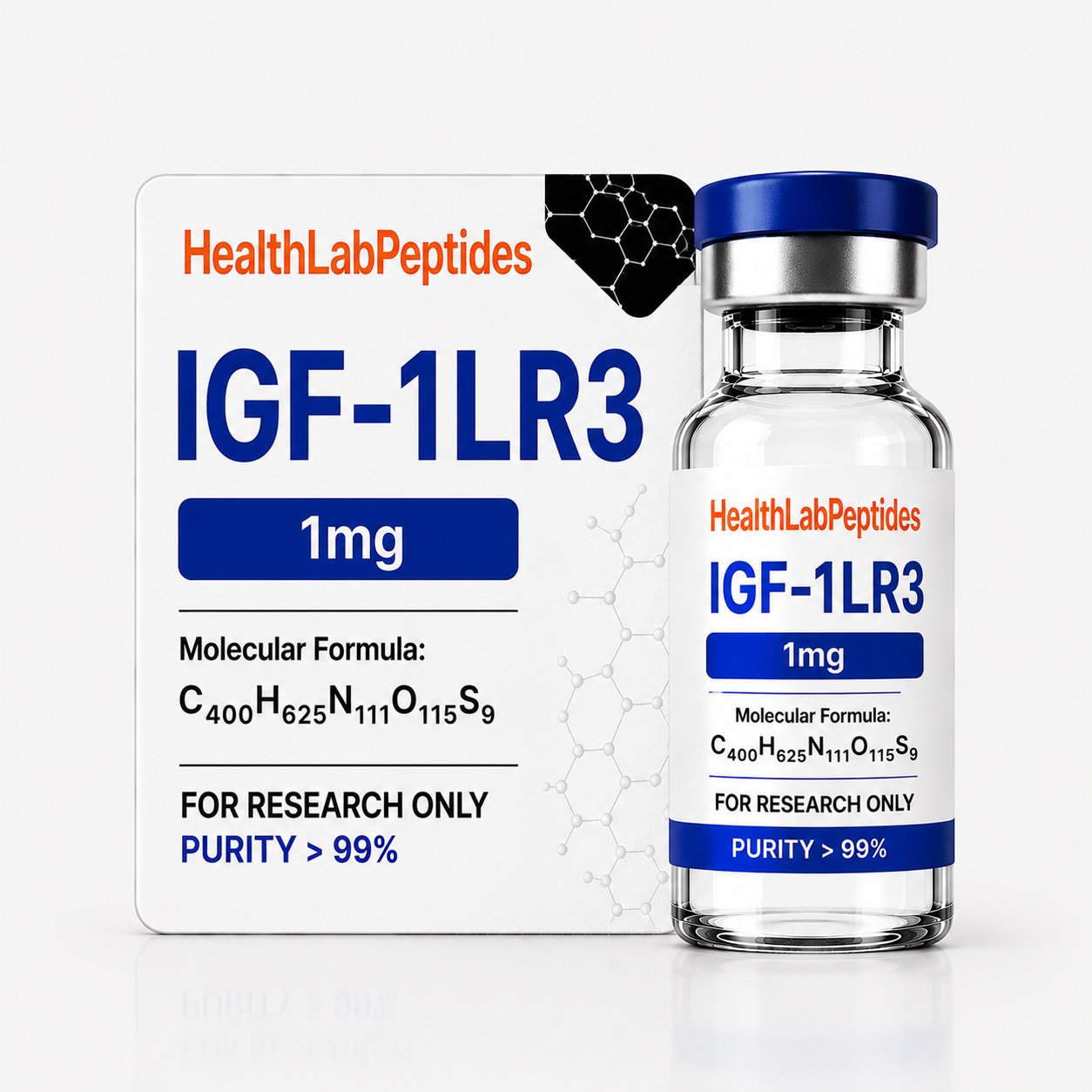
Research suggests that IGF-1 LR3 cell studies should distinguish direct receptor activation from changes caused by the binding-protein environment of the assay matrix. The primary HealthLab research material referenced here is labeled for RUO and in-vitro work only.
Define the comparison before collecting data
The central question is whether the observed response reflects IGF1R engagement under a defined free-analyte condition or a matrix-dependent difference in ligand availability. Write down the primary contrast, endpoint, sampling time, and interpretation rule before viewing results.
Method design
Measure proximal IGF1R signaling and a downstream endpoint while controlling serum and binding-protein content. Where feasible, quantify recovery or free versus total material in the matrix. The HealthLab Peptides research catalog can help identify materials, while the laboratory remains responsible for validating every comparison in its own system.
High-impact confounders
Serum lot, IGF-binding proteins, receptor abundance, insulin-receptor expression, cell density, and prolonged incubation can change apparent potency and pathway selectivity. These factors should be balanced or measured rather than assumed equal.
Controls that make the comparison interpretable
Include vehicle, serum-matched controls, parental or receptor-low cells, pathway-performance controls, viability, and an orthogonal engagement readout. Avoid comparing across matrices without bridging data. A related comparator, including this RUO material, must meet the same identity and assay-performance standards.
- Confirm identity, sample history, and lot documentation.
- Use independent biological replicates across separate preparations.
- Balance batches and randomize position where practical.
- Set exclusions and statistical models in advance.
- Archive raw data, metadata, and analysis settings.
Reporting standard
Report medium composition, serum lot, receptor context, exposure time, full response curves, normalization, and both proximal and downstream endpoints. Display replicate-level data and uncertainty so readers can evaluate both magnitude and consistency.
Interpretation boundaries
A stronger downstream signal does not by itself establish greater receptor affinity. Exposure and binding-protein context must be resolved before assigning the difference to receptor pharmacology. The behavior of another research comparator should never be inferred from name, category, or pathway association alone.
Replication and next steps
Repeat the core result from a fresh preparation and on a separate day. Add an orthogonal measurement that relies on a different detection principle. If the controls do not meet their acceptance criteria, classify the run as inconclusive instead of forcing a mechanistic explanation.
Well-bounded in-vitro conclusions are more durable than broad claims. They show exactly what was tested, what changed, what did not change, and which uncertainty the next experiment should address.
Research Use Only disclaimer: This article and the referenced materials are intended strictly for laboratory research and in-vitro use. They are not for human or veterinary use, consumption, injection, diagnosis, treatment, or any therapeutic application.


