

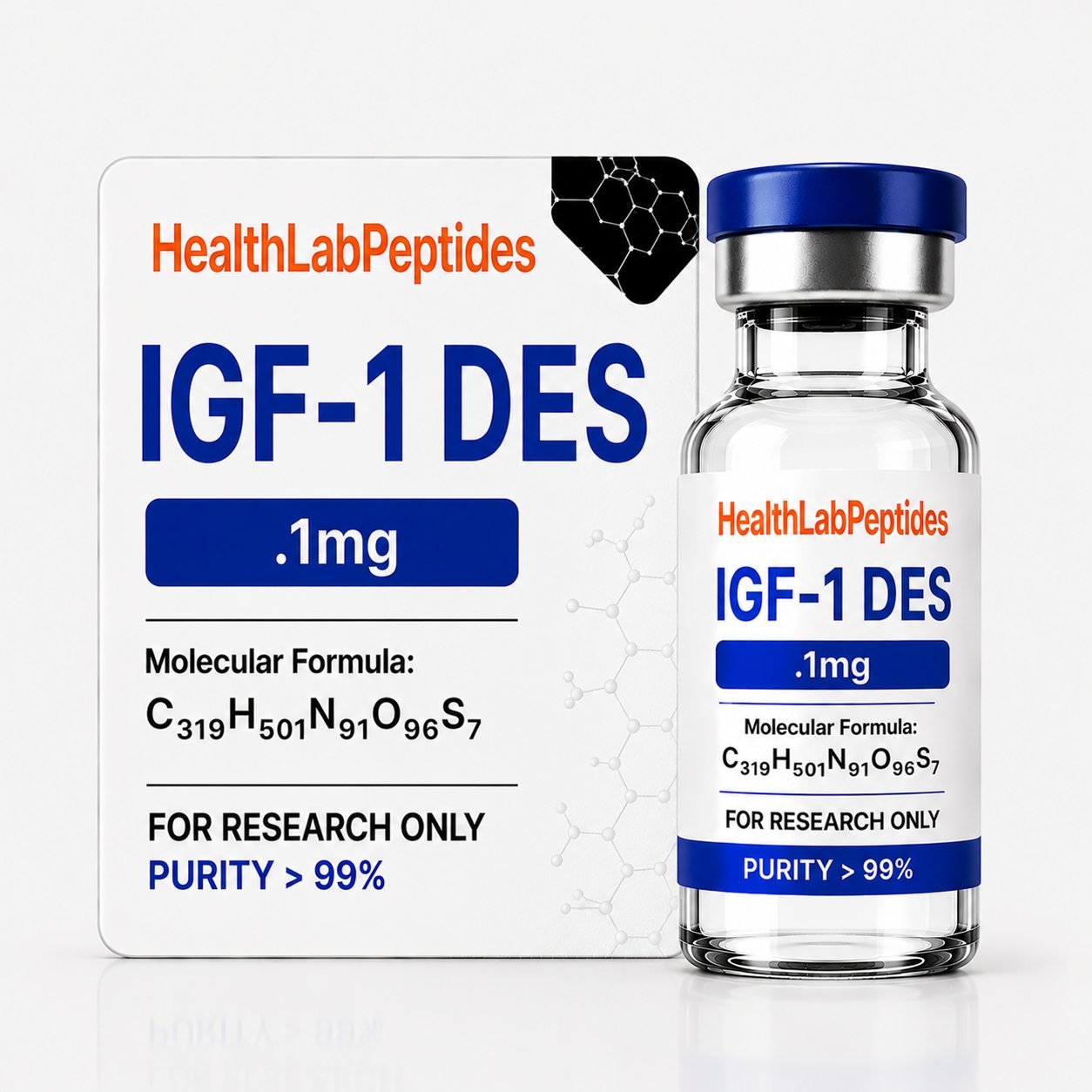
Research suggests that IGF-DES cell studies need controls for IGF1R, insulin-receptor expression, hybrid receptors, and the binding-protein composition of the assay matrix. The IGF-DES Receptor-Specificity Research product link identifies the RUO material while the article remains focused on controlled in-vitro research.
A precise laboratory question
The experiment should determine whether the observed response is mediated primarily through IGF1R or influenced by insulin-receptor signaling, receptor hybrids, or altered free-ligand availability. Natural use of peptide names, receptor pathways, mass-spectrometry terms, cell assays, and analytical endpoints supports useful SEO.
Experimental plan
Characterize receptor abundance, use proximal phosphorylation and downstream readouts, vary binding-protein context deliberately, and apply receptor-selective perturbations with validated specificity. The HealthLab Peptides RUO catalog provides internal research links, but related products should not be assumed equivalent.
Confounding factors
Serum lot, receptor reserve, hybrid receptors, cross-reactive antibodies, cell density, phosphatase activity, and exposure time can change the apparent pathway. Track sample history, material lot, cell passage, preparation timing, plate map, instrument settings, and analysis choices.
Controls and comparators
Include parental or receptor-low cells, vehicle, pathway references, receptor-expression measurements, viability, binding-protein controls, and independent cultures. If this related laboratory material is compared, apply the same acceptance criteria and reporting standard.
- Confirm material identity.
- Use independent preparations and biological replicates.
- Predefine endpoints and exclusion rules.
- Measure recovery, viability, and interference.
- Archive complete raw data and metadata.
Reporting standard
Report receptor and binding-protein context, medium and serum, timing, total and phospho signals, perturbation efficiency, viability, and uncertainty. Include individual values, effect sizes, confidence intervals, control results, and limitations.
Interpretation boundary
A downstream response cannot identify the responsible receptor by itself. Receptor-context and perturbation evidence are necessary for a specific assignment. Results cannot be assigned automatically to another HealthLab research product.
Replication
Repeat the key result from a fresh preparation and on a separate day. Confirm with an orthogonal measurement. When controls fail or methods disagree, investigate the cause and preserve uncertainty.
Compliance-first SEO
Search visibility should come from accurate laboratory information, not claims. These RUO discussions exclude administration, dosing, therapeutic use, disease outcomes, human use, veterinary use, and testimonials.
Research Use Only disclaimer: This article and the referenced materials are intended strictly for laboratory research and in-vitro use. They are not for human or veterinary use, consumption, injection, diagnosis, treatment, or any therapeutic application.


