

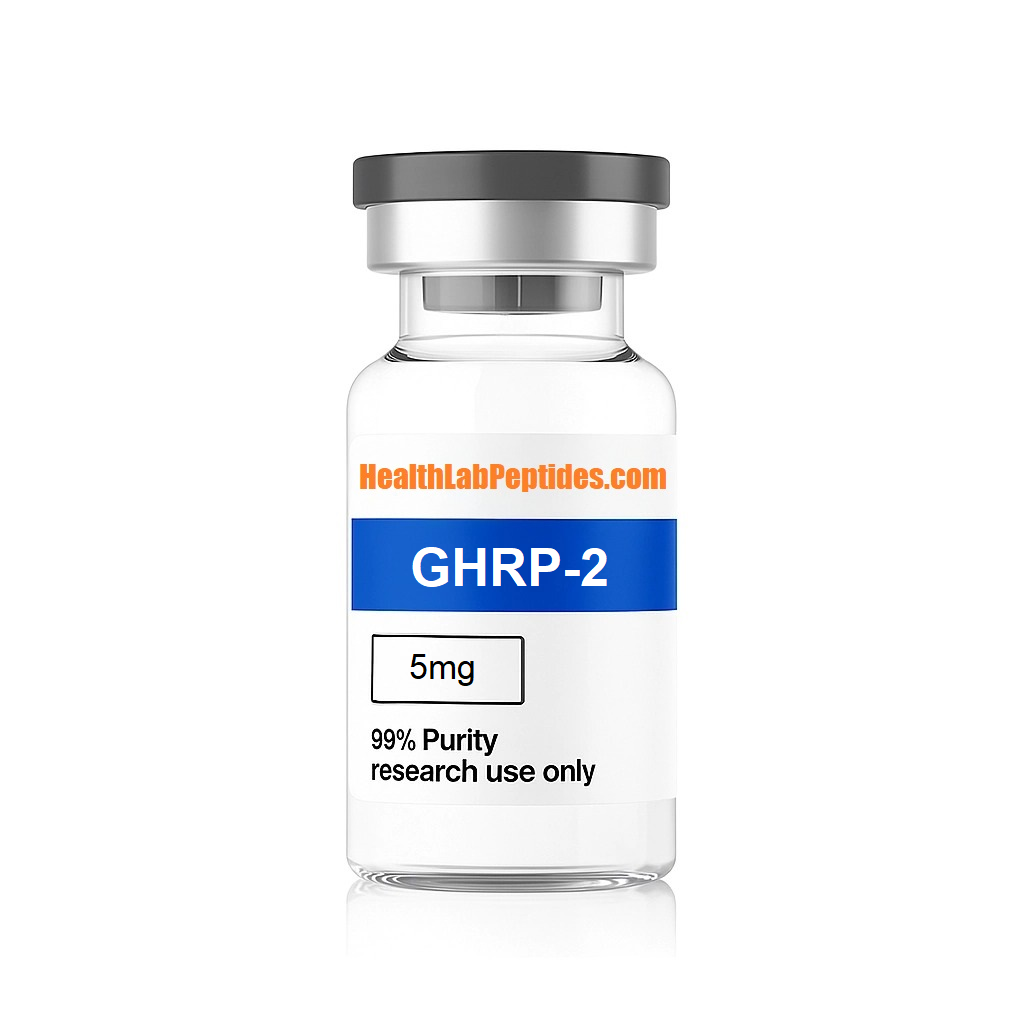
In the dynamic arena of biological and peptide research, scientists are continuously exploring compounds that modulate the body’s intricate endocrine systems. Among these, GHRP-2 5mg (Growth Hormone Releasing Peptide-2) has attracted significant attention for its documented effects on stimulating the pulsatile release of growth hormone (GH) from the pituitary gland in various experimental models. This article outlines the scientific understanding and research applications of GHRP-2, highlighting its role in endocrinology studies and beyond.
Important Notice: All products from [HealthlabPeptides], including GHRP-2 5mg, are strictly designated for Research Use Only (RUO). They are not intended for human consumption, therapeutic applications, or any form of medical use. [HealthlabPeptides] explicitly makes no health claims regarding its products. This content is for informational and educational research purposes only.
While other research peptides, such as ss-31 for mitochondrial studies or TB-500 peptide (also available via Repeat Peptides) for tissue remodeling, offer diverse investigative avenues, GHRP-2 5mg provides a specific focus on influencing the hypothalamic-pituitary-somatotropic axis through a distinct mechanism in controlled experimental settings.
What is [GHRP-2 5mg] Peptide? An Overview for Researchers
GHRP-2 5mg is a synthetic hexapeptide that belongs to the class of Growth Hormone Releasing Peptides. Its primary action, extensively studied in research, involves mimicking the action of ghrelin, the endogenous ligand for the growth hormone secretagogue receptor (GHSR). By binding to GHSRs in the pituitary and hypothalamus, GHRP-2 5mg stimulates the robust secretion of growth hormone.
This mechanism distinguishes GHRP-2 5mg from GHRH analogs like CJC-1295 peptide, which act on a different receptor (GHRHR). This difference allows researchers to investigate distinct pathways of GH modulation and often leads to synergistic effects when these types of compounds are studied in combination.
Mechanisms of Action: How [GHRP-2 5mg] Modulates GH in Research
The core scientific interest in GHRP-2 5mg lies in its direct interaction with the growth hormone secretagogue receptor. Key mechanisms of action explored in research studies include:
- GHSR Agonism: GHRP-2 5mg acts as a potent agonist at the GHSR, primarily located in the anterior pituitary. This binding triggers a signaling cascade that results in a significant release of GH.
- Modulation of GH Pulsatility: Studies demonstrate that GHRP-2 5mg induces a rapid, pulsatile release of GH, mimicking the body’s natural episodic secretion patterns but with enhanced amplitude.
- Interaction with GHRH: Research often investigates the synergistic effect observed when GHRP-2 5mg is co-administered with GHRH or its analogs. This suggests that the ghrelin and GHRH pathways complement each other in regulating GH release.
- Impact on IGF-1 Levels: The stimulated release of GH by GHRP-2 5mg in experimental models is typically followed by an increase in insulin-like growth factor-1 (IGF-1), primarily produced in the liver. IGF-1 mediates many of the growth-promoting and metabolic effects observed downstream of GH, making this interplay a key area of endocrinology research.
Through these precise modulations of the somatotropic axis, GHRP-2 5mg serves as a valuable tool for scientists dissecting the complex regulatory systems of growth hormone.
Key Areas of Research Utilizing [GHRP-2 5mg] Peptide
The ability of GHRP-2 5mg to influence GH secretion opens various avenues for scientific investigation in experimental models:
- Endocrinology Research: Primarily, GHRP-2 5mg is used to study the regulation of the hypothalamic-pituitary-somatotropic axis, exploring how GH release can be controlled and its physiological consequences.
- Metabolic Studies: Researchers are investigating the role of modulated GH/IGF-1 levels in metabolic processes. This includes examining potential impacts on nutrient partitioning, fat metabolism, and glucose homeostasis, possibly in conjunction with other metabolic peptides such as 5-amino-1mq 50mg or Lipo-C Lipotropic with Vitamin B 12.
- Tissue Modeling and Development Research: In in vitro and in vivo models, modulated GH/IGF-1 levels are being studied for their potential influence on cellular proliferation, differentiation, and development mechanisms in various tissues. This area often intersects with research on peptides like TB-500 peptide and BPC-157.
- Age-Related Cellular Changes: Given that natural GH levels typically decline with age, GHRP-2 5mg is utilized in models to understand the effects of enhancing GH pulsatility in the context of cellular aging and related processes.
- Synergistic Peptide Research: Studying the effects of GHRP-2 5mg in combination with GHRH analogs (e.g., CJC-1295 peptide) or other growth-promoting peptides like IGF-DES, to delineate subtle differences and synergistic potential in their biological actions.
Disclaimer for Researchers: The outcomes observed in preclinical and experimental studies are purely for scientific understanding and do not imply direct therapeutic applications or guaranteed results in humans. Further rigorous scientific investigation is consistently required.
Regulatory Status and Research Considerations for [GHRP-2 5mg] Peptide
It is critical for all researchers and interested parties to understand the regulatory context surrounding GHRP-2 5mg:
- Research Use Only (RUO): GHRP-2 5mg is exclusively designated for Research Use Only. It is strictly prohibited for human consumption, therapeutic purposes, or any medical applications.
- No FDA Approval: GHRP-2 5mg has NOT been approved by the U.S. Food and Drug Administration (FDA) for any human therapeutic use.
- WADA Prohibited Status: Researchers involved in studies related to athletic performance should be aware that peptides modulating growth hormone release are consistently listed on the World Anti-Doping Agency (WADA) Prohibited List. Always consult the most current WADA guidelines to ensure compliance in relevant research contexts.
- Purity and Quality for Research: When acquiring GHRP-2 5mg for scientific investigation, it is paramount to source from reputable suppliers who provide verifiable Certificates of Analysis (CoA) to ensure the purity, concentration, and absence of contaminants. Products not regulated for human consumption can vary significantly in quality.
Handling and Storage Protocols for [GHRP-2 5mg] in Research Settings
Proper handling and storage of GHRP-2 5mg are essential for maintaining compound stability and experimental integrity. GHRP-2 5mg is typically supplied in a lyophilized (freeze-dried) powder format.
- Reconstitution: Requires careful reconstitution with an appropriate solvent, such as bacteriostatic water, strictly following specific laboratory protocols and safety guidelines.
- Storage: Once reconstituted, GHRP-2 5mg solutions should be stored under refrigerated conditions (typically 2-8°C / 36-46°F) and utilized within a defined timeframe, as per the supplier’s recommendations, to prevent degradation. The lyophilized powder form should be stored appropriately (e.g., in a freezer) before reconstitution.
- Administration in Research Models: Any administration of GHRP-2 5mg in in vitro or in vivo research models must adhere to stringent ethical guidelines, institutional review board (IRB) approvals, and relevant safety protocols.
Final Reminder: Any handling or administration of GHRP-2 5mg must occur solely within a controlled research environment and under the direct supervision of qualified personnel experienced in peptide handling and research methodologies.
[GHRP-2 5mg] in the Context of Broader Peptide Research
GHRP-2 5mg plays a vital role within the extensive and dynamic field of peptide research. Its specific focus on modulating growth hormone secretion through GHSR agonism distinguishes it and complements studies involving peptides with different primary mechanisms of action.
For example, while GHRP-2 5mg is investigated for its influence on the somatotropic axis, ss-31 is researched for its effects on mitochondrial health, and BPC-157 for its impact on tissue repair and cytoprotective properties. The collective body of scientific investigation across these diverse peptide compounds, including newer research like Reta 5mg, represents an exciting frontier in elucidating complex biological processes at a molecular level. For a deeper dive into other areas of peptide research, explore articles such as “Investigating GHK-Cu Peptide: A Focus on Skin Biology and Tissue Remodeling in Research Models” (https://healthlabpeptides.com/investigating-ghk-cu-peptide-a-focus-on-skin-biology-and-tissue-remodeling-in-research-models/).
The Future of [GHRP-2 5mg] in Scientific Understanding
The ongoing investigation into GHRP-2 5mg and its precise influence on endogenous growth hormone secretion represents a significant area within modern biological and cellular research. Its role in manipulating the somatotropic axis via ghrelin receptors makes it a compelling subject for advancing our scientific knowledge related to growth, metabolism, and endocrine regulation.
As research progresses, particularly through robust preclinical studies and further scientific investigation, we anticipate a deeper comprehension of GHRP-2 5mg‘s full scope in various experimental models. Until then, its primary value lies in its contribution to fundamental peptide research, assisting scientists in unraveling the complexities of endocrine regulation.
Important Considerations for Responsible Research with [GHRP-2 5mg]
GHRP-2 5mg offers a fascinating opportunity for scientific exploration into growth hormone modulation. However, upholding stringent ethical and responsible research practices is paramount:
- Strictly Research Use Only (RUO): Reiterate that GHRP-2 5mg and similar compounds are exclusively for Research Use Only and are never to be used for human consumption or therapeutic application.
- No Health Claims Made: [HealthlabPeptides] makes no claims regarding any health benefits or therapeutic efficacy of GHRP-2 5mg or any of its other RUO products.
- Ethical Research Compliance: Adherence to all institutional, national, and international ethical guidelines and regulations pertinent to research involving experimental compounds.
- Reliable Sourcing: Always ensure research materials are acquired from suppliers who provide transparent documentation of product purity, composition, and quality.
Ultimately, scientific advancement relies on diligent, ethical, and well-informed research. We encourage all researchers to conduct their studies with the utmost responsibility and to continuously consult current scientific literature and regulatory guidelines.
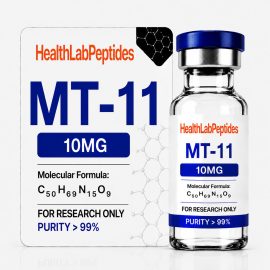 MT- 2 10mg (Melanotide)
 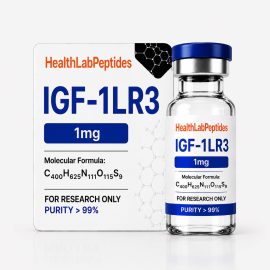 IGF-1 LR3
 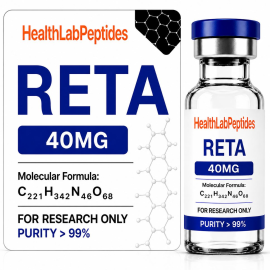 Reta 40mg