

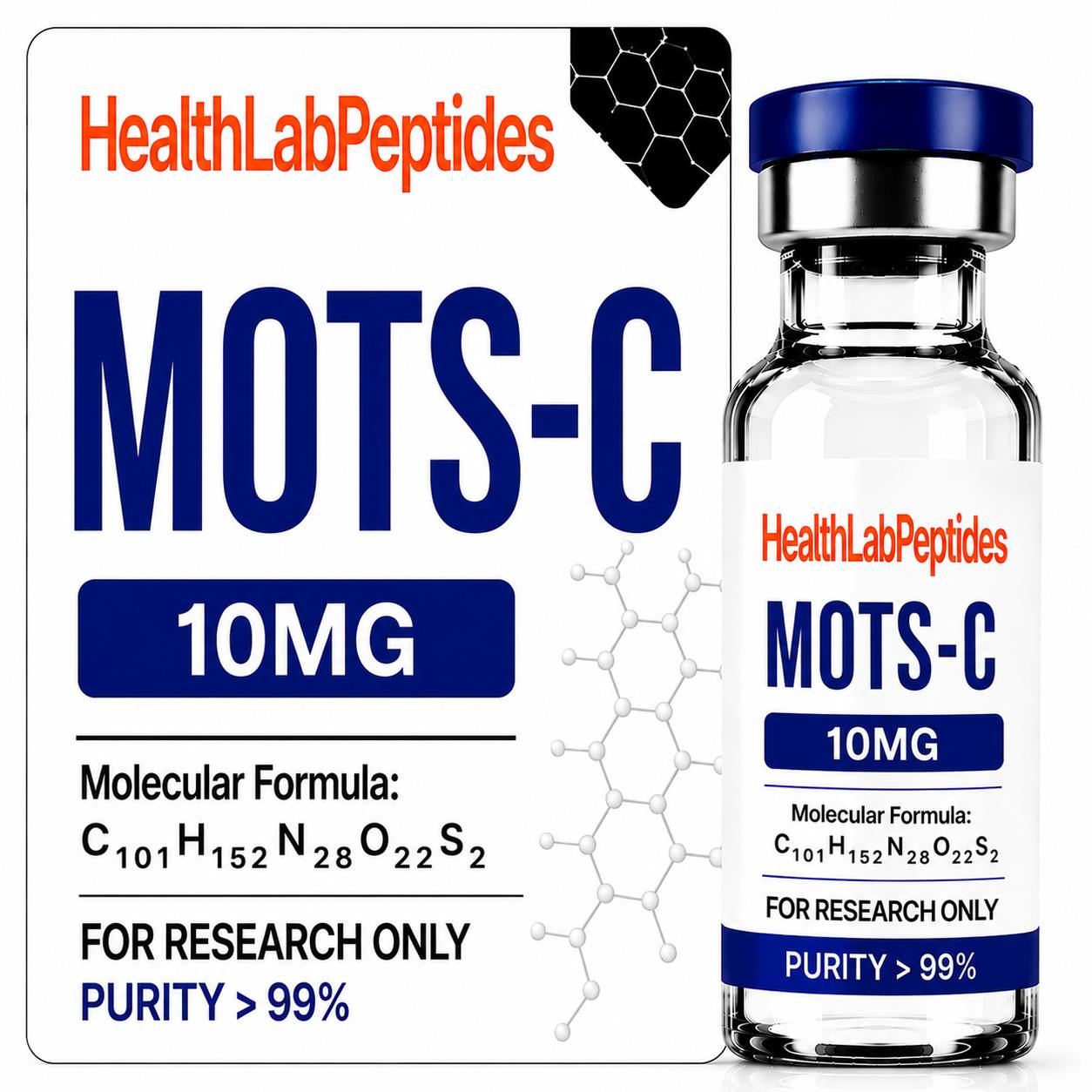
Research Use Only (RUO): This article discusses MOTS-c as a laboratory research subject. It does not provide product-use directions or claims about human or veterinary outcomes.
Research context
MOTS-c appears in research on mitochondrial-derived peptide studies and cellular metabolic signaling. The scientific question depends on the exact material, model, and endpoint under study. A short product name or category label is not enough to identify a sample or determine whether two papers examined the same molecular entity. Verify sequence, modifications, and source documentation before comparing results.
Experimental models and measurement
Laboratory studies can use biochemical, cell-based, or other defined experimental systems. Each design answers a limited question. The model, assay platform, reference controls, exposure duration, and signal-detection range can all affect the result. Researchers should state what was directly measured and avoid treating one readout as evidence for every downstream process.
Comparisons are most useful when the material is characterized, methods are fully reported, and conditions are aligned. A result from one model should not be generalized to another or represented as evidence that a research-use product produces a particular outcome. Review the related work on molecular or assay context and model-specific research findings.
How to read the evidence
For each paper, check the exact compound tested, the experimental system, the endpoint, the comparator, replication, and stated limitations. Separate observation from interpretation. When results differ, consider whether the studies used different materials, cell types, assay conditions, or definitions rather than assuming that one result invalidates another.
Published mechanistic and preclinical findings do not establish clinical efficacy, safety, or suitability for personal use. The distinction between laboratory data and regulated clinical evidence is described in our overview of research evidence and clinical therapy. This article is educational only and is not medical advice.
Research limits
Evidence should remain tied to the study that produced it. Additional work may be needed to validate sample identity, reproduce findings, or test a narrowly defined mechanism. Responsible summaries avoid extrapolating beyond the tested model and identify unanswered questions plainly.
Research Use Only — In Vitro Research. Not for human or veterinary use, administration, or consumption. Not intended to diagnose, treat, cure, mitigate, or prevent any disease. These materials have not been evaluated by the FDA for such uses. HealthLab Peptides makes no medical, therapeutic, cosmetic, or health claims.


