

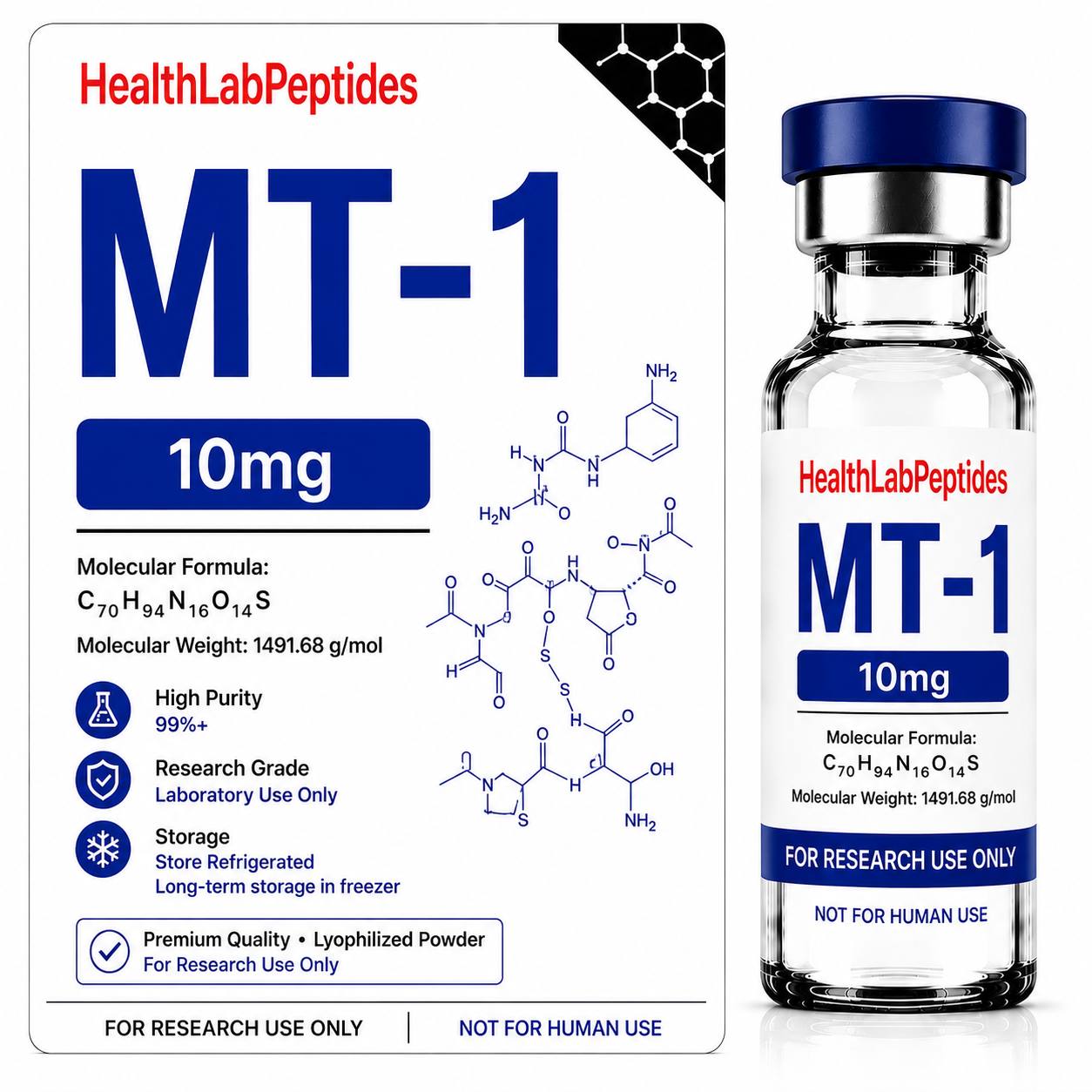
Research suggests that MT-1 and MT-2 comparisons need a receptor-subtype matrix that controls expression, signaling amplification, and acquisition timing. This article centers on MT-1 Versus MT-2 Research as a research-use-only material and does not extend laboratory evidence to human use.
Primary research question
The experiment must determine whether the two materials differ across MC1R, MC3R, MC4R, and MC5R in potency, efficacy, kinetics, or adaptation. Exact peptide names, receptor terminology, analytical methods, and in-vitro model descriptions provide useful SEO context when used naturally and accurately.
Study design
Run both materials side by side across matched receptor systems with quantified expression, a shared reference, common molar ranges, and identical analysis rules. The HealthLab Peptides research catalog can support matched material selection, but every comparator needs its own identity and recovery controls.
Confounding variables
Subtype-specific constitutive activity, host-cell coupling, receptor reserve, tag effects, and different baseline windows can change apparent selectivity. Track plate layout, sample history, cell passage, consumable lot, operator timing, instrument settings, and software version.
Required controls
Include parental cells, vehicle, receptor references, expression checks, viability, time-matched controls, and a second readout for key differences. Comparison with this related RUO product is meaningful only under harmonized conditions.
- Confirm identity before comparison.
- Use independent preparations and experimental days.
- Measure recovery and direct assay interference.
- Predefine fitting and exclusion rules.
- Archive raw traces, spectra, and metadata.
Transparent reporting
Report sequence identity, constructs, expression, full curves, maximum response, kinetic metrics, normalization, curve constraints, and uncertainty. Include all controls, replicate-level values, effect sizes, and confidence intervals.
Interpretation limits
Subtype matrices are comparative maps within a platform. They do not justify conclusions beyond the measured receptor, pathway, and cellular context. Results for another HealthLab laboratory material remain independent until tested directly.
Replication and method agreement
Repeat decisive findings using a fresh preparation and an orthogonal method. When measurements disagree, identify which physical or biological property each method detects. Do not average incompatible endpoints into a false consensus.
Compliance and search quality
Strong search content answers a defined laboratory question, links readers to relevant internal resources, and uses product keywords without medical promises. It excludes dosing, administration, testimonials, treatment language, and human outcome claims.
Research Use Only disclaimer: This article and the referenced materials are intended strictly for laboratory research and in-vitro use. They are not for human or veterinary use, consumption, injection, diagnosis, treatment, or any therapeutic application.


