

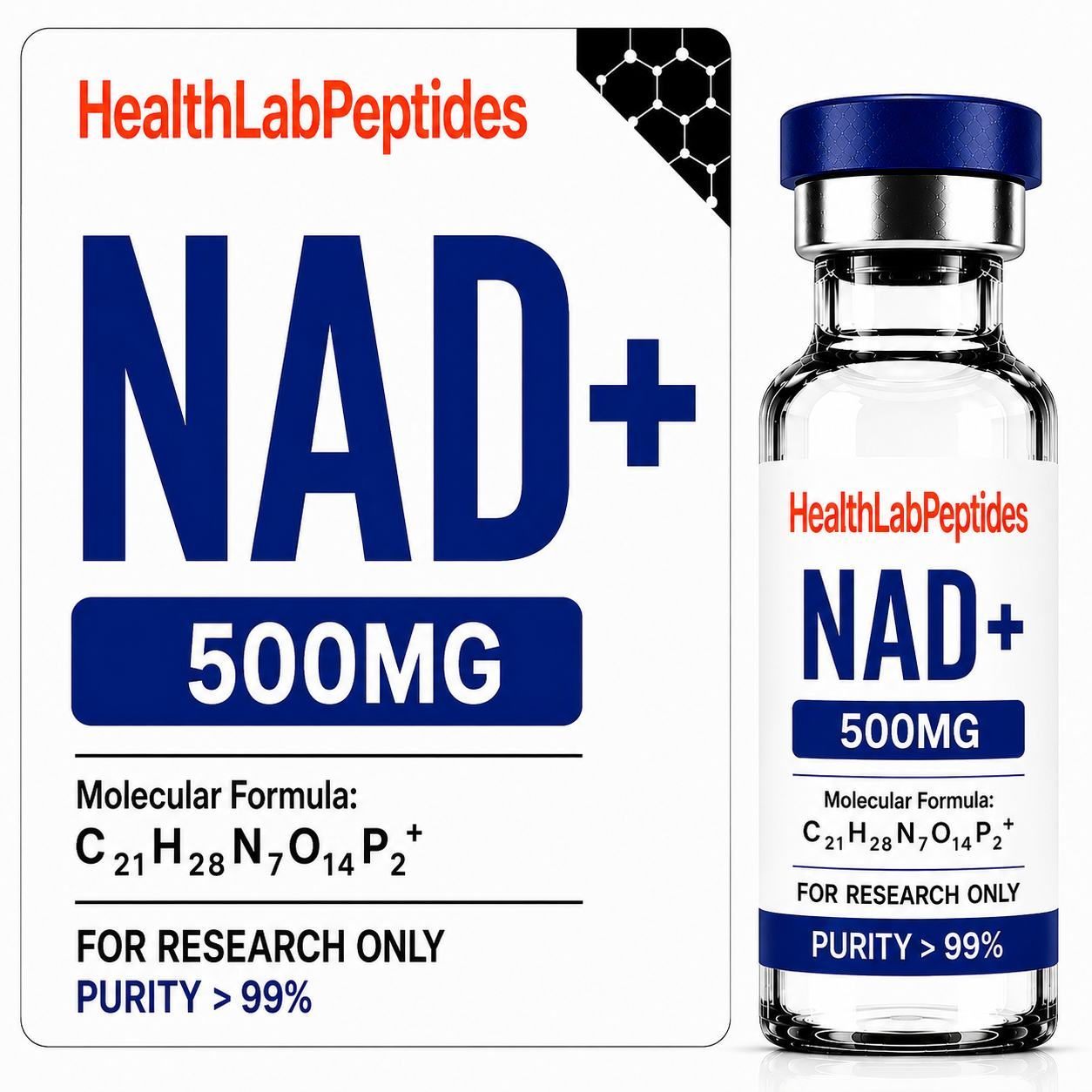
Research suggests that NAD+ studies can produce very different-looking results depending on whether a laboratory uses an enzymatic cycling assay or a mass-spectrometry method. Researchers evaluating NAD+ Measurement in Cell Research should begin with a clearly bounded question and an identity-controlled material.
Define the measurement before selecting the assay
The key question is what the reported number actually represents: total oxidized cofactor in a processed extract, a ratio derived from paired assays, or a chromatographically resolved analyte measured against an internal standard. This distinction matters because an assay can be technically precise while still answering the wrong question. A written objective, primary endpoint, and decision rule should be fixed before data collection.
Build an identity-first workflow
Cycling assays can provide sensitive, scalable measurements across many samples, while LC-MS can improve molecular specificity and permit simultaneous observation of related metabolites. The approaches are complementary rather than interchangeable. Researchers can review the broader HealthLab research-material catalog when planning matched comparators, but every material should retain its own lot record and analytical documentation.
Common sources of misleading variation
Extraction speed, temperature, pH, freeze-thaw history, matrix suppression, and incomplete separation of oxidized and reduced species can shift results. Normalizing only to culture volume may also conceal changes in cell number or protein content. Plate position, operator timing, instrument drift, and unplanned exclusions should also be tracked. These routine variables can be large enough to obscure a genuine experimental effect or create an apparent one.
Controls that strengthen interpretation
Plan matrix blanks, extraction controls, pooled quality-control samples, and technical replicates before the experiment begins. For LC-MS, an appropriate internal standard and monitored retention window are central; for cycling assays, standard-curve performance and interference checks deserve equal attention. A related research material, such as this catalog comparator, may be useful only when the comparison is scientifically justified and the assay is validated for both materials.
- Predefine inclusion, exclusion, and repeat criteria.
- Use independently prepared replicates rather than repeated reads from one preparation alone.
- Randomize plate or run order when practical.
- Record lot numbers, instrument settings, software version, and analysis parameters.
- Preserve raw data so the result can be audited.
What to report
Record recovery, linearity, lower and upper quantification boundaries, coefficient of variation, and the normalization basis. When ratios are reported, retain the underlying numerator and denominator rather than presenting the ratio alone. Report effect size and uncertainty alongside significance testing. Avoid treating a single normalized bar graph as a complete record of assay performance.
How to interpret a positive or negative result
Agreement between orthogonal methods strengthens confidence. Disagreement is informative: it may reveal matrix interference, analyte instability, or a difference in what the two methods are designed to measure. A second material—such as this related RUO product—should not be assumed equivalent because of a shared pathway label. Sequence, formulation, purity profile, and assay context remain material-specific.
A reproducibility checklist for the next experiment
Before repeating or expanding the study, confirm the material identity, document the sample history, verify the response range of the instrument, and examine whether the control behaved as expected. Replication should begin from a new preparation when feasible. If the result depends on only one readout, add an orthogonal method that relies on a different physical or biological principle.
Good in-vitro research narrows uncertainty rather than hiding it. Clear boundaries around the model, transparent reporting, and disciplined controls make the data more useful to other laboratories and reduce the risk of overextending a finding beyond the experiment.
Research Use Only disclaimer: This article and the referenced materials are intended strictly for laboratory research and in-vitro use. They are not for human or veterinary use, consumption, injection, diagnosis, treatment, or any therapeutic application.


