

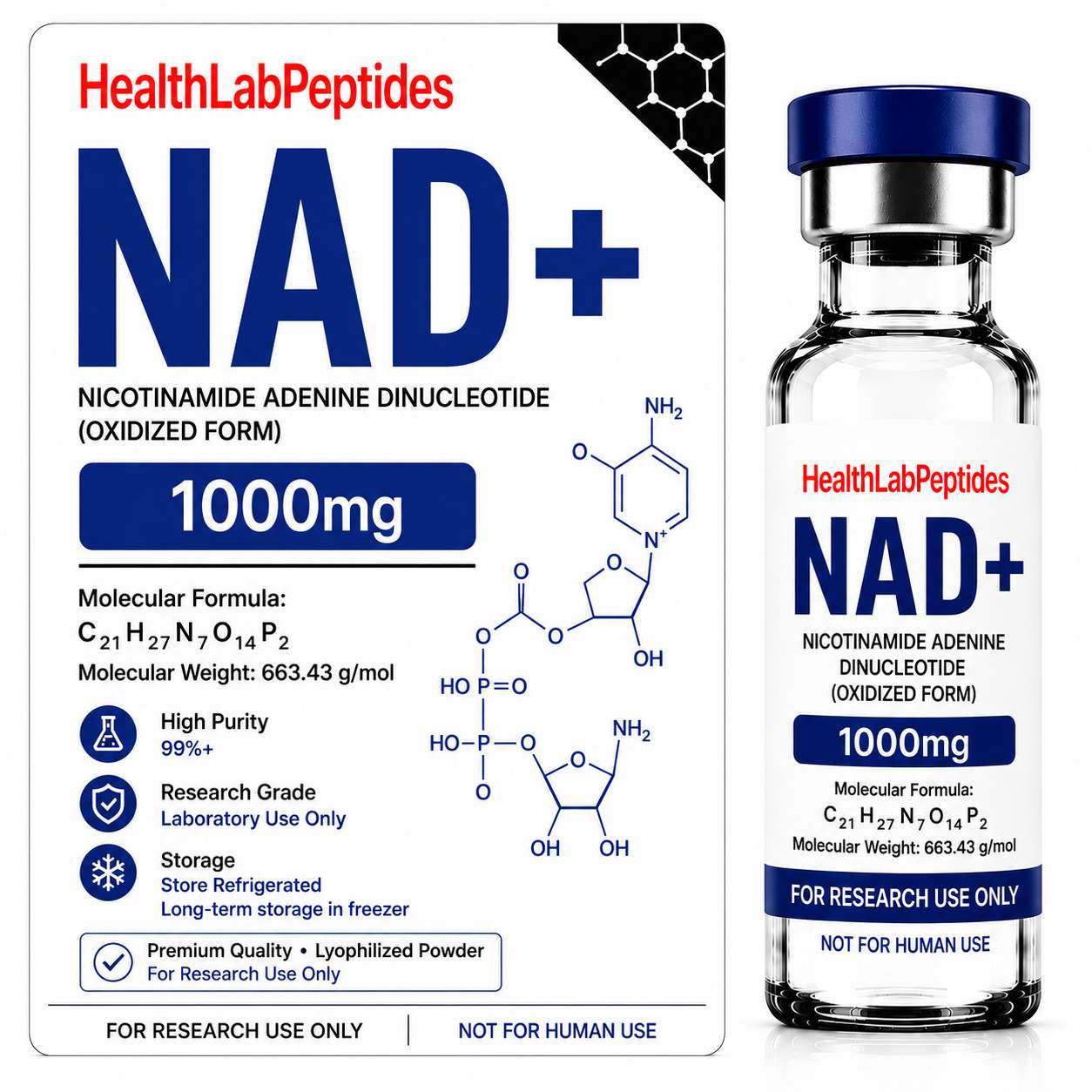
Research suggests that NAD+ measurements can lead to different conclusions depending on whether results are normalized to cell count, protein, volume, DNA, or a cellular compartment. Researchers evaluating NAD+ Normalization in Cell Research should define the comparison and evidence boundary before collecting data.
Research objective
The key question is which normalization basis best represents the biological question without hiding changes in cell number, size, extraction yield, or compartment composition. Precise use of compound names, receptor terminology, analytical methods, and in-vitro model language creates useful, SEO-rich scientific content without artificial keyword repetition.
Experimental design
Measure the numerator and normalization variable independently, preserve raw values, and test whether the chosen denominator changes across conditions. Use compartment markers when fractionation is involved. Researchers can review related products in the HealthLab Peptides research-use-only catalog, while independently qualifying every material.
Major confounders
Cell loss, altered protein content, variable extraction volume, incomplete fractionation, matrix effects, and ratio compression can create misleading normalized values. Document material lot, sample history, cell passage, plate map, operator timing, consumables, instrument settings, and software version.
Controls and comparators
Include process blanks, pooled controls, viability or cell count, protein or DNA measurement where justified, recovery checks, and fraction-purity markers. A comparison involving this related RUO material should use the same identity, recovery, and assay-performance standards.
- Verify identity before functional work.
- Use independent preparations and separate experimental days.
- Predefine endpoints, exclusions, and statistical models.
- Test viability and direct assay interference.
- Archive raw data and all deviations.
Reporting requirements
Report raw NAD+, the denominator, normalized values, extraction recovery, cell condition, compartment evidence, and sensitivity to alternative normalization approaches. Present replicate-level data, effect sizes, uncertainty, and all control performance.
Interpretation limits
A normalized change can be driven by the numerator, denominator, or both. Showing each component prevents a ratio from concealing the actual experimental behavior. Results for another research product cannot be assumed without direct testing.
Reproducibility and orthogonal evidence
Repeat decisive findings from a fresh preparation and with a second measurement principle. Verify that all controls remain inside their planned windows. Preserve an inconclusive classification when system suitability fails.
Compliance-first SEO
High-quality search content answers the laboratory question readers actually have. It uses research peptide names, receptor pathways, cell-assay terminology, and analytical keywords accurately while excluding human-use, dosing, administration, treatment, testimonial, and outcome claims.
Strong RUO communication makes the experiment auditable and the article useful: it explains what was measured, how uncertainty was controlled, and where the evidence stops.
Research Use Only disclaimer: This article and the referenced materials are intended strictly for laboratory research and in-vitro use. They are not for human or veterinary use, consumption, injection, diagnosis, treatment, or any therapeutic application.


