

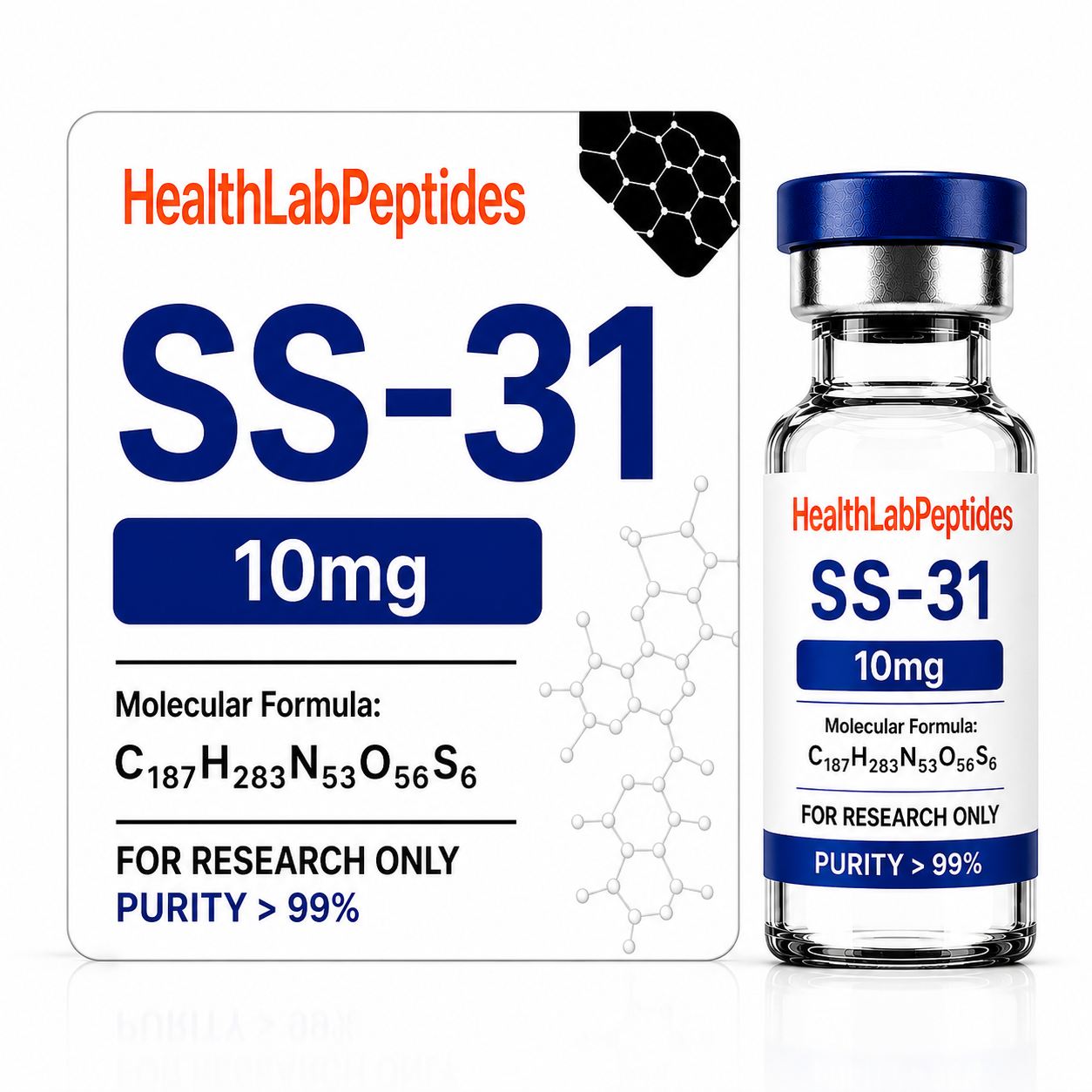
Research suggests that aggregation is a method-dependent observation, and no single technique fully describes every soluble and particulate species in a peptide sample. Researchers working with Peptide Aggregation Research should define the measurement, material attributes, and acceptance rules before data collection.
Why this question matters in peptide research
The central question is whether the study needs size-based separation, particle-size sensitivity, total recovery, or evidence of reversible self-association. Search terms such as research peptides, peptide analysis, laboratory peptide testing, and in-vitro peptide research are useful only when they lead to precise experimental definitions rather than broad claims.
Recommended experimental framework
Use size-exclusion chromatography for resolved soluble species and dynamic light scattering for rapid sensitivity to larger particles, then connect the findings with concentration, buffer, and time. Researchers can review the HealthLab Peptides research-material catalog for related RUO products, but every material requires its own lot record and method suitability assessment.
Variables that commonly distort results
DLS can be dominated by a small number of large particles, while SEC may lose material on the column or dissociate weak assemblies. Dust, bubbles, filtration, and sample concentration can change the result. Document operator, date, instrument, software version, consumable lot, plate or vial position, and every sample-handling interval.
Controls and comparators
Include filtered buffer blanks, concentration series, replicate preparations, instrument performance standards, recovery calculations, and a time-zero condition. Confirm unexpected findings with an orthogonal method. A related material such as this HealthLab RUO product may serve as a comparator only when scientifically justified and evaluated under equivalent conditions.
- Confirm identity and lot documentation before the experiment.
- Use independent preparations, not repeated reads alone.
- Predefine inclusion, exclusion, and repeat rules.
- Randomize run order or position when practical.
- Preserve raw data and complete method metadata.
What a complete report should include
Report sample concentration, buffer composition, temperature, equilibration time, filtration history, particle-size distribution or chromatographic recovery, and method limitations. Individual replicate values, effect sizes, confidence intervals, and control performance should accompany summary statistics.
Interpreting positive, negative, and mixed findings
Agreement between SEC and DLS strengthens an aggregation interpretation. Disagreement may reveal particles outside the SEC recovery window, reversible interactions disrupted by chromatography, or an artifact that deserves targeted follow-up. Results for another research-use-only material cannot be inferred from a shared category label or pathway association.
Reproducibility checklist
Before expanding the conclusion, repeat the core observation using a fresh preparation and a separate experimental day. Verify that controls remained within their planned ranges. Add an orthogonal method based on a different physical or biological principle, and classify a run as inconclusive when system suitability fails.
Research interpretation and SEO clarity
Clear scientific language also improves search usefulness. Product names, analytical methods, receptor systems, cell models, and measurement terms should appear naturally and accurately. Keyword repetition cannot replace specific evidence, and the article should never imply a human-use purpose from an in-vitro result.
Well-designed RUO peptide research narrows uncertainty. It states what was tested, what changed, what remained stable, and which limitation the next experiment should address.
Research Use Only disclaimer: This article and the referenced materials are intended strictly for laboratory research and in-vitro use. They are not for human or veterinary use, consumption, injection, diagnosis, treatment, or any therapeutic application.


