

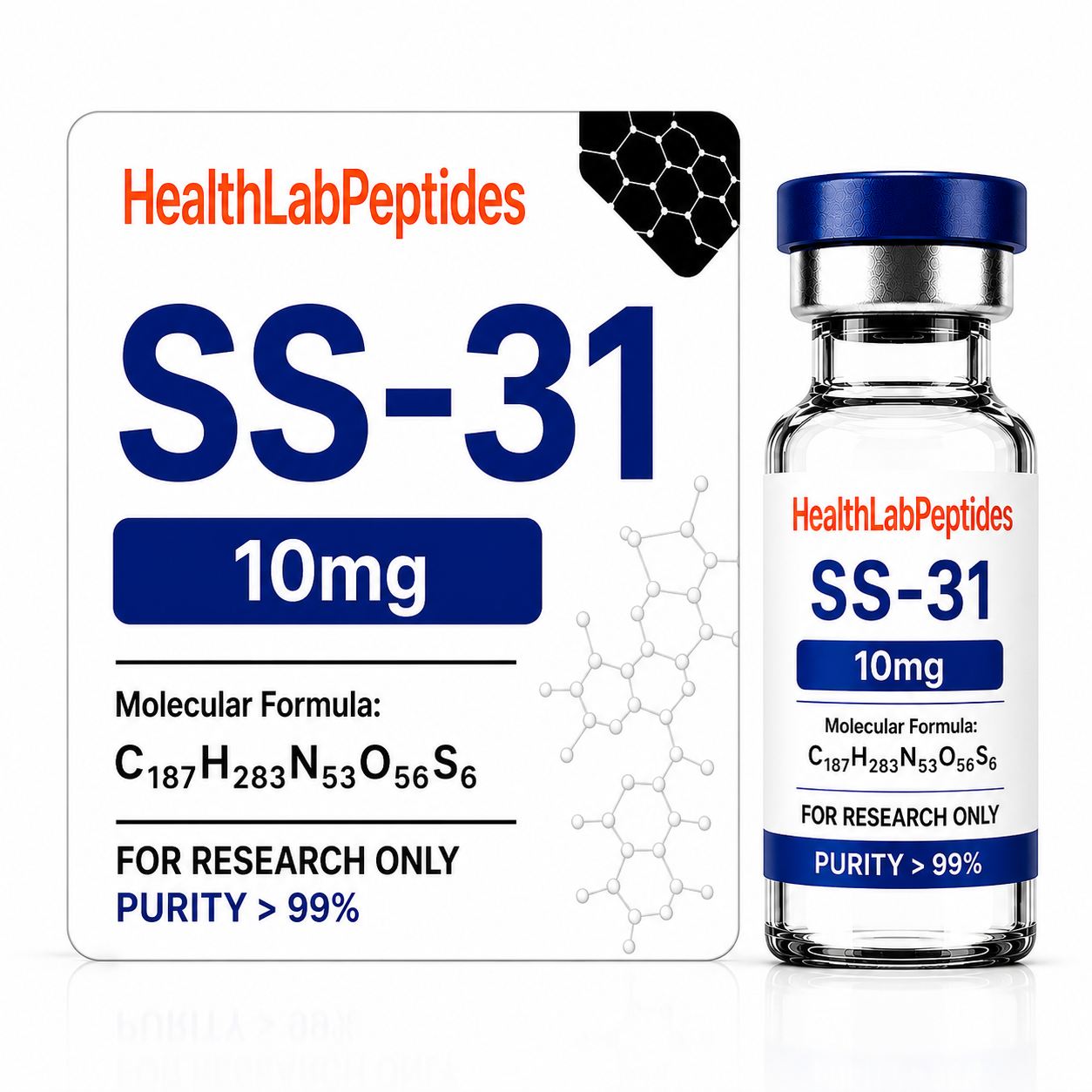
Research suggests that cardiolipin-oxidation research should separate total lipid abundance, oxidized molecular species, membrane organization, and downstream cellular response. Researchers evaluating SS-31 Research Peptide should establish material identity, recovery, and model performance before interpreting mitochondrial data.
The laboratory question
The central question is whether a change reflects altered cardiolipin quantity, oxidation state, extraction recovery, ionization, membrane remodeling, or general cell stress. Exact use of MOTS-c, SS-31, mitochondrial peptide research, cellular bioenergetics, LC-MS, imaging, and in-vitro assay terminology makes the article searchable without making unsupported claims.
Experimental framework
Combine targeted lipid LC-MS with oxidation-sensitive but chemically distinct measurements, internal standards, recovery controls, and membrane or respiration readouts. Define oxidized species before data review. Related RUO materials can be reviewed in the HealthLab Peptides research catalog, but each compound and lot requires independent qualification.
Confounders
Lipid autoxidation during extraction, oxygen exposure, metal contamination, freeze-thaw cycles, ion suppression, acyl-chain diversity, and source fragmentation can create false changes. Record material lot, sample history, cell passage, plate map, instrument settings, consumable lots, software, and analyst decisions.
Controls and internal links
Include extraction blanks, antioxidants when method-appropriate, time-zero controls, isotope or class standards, pooled quality controls, viability, and independent cultures. A related comparator such as MOTS-c 40 mg Research Peptide must be evaluated under matched conditions.
- Verify identity and lot documentation.
- Use independent preparations and biological replicates.
- Predefine normalization, exclusions, and repeat rules.
- Measure viability, recovery, and assay interference.
- Preserve raw data, metadata, and failed controls.
For this laboratory question, the SS-31 Research Peptide product reference belongs directly in the experimental context: confirm lot identity, matrix recovery, and the exact in-vitro endpoint before comparing results.
Reporting standard
Report extraction timing, solvents, oxygen and temperature control, internal standards, species assignments, recovery, chromatographic separation, and mitochondrial endpoints. Show individual values and uncertainty, not a representative image or summary bar alone.
Interpretation boundaries
A fluorescence shift is not a molecular-species identification. Concordant targeted lipid and functional evidence supports a stronger, model-bounded interpretation. Findings cannot be transferred automatically to Glutathione Research Material.
Replication
Repeat decisive findings from a fresh preparation and on another day. Add an orthogonal method that measures a different physical or biological property. When controls fail, classify the run as inconclusive.
Compliance-first research communication
Strong SEO follows scientific specificity. Product names, mitochondrial methods, analytical platforms, and model limitations should appear naturally. This RUO discussion excludes administration, dosing, treatment, disease outcomes, human use, veterinary use, and testimonials.
Research Use Only disclaimer: This article and the referenced materials are intended strictly for laboratory research and in-vitro use. They are not for human or veterinary use, consumption, injection, diagnosis, treatment, or any therapeutic application.



 Selank Research Material — 5mg