

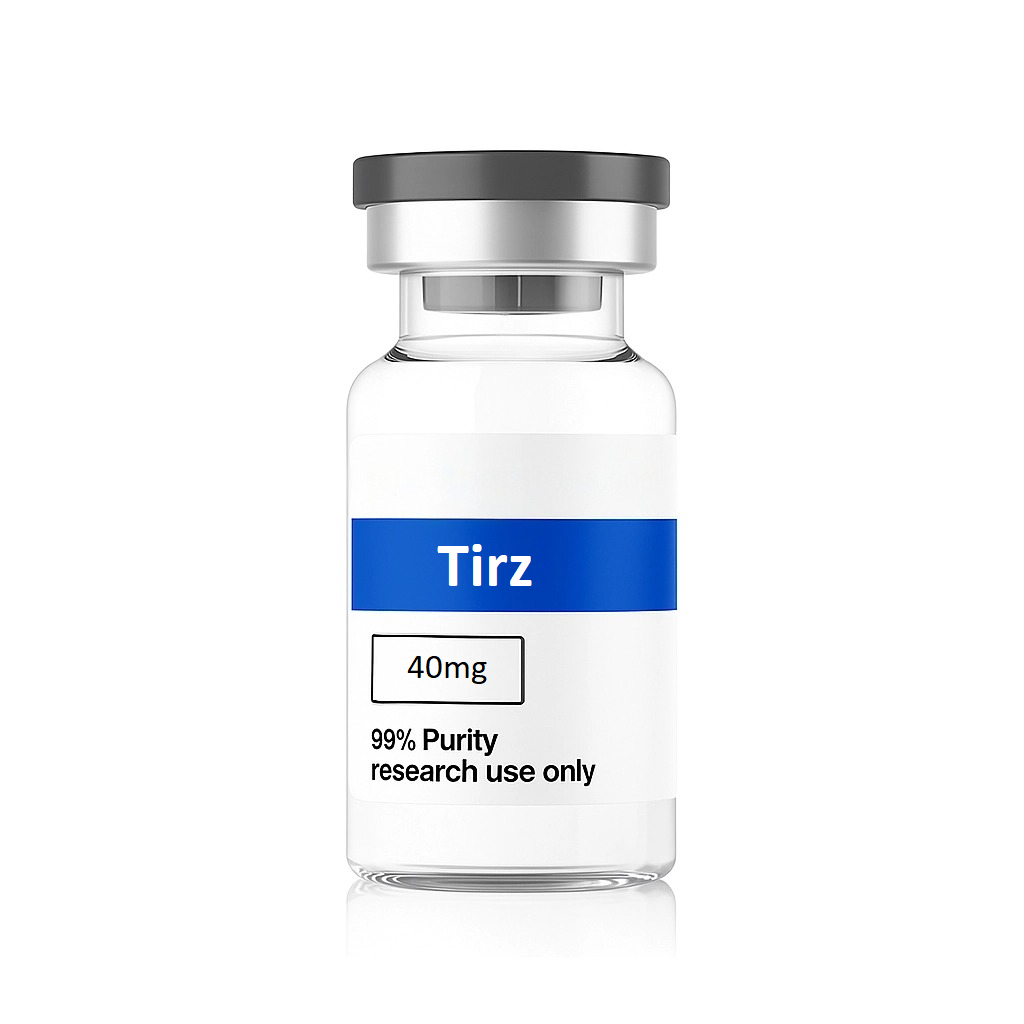
Research Use Only (RUO): This article reviews receptor and assay research involving tirzepatide. It does not describe a product benefit, treatment, or use in people or animals.
Why dual-receptor studies matter
Tirzepatide is studied as a peptide ligand associated with both the glucose-dependent insulinotropic polypeptide receptor (GIPR) and the glucagon-like peptide-1 receptor (GLP-1R). A dual-receptor profile raises experimental questions about binding, receptor activation, signaling bias, and how responses differ across assay systems. These questions belong to molecular and laboratory research; a receptor result alone does not establish a clinical outcome.
Separate binding from signaling
Binding assays estimate interaction under defined experimental conditions. Functional assays measure a selected downstream response, such as a second-messenger readout. Results can vary with receptor expression, cell background, ligand concentration, incubation time, and the assay’s detection range. Researchers should therefore avoid treating one potency value as a universal property or comparing values obtained with different methods as if they were interchangeable.
G-protein and beta-arrestin pathways may produce different readouts in the same receptor system. Time-course and concentration-response designs can help characterize those differences, while appropriate controls help distinguish receptor-mediated effects from assay artifacts. Our related article explains why cAMP and beta-arrestin assays can diverge.
Interpreting evidence across models
Cellular assays, animal studies, and clinical trials address different questions. Findings in one model cannot by themselves establish an effect in another, and clinical evidence about an approved medicine does not establish the identity, quality, safety, or performance of a separate research-use material. The specific molecule, formulation, population, endpoint, and study design all matter.
For each source, identify the exact receptor system, species or cell line, assay endpoint, comparator, and replicate structure. Check whether authors report direct measurements or interpretive conclusions. A careful summary describes what the study observed and its limits rather than promising a result or implying personal use.
Questions for future research
Further laboratory work can examine receptor-specific signaling, pathway kinetics, assay reproducibility, and how experimental conditions influence comparisons. The related retatrutide receptor-assay review illustrates why receptor profiles should be described molecule by molecule. For the distinction between research findings and therapeutic evidence, see laboratory research versus clinical therapy.
Research Use Only — In Vitro Research. Not for human or veterinary use, administration, or consumption. Not intended to diagnose, treat, cure, mitigate, or prevent any disease. These materials have not been evaluated by the FDA for such uses. HealthLab Peptides makes no medical, therapeutic, cosmetic, or health claims.


