

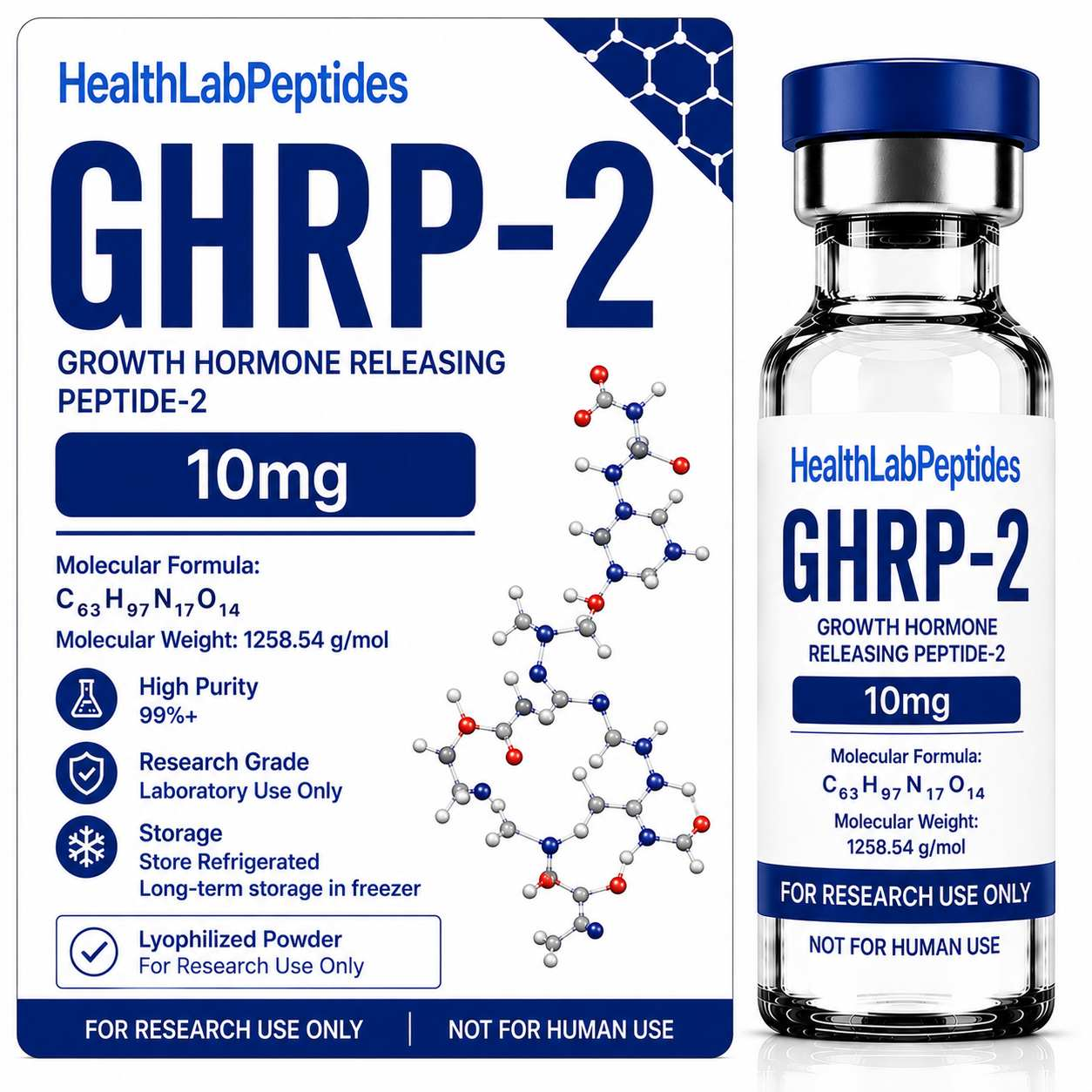
Research suggests that counter-screens are most valuable when they reproduce the primary assay’s detection chemistry without its intended target biology. For U.S. laboratory teams, the practical question is not whether an instrument produces a number, but whether that number survives controls for identity, matrix, normalization, and analytical interference. Researchers reviewing GHRP-2 10 mg Research Peptide should treat the material as Research Use Only and define the measurement claim before collecting data.
Design the counter-screen around the artifact mechanism
A generic unrelated assay may miss the exact interference that generated the primary hit. Reporter-only cells, target-null cells, purified detection reagents, and constitutive reporter systems each test different failure modes. The strongest choice preserves the optical, enzymatic, and matrix environment while removing the proposed target-dependent step.
For this laboratory question, the GHRP-2 10 mg Research Peptide product reference belongs directly in the experimental context: confirm lot identity, matrix recovery, and the exact in-vitro endpoint before comparing results.
Build the experiment around a falsifiable question
Map the signal chain from biological event to final detector output. At each link, ask how the research material could alter the readout without engaging the target. A useful design separates the proposed biological event from assay mechanics. Include a vehicle control, a method blank where appropriate, a positive control with a known direction of response, and a negative control that challenges specificity. Predefine the primary endpoint and the rule for excluding failed wells or runs before viewing group labels.
Control the largest sources of false signal
Colored or fluorescent compounds, luciferase modulation, enzyme inhibition, precipitation, pH shift, detergent-like membrane effects, and altered cell number are common sources of misleading signal. Record passage number, confluence, plate position, incubation interval, instrument settings, acquisition order, and operator. Randomization across plates and balanced processing order matter because drift can imitate a concentration trend. When fluorescence or luminescence is used, test the research material in a cell-free detection mixture to identify quenching, autofluorescence, or direct reporter effects.
Use orthogonal evidence
Pair reporter counter-screens with direct target engagement or a second messenger measured by different chemistry. Confirm that the counter-screen has comparable sensitivity to interference. Orthogonal does not simply mean repeating the same chemistry on another instrument. It means using a measurement with a materially different failure mode. Browse the HealthLab Peptides research catalog only after defining the assay, acceptance criteria, and documentation needed for the study.
A controlled comparison may include the Ipamorelin 10 mg Research Peptide as a separate RUO research material, provided concentration, timing, analytical recovery, and assay conditions are matched rather than assumed equivalent.
- Verify research-material identity and lot traceability.
- Establish matrix recovery and linearity across the intended range.
- Include at least one specificity-challenging control.
- Normalize to a denominator justified by the biological question.
- Report independent experiments, not only technical replicate wells.
Interpretation boundaries
A clean counter-screen reduces specific artifact concerns but cannot prove the proposed mechanism on its own. A statistically separated group is not automatically a mechanism, and an in-vitro response is not evidence of clinical utility. Report effect size, uncertainty, individual experiment values, and failed-quality-control events. Avoid translating cell or biochemical findings into human-use language.
Related RUO comparisons
Depending on the hypothesis, researchers may compare the workflow with Ipamorelin 10 mg Research Peptide or Hexarelin 5 mg Research Peptide. Such comparisons should be matched for analytical recovery and experimental context; nominal concentration alone does not establish equivalent exposure or activity.
A reproducible reporting checklist
Document reporter construct, target status, detection reagents, raw signal, viability, optical scans where relevant, and the decision rule for classifying interference. Archive raw files, analysis scripts, plate maps, calibration results, reagent lots, and deviations. State exactly what the assay demonstrates and what it cannot resolve. This discipline makes a research-peptide article useful to laboratories without implying therapeutic, dosing, or consumer use.
Where the hypothesis requires a third product-specific comparator, the Hexarelin 5 mg Research Peptide should be evaluated with the same blanks, positive controls, interference checks, and independent replication.
Research Use Only disclaimer: This material is provided solely for lawful laboratory research and in-vitro analytical discussion. The compounds discussed are not medicines, foods, cosmetics, or consumer products and are not intended for human or veterinary use, ingestion, injection, diagnosis, treatment, cure, mitigation, or prevention of any disease. Nothing here is medical advice or a dosing, reconstitution, or administration guide. Qualified researchers are responsible for institutional review, applicable law, validated methods, appropriate controls, and safe laboratory handling.


