
Research suggests that peptide science continues to uncover new insights into how signaling molecules regulate communication between cells. Among the peptides frequently investigated in endocrine research is Tesamorelin, a synthetic peptide that researchers study for its interaction with growth hormone-releasing hormone (GHRH) receptors and related signaling pathways.
Unlike peptides that primarily target mitochondrial biology or cellular organization, Tesamorelin is widely used in laboratory settings to better understand endocrine signaling and the complex mechanisms that regulate growth hormone activity. As research technologies continue to improve, scientists are gaining a more detailed understanding of how GHRH analogs participate in molecular communication.
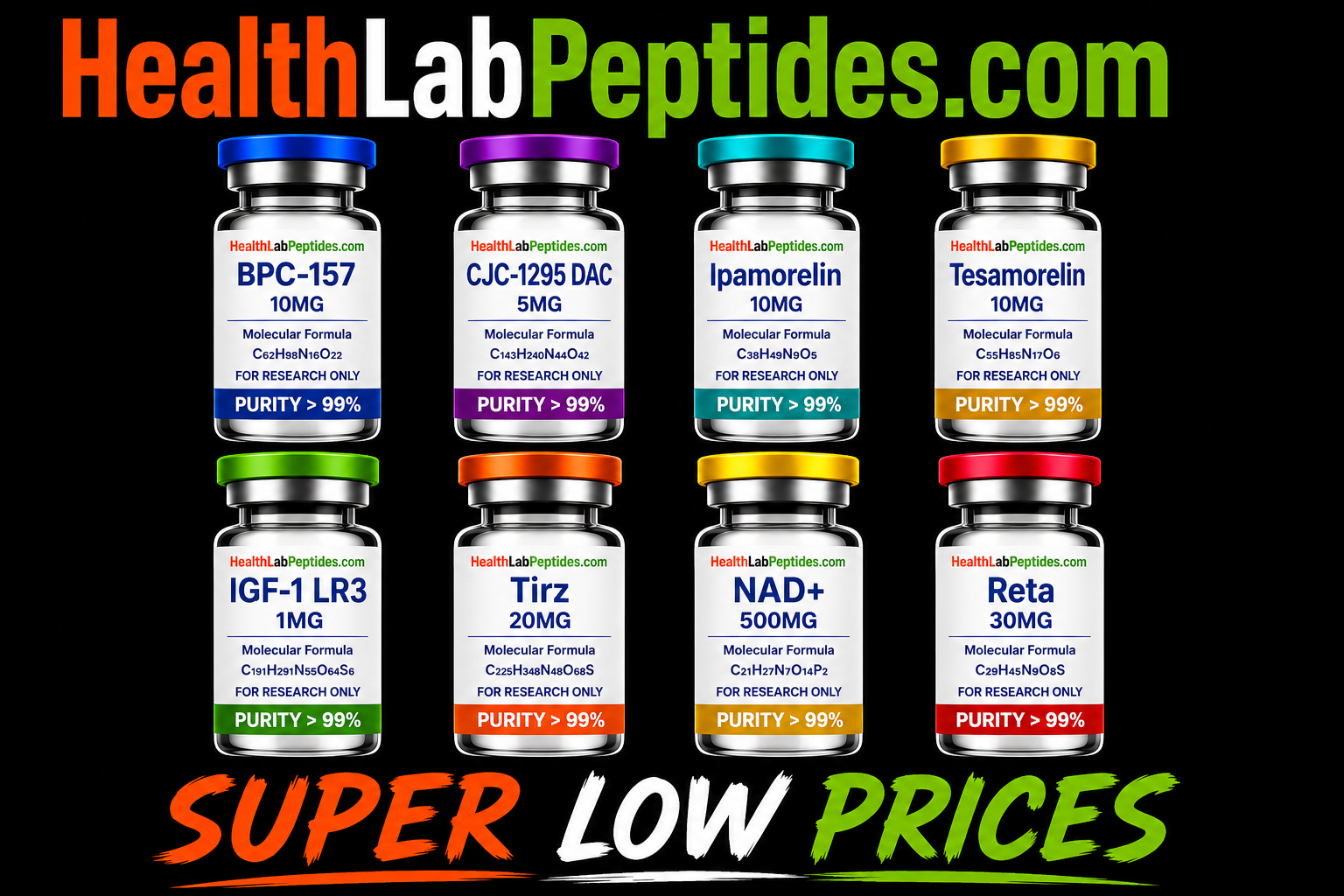
Modern peptide research rarely focuses on a single compound. Investigators often compare Tesamorelin with other endocrine peptides, including CJC-1295 (No DAC) and Ipamorelin, to study different approaches to growth hormone signaling under controlled laboratory conditions. Researchers may also examine IGF-1 LR3 when investigating downstream growth factor pathways and broader endocrine biology.
Beyond endocrine research, peptide science continues expanding into many other areas of molecular biology. Scientists frequently investigate MOTS-c and SS-31 to better understand mitochondrial signaling and cellular energy systems. Laboratory studies involving BPC-157, TB-500, and GHK-Cu continue exploring cellular communication, while combination formulations such as KLOW 80 demonstrate the growing interest in evaluating multiple peptide pathways within the same experimental framework.
The continued study of Tesamorelin reflects a broader trend in peptide research. Rather than examining isolated biological events, researchers increasingly investigate how interconnected signaling networks coordinate cellular function. Technologies such as transcriptomics, proteomics, metabolomics, and high-resolution molecular imaging are providing new opportunities to observe these interactions with remarkable precision.
As peptide science advances, Tesamorelin remains an important research peptide for laboratories investigating endocrine signaling, molecular regulation, and the complex communication systems that help govern cellular biology.
Explore a growing selection of Research Use Only peptides at HealthLabPeptides.com.
HealthLabPeptides.com Research Use Only (RUO) Disclaimer
All products offered by HealthLabPeptides.com are intended strictly for laboratory Research Use Only (RUO). They are not intended for human consumption, veterinary use, therapeutic use, or diagnostic purposes. These products have not been evaluated by the U.S. Food and Drug Administration (FDA) and are not intended to diagnose, treat, cure, or prevent any disease. HealthLabPeptides.com makes no medical or therapeutic claims regarding its products. Information provided is for educational and scientific discussion only.