
Certainly. Here’s a completely reimagined version with a different structure, flow, and emphasis. Instead of organizing the article by peptide categories, it focuses on the broader direction of peptide research and emerging laboratory trends.
As scientific research continues to advance, peptides remain one of the most active areas of molecular biology. Research suggests that laboratories are shifting their focus from studying individual compounds to understanding how peptides interact within larger biological signaling networks. This broader perspective is helping researchers uncover new questions about cellular communication, energy regulation, gene expression, and molecular adaptation.
Rather than concentrating on a single class of peptides, today’s researchers are investigating how multiple biological systems work together. Improvements in laboratory technology, combined with an increasing volume of published research, continue driving new discoveries across the peptide landscape.
A New Era of Multi-Pathway Research
One of the most noticeable changes in peptide science is the move toward studying multiple signaling pathways simultaneously.
Instead of examining one peptide in isolation, researchers frequently evaluate combinations of compounds to better understand how biological systems communicate. This approach reflects the growing recognition that cells rely on interconnected molecular networks rather than individual signaling molecules.
Research blends such as KLOW 80, which combines BPC-157, TB-500, GHK-Cu, and KPV, illustrate this trend toward broader experimental models.
Mitochondria Continue to Capture Scientific Interest
The role of mitochondria in cellular biology has expanded well beyond energy production. Scientists now recognize these organelles as important regulators of cellular communication and metabolic signaling.
As a result, laboratory investigations involving MOTS-c, SS-31, and NAD+ continue to grow. These compounds are helping researchers better understand how mitochondrial function influences broader biological systems.
Regulatory Peptides Remain an Active Area of Study
Neuroscience continues to benefit from advances in peptide research.
Compounds including Semax, Selank, Pinealon, and DSIP are frequently investigated as researchers examine neuronal signaling, molecular communication, and gene regulation.
These studies contribute to a growing understanding of how regulatory peptides participate in complex cellular processes.
Advances in Laboratory Technology
Scientific progress is closely tied to improvements in research tools.
Today’s laboratories routinely employ technologies such as:
- RNA sequencing
- Transcriptomics
- Proteomics
- Metabolomics
- High-resolution microscopy
- Artificial intelligence-assisted data analysis
These techniques allow researchers to observe molecular interactions in extraordinary detail, creating opportunities to revisit established peptides with fresh scientific perspectives.
Growth Hormone and Growth Factor Research
Growth hormone-related peptides continue to represent an important segment of peptide science.
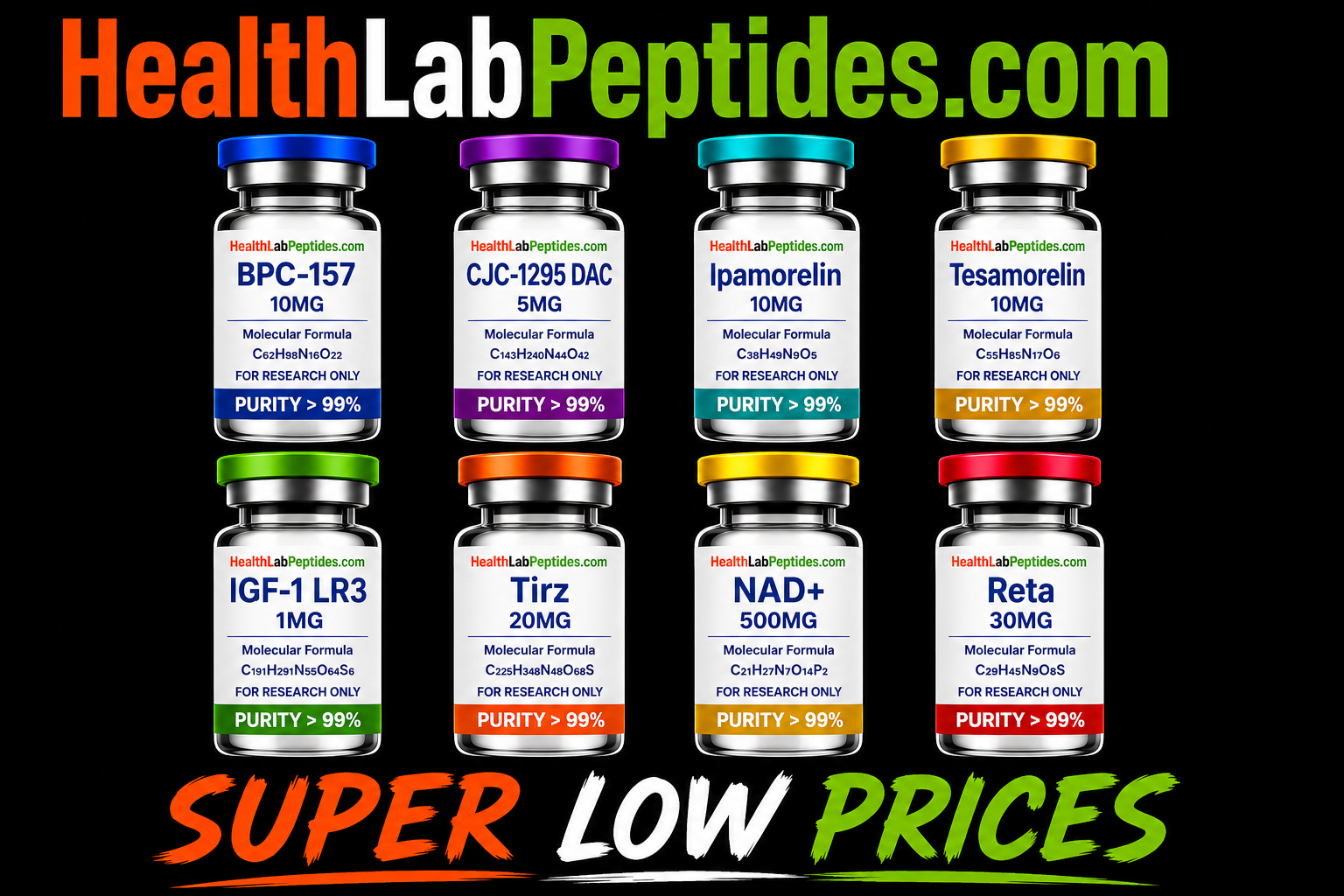
Researchers regularly investigate CJC-1295, Ipamorelin, Tesamorelin, and IGF-1 LR3 while exploring endocrine signaling and growth factor biology.
These investigations continue expanding our understanding of cellular communication within endocrine systems.
Cellular Organization Remains a Major Focus
Laboratory studies involving BPC-157, TB-500, and GHK-Cu remain among the most frequently discussed areas of peptide research.
Scientists continue examining how these peptides participate in cellular signaling, biological organization, and molecular regulation under controlled laboratory conditions.
Metabolic Peptide Research Keeps Expanding
Interest in receptor biology and metabolic signaling continues to increase.
Research involving Retatrutide and Tirzepatide reflects the growing scientific effort to better understand complex metabolic pathways and receptor interactions.
As additional research becomes available, these peptides are expected to remain prominent topics within laboratory science.
Looking Beyond 2026
Research suggests that the next phase of peptide science will be shaped by integration rather than specialization. Instead of asking how one peptide behaves, scientists are increasingly exploring how multiple signaling systems influence one another across different areas of biology.
This shift is creating opportunities for more comprehensive laboratory studies and a deeper understanding of molecular communication.
As new discoveries continue to emerge, peptide research is expected to remain one of the most dynamic and rapidly evolving fields in modern life science.
To explore research peptides and educational resources, visit HealthLabPeptides.com.
HealthLabPeptides.com Research Use Only (RUO) Disclaimer
All products offered by HealthLabPeptides.com are intended strictly for laboratory Research Use Only (RUO). They are not intended for human consumption, veterinary use, therapeutic use, or diagnostic purposes. These products have not been evaluated by the U.S. Food and Drug Administration (FDA) and are not intended to diagnose, treat, cure, or prevent any disease. HealthLabPeptides.com makes no medical or therapeutic claims regarding its products. Information presented is provided solely for educational and scientific discussion and should not be interpreted as medical advice.
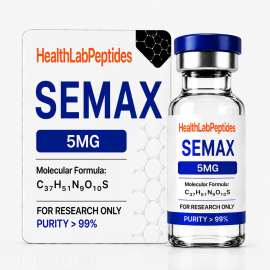 Semax 5mg
 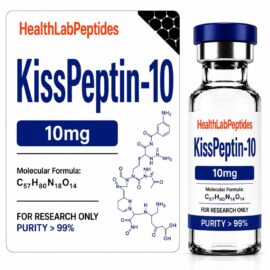 KissPeptin-10 10mg