

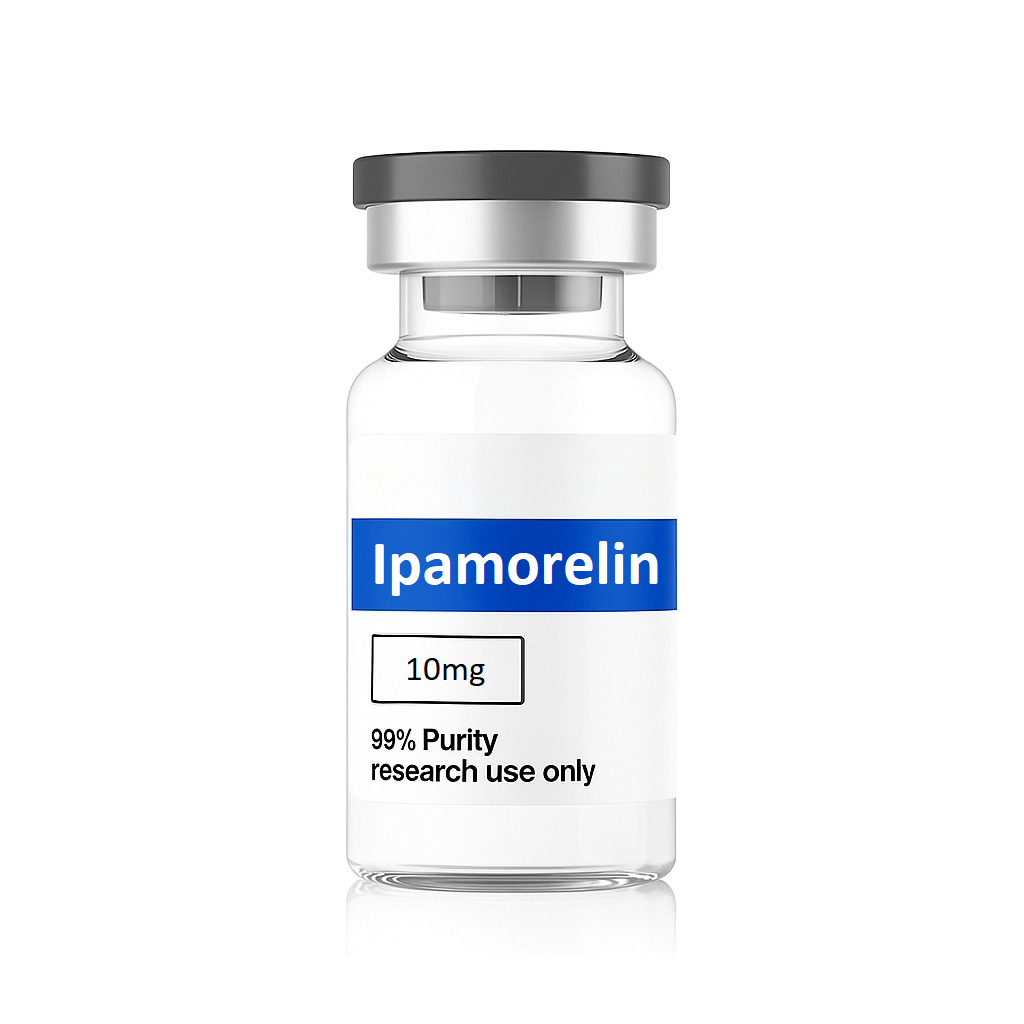
Meta Description: Explore the world of Ipamorelin peptide research. This guide delves into its proposed selective mechanism, potential research applications, and its place within the landscape of growth hormone secretagogues.
The field of peptide research continues to expand, with scientists investigating a wide array of compounds for their unique interactions with biological systems. Among these compounds, Ipamorelin has garnered significant attention within the research community. Classified as a growth hormone secretagogue (GHS), Ipamorelin is noted in scientific literature for its selective mechanism of action.
This article provides a detailed, research-focused overview of Ipamorelin, exploring its structure, proposed mechanism, and the key areas of scientific inquiry surrounding it. It is intended for educational and research purposes only.
Understanding the Basics: What is Ipamorelin?
Ipamorelin is a synthetic pentapeptide (a chain of five amino acids) identified in research settings as a potent and selective agonist for the ghrelin/growth hormone secretagogue receptor (GHSR). It is part of a class of compounds designed to stimulate the release of growth hormone from the pituitary gland.
First described in the 1990s, its development was part of a broader scientific effort to create molecules that could mimic the natural function of ghrelin, the “hunger hormone,” which also plays a key role in growth hormone secretion.
The Proposed Mechanism of Action: How Does Ipamorelin Work?
The scientific interest in Ipamorelin largely stems from its reported selectivity. Its proposed mechanism of action is a key differentiator from other first-generation GHS peptides.
1. Targeting the GHSR: Ipamorelin is believed to bind selectively to the GHSR in the pituitary gland and hypothalamus.
2. Mimicking Ghrelin: By binding to this receptor, it is thought to mimic the action of endogenous ghrelin.
3. Stimulating GH Release: This receptor activation is hypothesized to trigger a signaling cascade that ultimately leads to the pulsatile release of growth hormone from the anterior pituitary.
The notable aspect of Ipamorelin in research models has been its reported minimal effect on the secretion of other hormones like cortisol, prolactin, and ACTH, which is a profile that has piqued scientific curiosity regarding its specificity.
Ipamorelin in the Research Landscape: Key Areas of Investigation
Within laboratory and pre-clinical studies, Ipamorelin has been a subject of investigation for various physiological pathways. It is crucial to reiterate that these are areas of scientific exploration and not indications or health claims.
Research on Skeletal Muscle Tissue: Some studies have investigated the role of growth hormone secretagogues like Ipamorelin in models related to muscle protein synthesis and muscle mass regulation.
Investigations into Bone Metabolism: Given the role of Growth Hormone and IGF-1 in bone remodeling, research has explored the potential effects of GHSRs on bone density and strength in experimental settings.
Studies on Metabolic Function: The interplay between growth hormone and metabolic processes has led to research examining compounds like Ipamorelin in the context of lipid metabolism and body composition in research models.
Exploration of Tissue Repair: The anabolic properties of growth hormone have prompted scientific inquiry into how its secretagogues might influence the rate and quality of tissue repair and wound healing in controlled environments.
Sleep Cycle Research: Due to the natural pulsatile release of growth hormone during deep sleep, the relationship between GHSRs and sleep architecture has been a topic of academic interest.
Ipamorelin vs. Other GHRPs: A Research Comparison
In scientific discussions, Ipamorelin is often compared to other Growth Hormone-Releasing Peptides (GHRPs) like GHRP-2 and GHRP-6. The primary distinctions noted in research literature include:
Selectivity: As mentioned, Ipamorelin is frequently characterized by its high selectivity for GH release with a reportedly lower propensity to stimulate appetite (a noted effect of GHRP-6) or cause significant rises in prolactin and cortisol (sometimes observed with GHRP-2).
Half-Life: Research into the pharmacokinetics of Ipamorelin suggests it may have a moderately longer half-life than some of its counterparts, which is a factor in designing experimental dosing protocols.
Conclusion: The Research Profile of Ipamorelin
In summary, Ipamorelin represents a significant compound in the landscape of peptide research. Its profile as a selective growth hormone secretagogue with a reportedly clean side-effect profile in experimental models makes it a subject of ongoing scientific interest. The research into its mechanism and potential applications provides a fascinating glimpse into the complex regulation of the growth hormone axis.
The future of Ipamorelin research likely involves more detailed studies to fully elucidate its long-term effects and interactions within various biological systems.
—
Disclaimer
This article is intended for informational and research purposes only. It is based on a synthesis of publicly available scientific literature and is not a substitute for professional medical advice.
The content presented here does not constitute a health claim, medical advice, or a suggestion for personal use.
Ipamorelin is a research chemical and has not been approved by the FDA or any other regulatory body for human consumption, diagnosis, treatment, cure, or prevention of any disease or condition.
All mentions of “potential,” “effects,” or “research” refer to hypothetical, pre-clinical, or laboratory investigations and should not be interpreted as evidence of human efficacy or safety.
Individuals should always consult with a qualified healthcare professional for any health concerns or before considering any new therapeutic regimen.
Dr.’s opinion on peptides click here Not endorsed by this site. Posted for entertainment.
Image Alt Text Suggestions (for included graphics):
`Chemical structure of the Ipamorelin peptide molecule`
`Diagram illustrating the proposed mechanism of action of a growth hormone secretagogue on the pituitary gland`
`Graph comparing the selective GH release profile of Ipamorelin versus other peptides in a research model`
Target Keywords Integrated: Ipamorelin, peptide research, growth hormone secretagogue, GHSR, research peptide, Ipamorelin mechanism, GHRP, growth hormone release, selective agonist, scientific research, laboratory study.
 GHK-CU 50mg
  Tesamorelin 10mg
  Tirz 5mg
  GHRP-6 10mg