

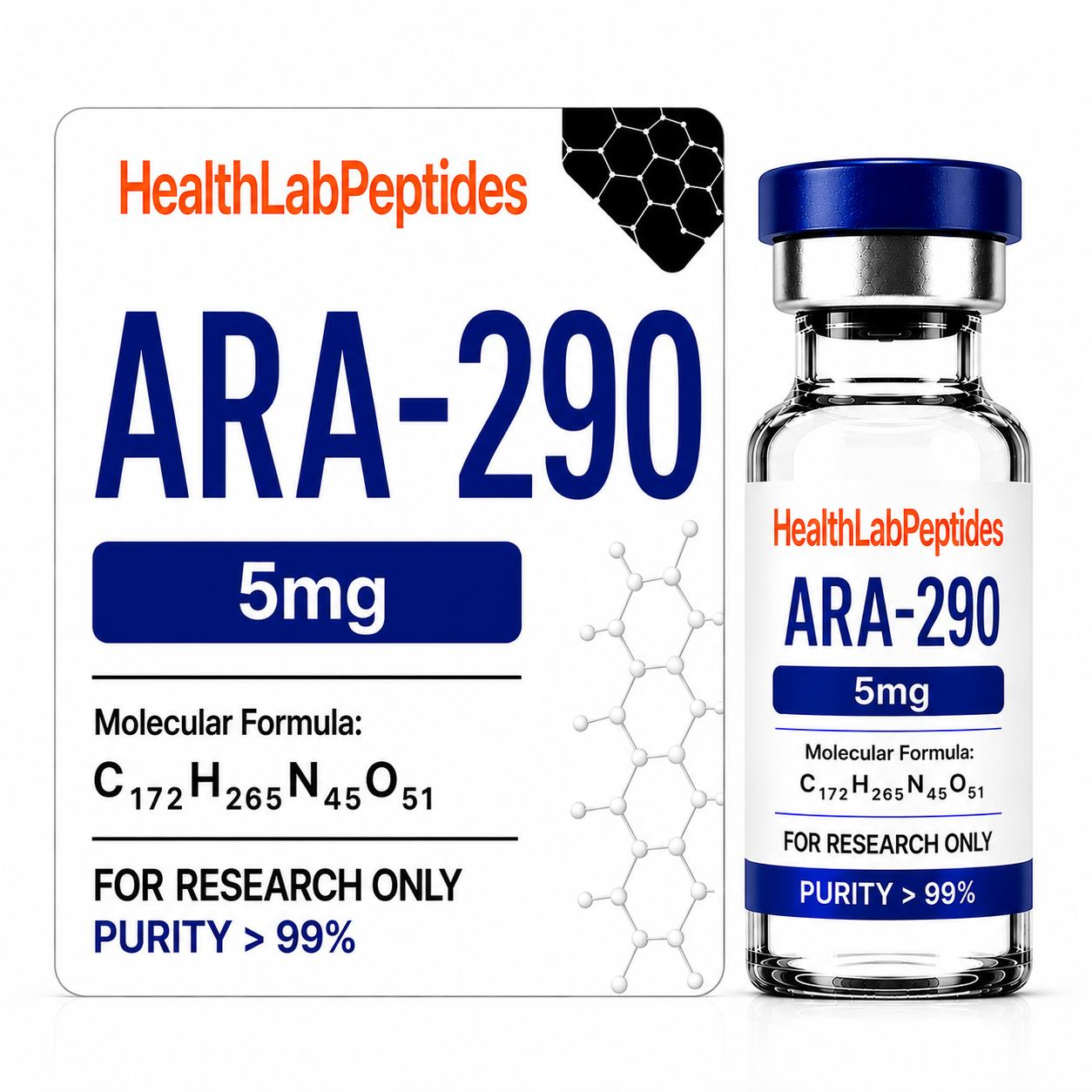
Research suggests that peripheral blood mononuclear cell responses vary across donors because cell composition and baseline state are biological variables, not merely noise. This article is limited to lawful Research Use Only and in-vitro work. Laboratories considering ARA-290 5 mg Research Peptide should establish material identity, traceability, matrix compatibility, and acceptance criteria before interpreting a biological signal.
Design donors as experimental units
PBMC preparations differ in lymphocyte and monocyte proportions, activation state, viability, prior handling, cryopreservation response, and baseline cytokine output. Pooling donors can increase material but erase heterogeneity and makes the pool—not each donor—the experimental unit.
For this laboratory question, the ARA-290 5 mg Research Peptide product reference belongs directly in the experimental context: confirm lot identity, matrix recovery, and the exact in-vitro endpoint before comparing results.
Experimental design
Use a repeated-measures design when each donor can receive every condition. Balance conditions within isolation or thaw batches, prespecify the donor sample-size logic, and analyze donor-level effects rather than treating replicate wells as independent donors. Define the experimental unit, randomization method, primary endpoint, exclusion rules, and replication plan before group labels are revealed. Technical replicates estimate measurement precision; independent cultures, donors, or preparations support biological reproducibility.
Controls and analytical qualification
Include unstimulated and qualified stimulated controls for every donor, cell-composition measurements, thaw-recovery metrics, and processing blanks. Include vehicle, method blanks where relevant, a qualified positive control, and a negative control that tests specificity. Measure recovery, linearity, precision, and interference in the actual sample matrix rather than assuming buffer performance transfers.
- Document lot identity, analytical evidence, and handling history.
- Randomize plate positions and processing order.
- Test detector interference and sample-matrix effects.
- Use an independent method with a different failure mode.
- Report individual experimental units and quality-control failures.
The most important confounders
Time from collection, anticoagulant, isolation method, cryopreservation lot, thaw protocol, rest period, seeding density, and microbial contamination can dominate the response. Track operator, reagent lots, passage or donor, incubation timing, plate map, instrument settings, and acquisition order. Avoid turning a batch effect into a biological conclusion.
A controlled comparison may include the GHK-Cu 50 mg Research Peptide as a separate RUO research material, provided concentration, timing, analytical recovery, and assay conditions are matched rather than assumed equivalent.
Related RUO materials and internal research paths
For a hypothesis-led comparison, researchers may review GHK-Cu 50 mg Research Peptide and BPC-157 5 mg Research Peptide. The HealthLab Peptides research catalog provides additional RUO materials. Comparisons should use matched matrices, time points, recovery, and analytical confidence; nominal concentration alone is not enough.
Interpretation limits
A reproducible mean change can coexist with divergent donor responses. Report both the population estimate and donor-level trajectories without implying clinical prediction. State conclusions at the level supported by the measurement. In-vitro results do not establish clinical effectiveness, safety, dosing, therapeutic use, or suitability for people or animals.
Reproducible reporting
Report donor inclusion criteria in privacy-protective form, cell composition, viability, batch, mixed-model structure, missing data, and whether conclusions depend on outlier donors. Archive raw data, scripts, calibration files, plate maps, sample metadata, and deviations. Report effect sizes and uncertainty alongside statistical tests, and distinguish exploratory from prespecified analyses.
Where the hypothesis requires a third product-specific comparator, the BPC-157 5 mg Research Peptide should be evaluated with the same blanks, positive controls, interference checks, and independent replication.
Research Use Only disclaimer: This material is provided solely for lawful laboratory research and in-vitro analytical discussion. The compounds discussed are not medicines, foods, cosmetics, or consumer products and are not intended for human or veterinary use, ingestion, injection, diagnosis, treatment, cure, mitigation, or prevention of disease. Nothing here is medical advice or a dosing, reconstitution, or administration guide. Qualified researchers are responsible for institutional review, applicable law, validated methods, appropriate controls, and safe laboratory handling.


