

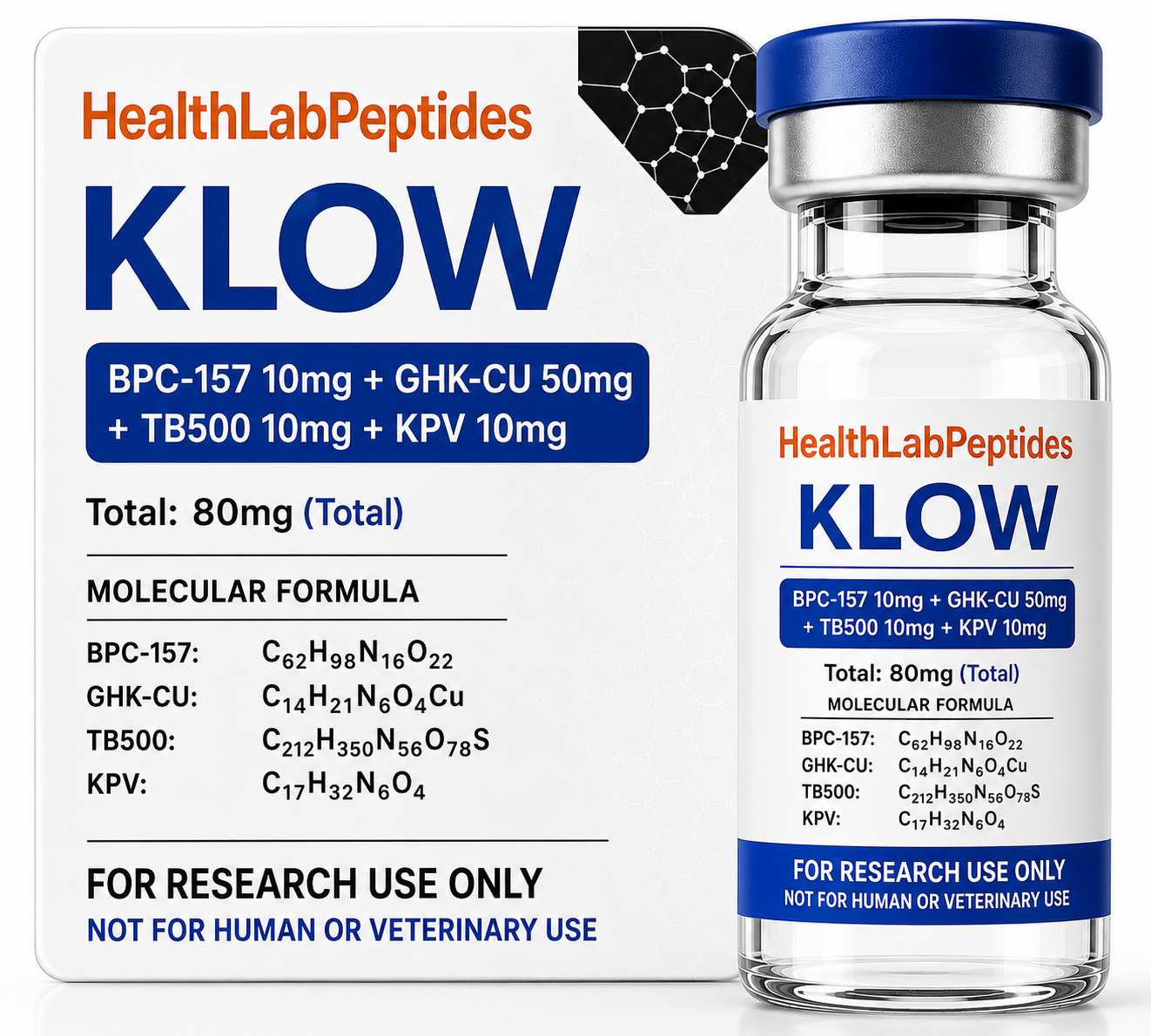
Research suggests that multiplex cytokine panels increase breadth, but every analyte still has its own calibration, cross-reactivity, and matrix limitations. This article is limited to lawful Research Use Only and in-vitro work. Laboratories considering GHK-Cu 50 mg Research Peptide should establish material identity, traceability, matrix compatibility, and acceptance criteria before interpreting a biological signal.
A panel is many assays sharing one sample
Different capture and detection pairs can have unequal sensitivity, dynamic range, hook behavior, and susceptibility to heterophilic interference. A strong result for one cytokine does not validate neighboring analytes. Values below quantification or above calibration should not be replaced with convenient constants without a declared rule.
For this laboratory question, the GHK-Cu 50 mg Research Peptide product reference belongs directly in the experimental context: confirm lot identity, matrix recovery, and the exact in-vitro endpoint before comparing results.
Experimental design
Qualify each priority analyte in the intended supernatant, serum-free medium, or lysate. Use dilution series to test parallelism and select sample dilutions that keep critical signals inside the validated range. Define the experimental unit, randomization method, primary endpoint, exclusion rules, and replication plan before group labels are revealed. Technical replicates estimate measurement precision; independent cultures, donors, or preparations support biological reproducibility.
Controls and analytical qualification
Spike recovery, dilutional linearity, blank matrix, single-analyte controls, and alternate antibody pairs help identify suppression and cross-reactivity. Include vehicle, method blanks where relevant, a qualified positive control, and a negative control that tests specificity. Measure recovery, linearity, precision, and interference in the actual sample matrix rather than assuming buffer performance transfers.
- Document lot identity, analytical evidence, and handling history.
- Randomize plate positions and processing order.
- Test detector interference and sample-matrix effects.
- Use an independent method with a different failure mode.
- Report individual experimental units and quality-control failures.
The most important confounders
Be alert to bead count, plate washing, incubation uniformity, sample viscosity, freeze-thaw cycles, and analyte degradation. Track operator, reagent lots, passage or donor, incubation timing, plate map, instrument settings, and acquisition order. Avoid turning a batch effect into a biological conclusion.
A controlled comparison may include the ARA-290 5 mg Research Peptide as a separate RUO research material, provided concentration, timing, analytical recovery, and assay conditions are matched rather than assumed equivalent.
Related RUO materials and internal research paths
For a hypothesis-led comparison, researchers may review ARA-290 5 mg Research Peptide and Glutathione Research Material. The HealthLab Peptides research catalog provides additional RUO materials. Comparisons should use matched matrices, time points, recovery, and analytical confidence; nominal concentration alone is not enough.
Interpretation limits
A cytokine pattern describes the tested system and time point; it does not automatically identify a cellular source or prove a beneficial immune effect. State conclusions at the level supported by the measurement. In-vitro results do not establish clinical effectiveness, safety, dosing, therapeutic use, or suitability for people or animals.
Reproducible reporting
Provide analyte-specific lower and upper quantification limits, calibration model, dilution, imputation rule, bead acceptance, multiplicity approach, and raw concentration distributions. Archive raw data, scripts, calibration files, plate maps, sample metadata, and deviations. Report effect sizes and uncertainty alongside statistical tests, and distinguish exploratory from prespecified analyses.
Where the hypothesis requires a third product-specific comparator, the Glutathione Research Material should be evaluated with the same blanks, positive controls, interference checks, and independent replication.
Research Use Only disclaimer: This material is provided solely for lawful laboratory research and in-vitro analytical discussion. The compounds discussed are not medicines, foods, cosmetics, or consumer products and are not intended for human or veterinary use, ingestion, injection, diagnosis, treatment, cure, mitigation, or prevention of disease. Nothing here is medical advice or a dosing, reconstitution, or administration guide. Qualified researchers are responsible for institutional review, applicable law, validated methods, appropriate controls, and safe laboratory handling.


 DSIP Research Material — 10mg