

Description
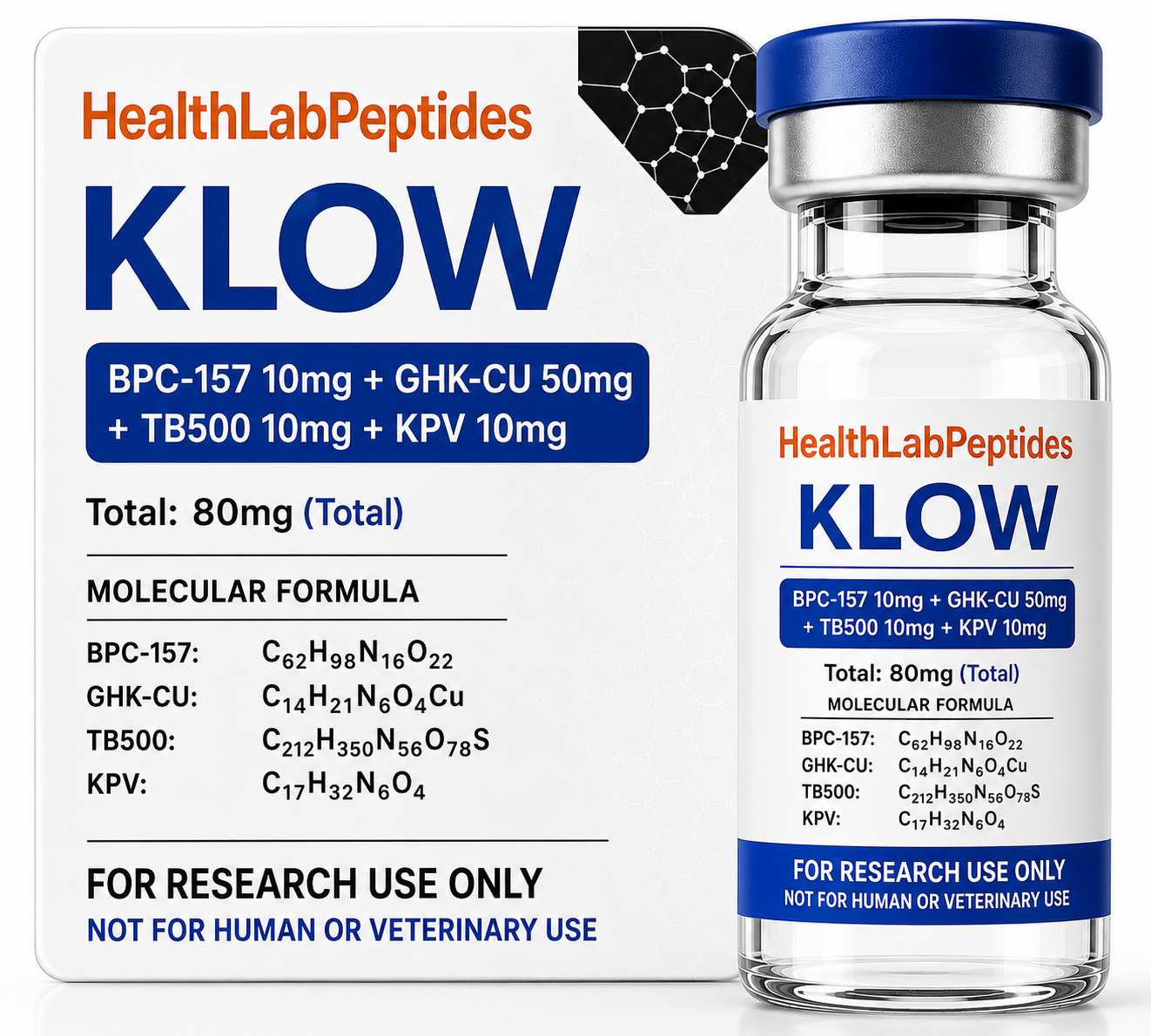
Four-Component Research Blend — 80mg
This clearly identified multi-component research material is supplied exclusively for controlled laboratory, analytical, and in-vitro investigation. It is not offered as a consumer, clinical, therapeutic, diagnostic, or veterinary product.
Composition
- BPC-157 — 10mg
- GHK-Cu — 50mg
- TB-500 — 10mg
- KPV — 10mg
- Total nominal quantity — 80mg
Laboratory Research Context
Multi-component materials may be investigated in appropriately controlled analytical and in-vitro experiments. Experimental design should distinguish the combined material from its individual components and include suitable controls. References to published studies identify areas of scientific investigation only and do not establish the behavior, safety, or effectiveness of this blend for any human or animal purpose.
Documentation and Handling
Researchers should document material identity, nominal composition, lot information, analytical documentation, experimental conditions, controls, and endpoints. Researchers are responsible for applying appropriate institutional and laboratory safety procedures.
Research Use Only — In Vitro Research
Research Use Only (RUO). For legitimate laboratory, analytical, and in-vitro research only.
NOT FOR HUMAN OR VETERINARY USE, CONSUMPTION, INGESTION, INJECTION, IMPLANTATION, OR OTHER BODILY ADMINISTRATION.
This material is not offered as a drug, food, dietary supplement, cosmetic, or medical product. It is not intended to diagnose, treat, cure, mitigate, or prevent disease or to affect the structure or function of the human or animal body. HealthLab Peptides does not provide dosing, administration, reconstitution, injection, treatment, cycling, or personal-use instructions.
Analytical and in-vitro research context
BPC-157 10mg + GHK-Cu 50mg + TB-500 10mg + KPV 10mg — Research Blend is cataloged exclusively as research-use-only material for legitimate laboratory, analytical, and in-vitro investigation. Relevant scientific terminology for this material includes copper-peptide complex identity, metal speciation, chromatographic recovery, mass spectrometry, matrix-remodeling assays, and copper-dependent interference controls. These terms describe possible laboratory measurements and experimental controls; they do not imply a medical, diagnostic, therapeutic, human-use, or veterinary-use purpose.
Before beginning research, laboratories should review the lot-specific Certificate of Analysis and distinguish molecular identity, chromatographic peak-area purity, total material quantity, moisture or counterion contribution, analytical recovery, and functional assay performance. HPLC or UPLC can evaluate retention and resolved peak area, while LC-MS or high-resolution mass spectrometry may support molecular-mass confirmation. When close variants or modification sites matter, tandem mass spectrometry or peptide mapping may provide additional sequence-position evidence.
Useful internal research resources include BPC-157 10mg + GHK-Cu 50mg + TB-500 10mg — Research Blend and GHK-Cu Research Material — 100mg. Researchers may also read this related HealthLab laboratory article and review the complete HealthLab Peptides RUO catalog. Related products are linked for analytical comparison and catalog navigation only; shared terminology does not establish chemical, functional, or lot-to-lot equivalence.
 TB-500 Research Material — 5mg
 Pinealon Research Material — 10mg
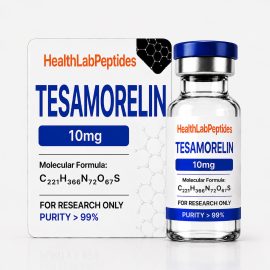 Tesa Research Material — 10mg
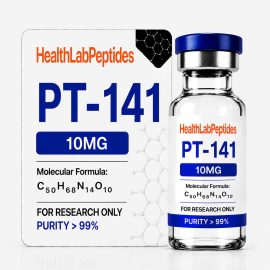 PT-141 Research Material — 10mg
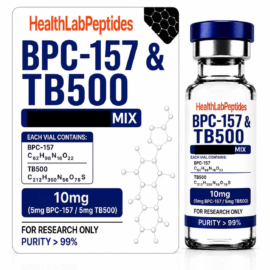 BPC-157 + TB-500 — 10mg Research Blend
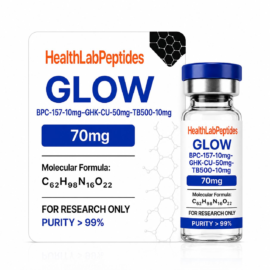 BPC-157 10mg + GHK-Cu 50mg + TB-500 10mg — Research Blend
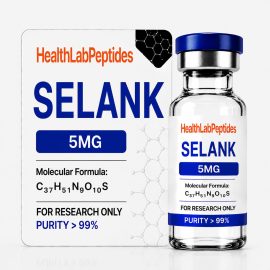 Selank Research Material — 5mg
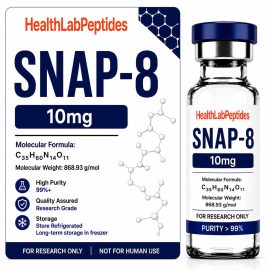 SNAP-8 Research Material — 10mg
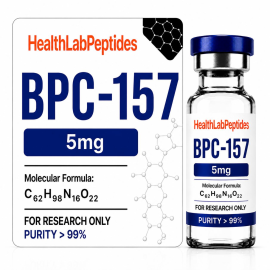 BPC-157 Research Material — 5mg
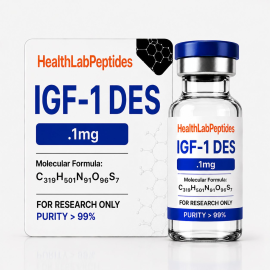 IGF-DES Research Material — 0.1mg