
Peptide Research suggests:
The field of peptide research continues to expand at an impressive pace, with scientists exploring new signaling pathways, refining laboratory techniques, and investigating an increasingly diverse range of research peptides. Research suggests that interest in peptides remains strong across multiple disciplines, including neuroscience, mitochondrial biology, endocrinology, immunology, cellular signaling, and molecular genetics.
As laboratories adopt more advanced analytical tools and publish new findings, researchers are gaining a clearer understanding of how peptides contribute to complex biological systems. While many questions remain unanswered, 2026 has continued the trend toward broader, more integrated peptide research.
Mitochondrial Research Continues to Grow
One of the most active areas of laboratory investigation involves mitochondrial biology. Rather than viewing mitochondria solely as energy producers, researchers now recognize them as dynamic signaling centers involved in cellular communication and metabolic regulation.
This has increased scientific interest in research peptides such as MOTS-c, SS-31, and NAD+. These compounds continue to appear in laboratory studies examining mitochondrial function, cellular energy systems, and metabolic signaling.
As research technology advances, mitochondrial biology is expected to remain one of the fastest-growing fields within peptide science.
Regulatory Peptides Continue Expanding
Scientists remain interested in regulatory peptides that help explain cellular communication within the nervous system.
Research involving Semax, Selank, Pinealon, and DSIP continues to explore neuronal signaling, molecular regulation, and peptide-mediated communication.
These compounds represent an important area of neuroscience research as investigators work to better understand the complexity of cellular signaling networks.
Combination Peptide Research Is Increasing
Another notable trend is the growing use of combination peptide formulations.
Rather than investigating individual compounds in isolation, researchers are increasingly studying multiple peptides within the same experimental model. This approach allows scientists to evaluate how interconnected signaling pathways function together.
Examples include formulations such as KLOW 80, which combines BPC-157, TB-500, GHK-Cu, and KPV into a single research blend, as well as the Wolverine Stack, which combines BPC-157 and TB-500 for laboratory investigation.
This trend reflects the growing understanding that biological systems operate through coordinated networks rather than isolated molecular events.
Tissue Biology Remains a Major Research Focus
Research into cellular organization and tissue-related signaling continues to be an active area of peptide science.
Laboratories frequently investigate BPC-157 and TB-500 in studies examining cellular communication, biological organization, and molecular signaling.
Similarly, GHK-Cu remains one of the longest-studied peptides because of its relationship with gene expression, extracellular matrix biology, and cellular regulation.
These peptides continue to generate scientific interest as researchers refine their understanding of cellular communication.
Growth Hormone Research Continues
Growth hormone-releasing peptides remain an important category of laboratory research.
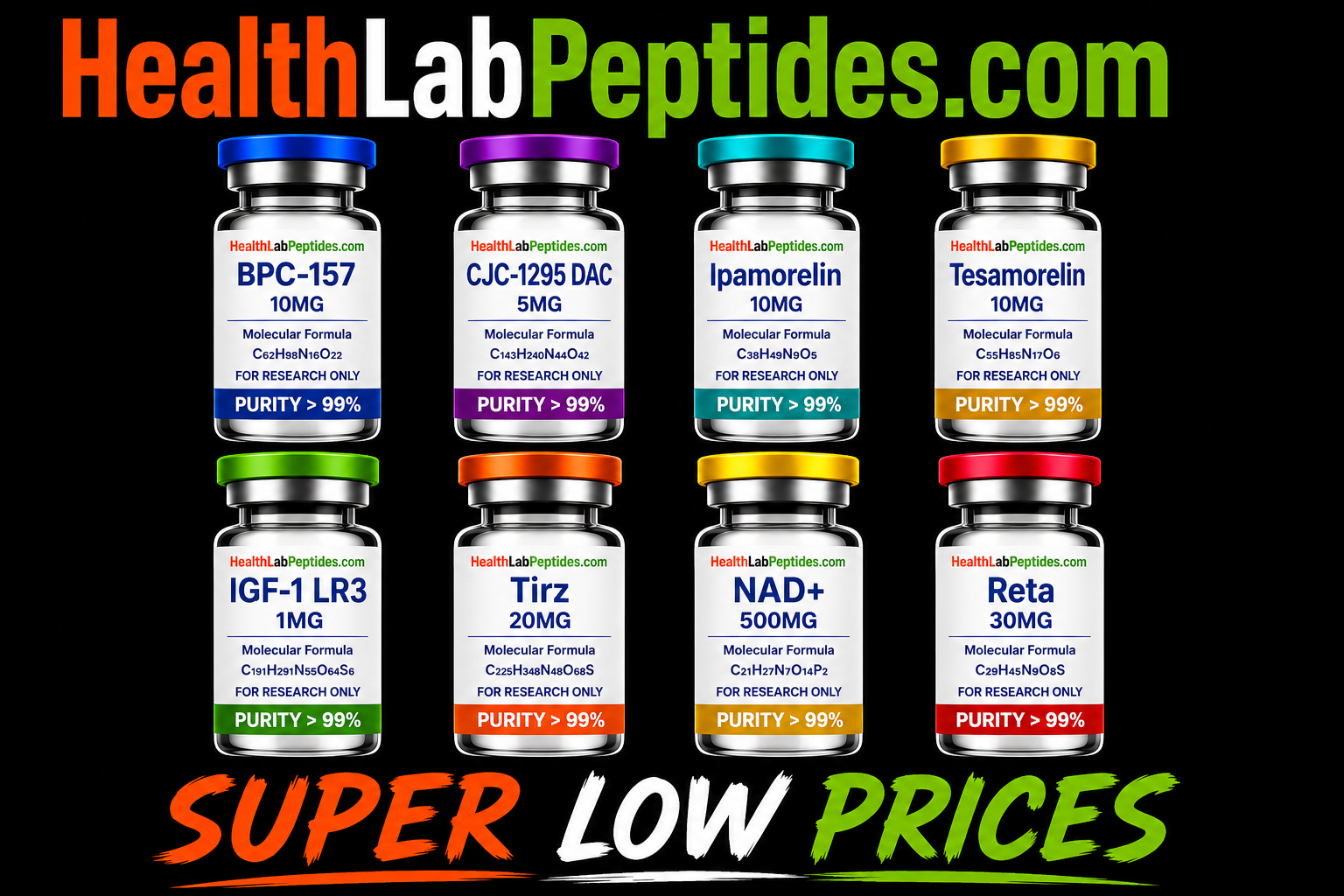
Scientists continue investigating compounds such as CJC-1295, Ipamorelin, Tesamorelin, and IGF-1 LR3 to better understand endocrine signaling and growth factor biology.
As laboratory methods continue improving, these peptides remain central to research involving hormonal regulation and molecular physiology.
Metabolic Peptides Continue to Receive Attention
Scientific interest in metabolic signaling remains strong.
Research involving Retatrutide and Tirzepatide continues to expand as investigators explore receptor signaling and metabolic pathways under controlled laboratory conditions.
These peptides represent one of the most rapidly developing areas of peptide research today.
Technology Is Driving New Discoveries
The pace of peptide research has accelerated because laboratory technology continues advancing.
Researchers now routinely utilize:
- Transcriptomics
- Proteomics
- Metabolomics
- High-resolution molecular imaging
- RNA sequencing
- Artificial intelligence-assisted biological analysis
These technologies allow investigators to observe molecular interactions with far greater precision than ever before.
As a result, many peptides previously studied only in limited ways are now being revisited using modern analytical techniques.
Looking Ahead
Research suggests that peptide science will continue evolving as researchers gain a deeper understanding of molecular communication and cellular regulation. Rather than focusing on isolated compounds, laboratories are increasingly investigating how multiple peptides interact across interconnected biological systems.
Emerging technologies, improved laboratory methods, and expanding scientific literature are expected to drive continued growth across all major areas of peptide research.
For researchers, educators, and laboratories alike, the coming year promises new discoveries, broader collaboration, and a deeper appreciation for the complexity of peptide-mediated biology.
Explore the latest selection of laboratory research peptides, educational resources, and scientific articles at HealthLabPeptides.com.
HealthLabPeptides.com Research Use Only (RUO) Disclaimer
All products offered by HealthLabPeptides.com are intended strictly for laboratory Research Use Only (RUO). They are not intended for human consumption, veterinary use, therapeutic use, or diagnostic purposes. These products have not been evaluated by the U.S. Food and Drug Administration (FDA) and are not intended to diagnose, treat, cure, or prevent any disease. HealthLabPeptides.com makes no medical or therapeutic claims regarding its products. Information provided in this article is for educational and scientific discussion only.