
Semax Peptide: Research, Mechanisms, Laboratory Applications, and Current Scientific Interest
Table of Contents
- What Is Semax?
- The History of Semax Research
- Why Scientists Continue Studying Semax
- Understanding Regulatory Peptides
- Semax and Brain Signaling Research
- Gene Expression and Cellular Communication
- Modern Laboratory Techniques
- Semax Compared with Other Research Peptides
- Related Research Peptides
- Conclusion (Part 2)
- Frequently Asked Questions (Part 2)
What Is Semax?
Research suggests that peptide science has expanded dramatically over the past two decades. While many peptides are investigated for metabolic, endocrine, or mitochondrial signaling, another important category focuses on neuroscience and cellular communication within the central nervous system.
One of the most recognized compounds in this field is Semax.
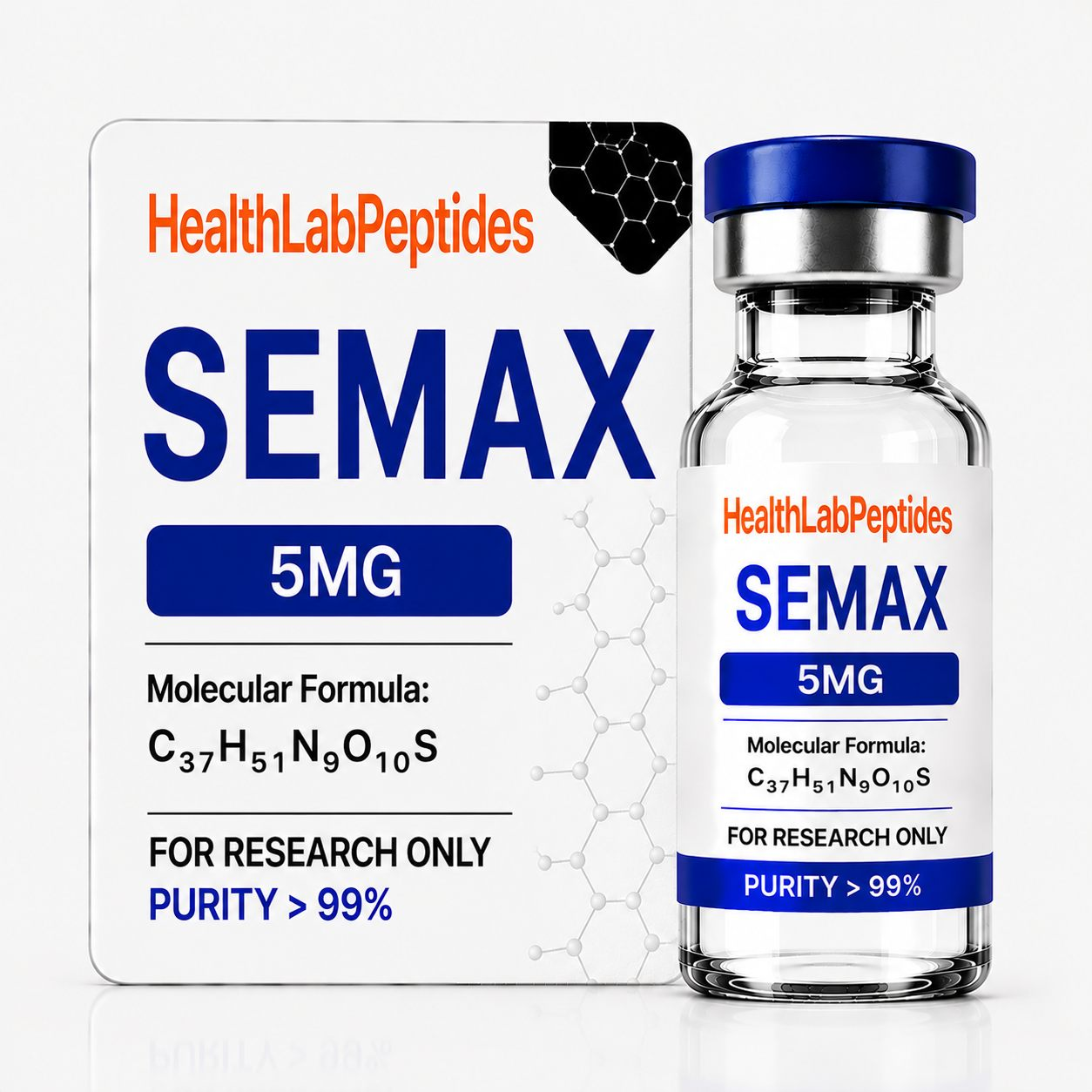
Semax is a synthetic peptide originally developed for laboratory investigation into peptide-mediated signaling within the brain. Since its introduction, researchers have continued exploring how this small peptide interacts with neuronal communication, gene regulation, and molecular signaling pathways.
Today, Semax remains one of the most frequently discussed research peptides in neuroscience laboratories around the world.
Unlike structural proteins, Semax functions as a regulatory peptide. Scientists investigate how these small signaling molecules coordinate communication between cells while helping researchers better understand the complexity of biological systems.
The History of Semax Research
Semax was originally developed by researchers interested in understanding naturally occurring peptide fragments involved in nervous system regulation.
As molecular biology advanced, investigators recognized that even relatively small peptides could participate in highly sophisticated signaling networks.
This realization opened an entirely new area of research focused on peptide bioregulators.
Semax became one of the earliest synthetic peptides designed specifically to investigate these mechanisms under controlled laboratory conditions.
Over time, improvements in laboratory technology have allowed researchers to revisit Semax using far more advanced analytical techniques than were available when it was first introduced.
Why Scientists Continue Studying Semax
One reason Semax remains an important research peptide is its relationship with several interconnected biological systems.
Rather than examining one isolated mechanism, scientists continue exploring how Semax interacts with broader signaling networks involving:
- Neuronal communication
- Cellular signaling
- Gene expression
- Protein regulation
- Neurobiology
- Molecular adaptation
- Experimental stress responses
- Cellular maintenance
Each laboratory study contributes additional information regarding how peptides participate in complex biological regulation.
Because modern biology emphasizes interconnected pathways rather than isolated molecules, Semax continues to attract scientific interest across multiple research disciplines.
Regulatory Peptides Play an Important Role
Every cell continuously receives and transmits biological information.
Hormones, enzymes, neurotransmitters, proteins, and peptides all participate in maintaining normal cellular communication.
Researchers investigate Semax because regulatory peptides often influence these communication networks in unique ways.
Instead of acting as structural components, signaling peptides function more like biological messengers that coordinate responses between cells.
Understanding this communication remains one of today’s most important objectives in molecular biology.
Semax and Brain Signaling Research
Perhaps the greatest scientific interest surrounding Semax involves experimental neuroscience.
The human nervous system contains billions of neurons that communicate through highly organized molecular pathways.
Researchers continue studying how regulatory peptides participate in these communication systems.
Experimental laboratory investigations involving Semax often explore:
- Neuronal signaling
- Synaptic communication
- Cellular organization
- Gene transcription
- Protein synthesis
- Molecular adaptation
- Cellular signaling networks
Although research continues to evolve, Semax remains an important tool for scientists studying neuronal biology.
Advances in Gene Expression Research
One of the most exciting developments in peptide science has been the ability to measure changes in gene activity.
Every cell contains thousands of genes that can become activated or suppressed depending upon biological conditions.
Researchers investigate whether signaling peptides influence these regulatory processes.
Today’s laboratories utilize sophisticated technologies including:
- RNA sequencing
- Transcriptomics
- DNA microarrays
- Proteomics
- Metabolomics
- Artificial intelligence-assisted analysis
These technologies allow investigators to observe molecular responses with unprecedented precision.
Rather than relying solely on visible biological changes, scientists can now examine cellular responses at the genetic level.
Modern Research Continues Expanding
As laboratory capabilities improve, researchers continue discovering that peptide biology is significantly more complex than previously understood.
Instead of functioning independently, biological pathways communicate continuously through networks of signaling molecules.
This systems-based approach has changed how peptide research is conducted.
Scientists increasingly investigate multiple peptides together to better understand how different signaling pathways interact.
Semax Compared with Other Research Peptides
Although Semax occupies an important place within neuroscience research, laboratories often compare its findings with several other regulatory peptides.
For example, Selank is another widely investigated peptide associated with neuronal signaling and laboratory neurobiology.
Learn more about Selank:
Researchers also investigate Pinealon, a synthetic tripeptide studied for its interaction with gene regulation and cellular communication.
Explore Pinealon:
Another important neuroscience research peptide is DSIP (Delta Sleep-Inducing Peptide), which continues to appear in experimental studies involving biological rhythms and nervous system signaling.
Each of these peptides contributes unique information about cellular communication while expanding researchers’ understanding of neurobiology.
Beyond Neuroscience
Scientists studying Semax frequently investigate peptides outside the nervous system to gain a broader understanding of cellular signaling.
One rapidly growing area involves mitochondrial biology.
For example, MOTS-c has become one of the most recognized mitochondrial-derived peptides investigated for cellular energy regulation and metabolic signaling.
Learn more about MOTS-c:
Researchers also continue studying SS-31, another peptide frequently included in laboratory investigations involving mitochondrial communication and energy systems.
Meanwhile, laboratories interested in extracellular matrix biology often investigate GHK-Cu, a naturally occurring copper-binding peptide associated with gene expression and cellular regulation.
Together, these peptides demonstrate how diverse peptide science has become, spanning neuroscience, mitochondrial biology, metabolism, endocrinology, and molecular genetics.
Tissue Signaling Research
Scientists examining biological organization frequently include BPC-157 and TB-500 in broader laboratory investigations involving cellular signaling.
Explore BPC-157:
Learn more about TB-500:
Researchers interested in multi-peptide formulations also investigate KLOW 80, a research blend combining BPC-157, TB-500, GHK-Cu, and KPV.
These formulations illustrate the growing scientific interest in studying multiple signaling pathways within the same laboratory model.
Semax Peptide: Research, Mechanisms, Laboratory Applications, and Current Scientific Interest (Part 2)
The Expanding World of Peptide Research
Peptide science has progressed far beyond the study of individual molecules. Today, researchers recognize that cells function through vast networks of signaling pathways that constantly exchange information.
Rather than investigating one pathway in isolation, laboratories increasingly examine how multiple signaling molecules interact under controlled research conditions.
Semax continues to play an important role in this expanding field because it provides researchers with another tool for studying neuronal communication and molecular regulation.
As advances in molecular biology continue, scientists are discovering that many peptide systems overlap, creating opportunities for broader and more comprehensive laboratory investigations.
Understanding the Relationship Between Regulatory Peptides
One of the most interesting developments in peptide science is the realization that regulatory peptides often influence different biological systems while sharing common signaling principles.
Although Semax is primarily associated with neuroscience research, investigators frequently compare its activity with peptides involved in completely different areas of biology.
For example, researchers interested in cellular communication often investigate GHK-Cu, a naturally occurring copper-binding peptide that has been widely studied for gene expression, extracellular matrix biology, and cellular signaling.
Learn more about GHK-Cu:
Similarly, scientists examining tissue organization frequently include BPC-157 and TB-500 in laboratory experiments involving cellular communication and biological organization.
Explore BPC-157:
Learn more about TB-500:
While these peptides target different research interests, together they help scientists develop a broader understanding of molecular signaling.
Multi-Peptide Research Is Growing
Combination peptide research has become increasingly common over the past several years.
Rather than studying individual compounds separately, investigators often design experiments that evaluate multiple peptide systems simultaneously.
One example is KLOW 80, a research formulation containing BPC-157, TB-500, GHK-Cu, and KPV.
Explore KLOW 80:
These formulations allow researchers to investigate multiple biological pathways within the same experimental model while collecting more comprehensive molecular data.
Mitochondrial Research Continues to Expand
Another rapidly developing area of peptide science involves mitochondrial biology.
For decades, mitochondria were viewed primarily as the energy-producing structures inside cells. Modern research has shown that mitochondria also function as important signaling centers capable of influencing numerous cellular processes.
Because of these discoveries, researchers increasingly investigate mitochondrial peptides alongside neuroscience compounds such as Semax.
One of the best-known examples is MOTS-c, a mitochondrial-derived peptide studied for cellular energy regulation and metabolic signaling.
Explore MOTS-c:
Another important research peptide is SS-31, which continues to appear in laboratory studies involving mitochondrial communication and cellular bioenergetics.
Learn more about SS-31:
Although Semax and mitochondrial peptides have different research objectives, both contribute to a growing understanding of how cells coordinate biological activity.
Growth Hormone Research Peptides
Another major category within peptide science focuses on endocrine signaling.
Researchers frequently investigate CJC-1295 because of its interaction with growth hormone-releasing hormone pathways in laboratory models.
Explore CJC-1295:
Many laboratories also study Ipamorelin, particularly in experiments involving growth hormone signaling.
Learn more about Ipamorelin:
Another peptide receiving continued scientific attention is Tesamorelin, which researchers investigate for its interaction with endocrine signaling pathways.
Explore Tesamorelin:
These peptides demonstrate how diverse the field of peptide research has become, extending well beyond neuroscience into endocrinology and molecular physiology.
Growth Factor Biology
Scientists investigating cellular signaling often include IGF-1 LR3 in experimental studies involving growth factor pathways.
Because insulin-like growth factor signaling influences numerous cellular processes, IGF-1 LR3 remains one of the most recognized peptides within laboratory growth factor research.
Learn more about IGF-1 LR3:
Research comparing growth factor signaling with neuronal signaling continues contributing valuable information regarding complex biological regulation.
Metabolic Research Continues to Advance
The field of metabolic peptide research has expanded rapidly in recent years.
Researchers continue investigating compounds such as Retatrutide and Tirzepatide for their interaction with receptor systems involved in metabolic signaling.
Explore Retatrutide:
Learn more about Tirzepatide:
Although these peptides are structurally different from Semax, they illustrate the tremendous diversity within peptide science today.
Choosing High-Quality Research Peptides
Reliable laboratory investigations begin with dependable research materials.
Scientists generally look for products that provide:
- High analytical purity
- Third-party laboratory verification
- Consistent manufacturing
- Proper storage conditions
- Secure packaging
- Batch consistency
- Transparent documentation
Using consistent research materials helps reduce unnecessary experimental variation and supports reproducible scientific observations.
Quality remains one of the most important factors in peptide research regardless of the biological system being investigated.
Frequently Asked Questions
What is Semax?
Semax is a synthetic regulatory peptide investigated in laboratory research involving neuroscience, neuronal signaling, cellular communication, and gene expression.
Why is Semax studied?
Researchers continue investigating Semax because of its interaction with molecular signaling pathways associated with experimental neurobiology and cellular regulation.
Is Semax naturally occurring?
Semax is a synthetic peptide developed specifically for laboratory research based on naturally occurring biological peptide fragments.
What peptides are commonly researched alongside Semax?
Researchers frequently investigate Semax together with:
- Selank
- Pinealon
- DSIP
- MOTS-c
- SS-31
- GHK-Cu
- BPC-157
- TB-500
- KLOW 80
- CJC-1295
- Ipamorelin
- Tesamorelin
- IGF-1 LR3
- Retatrutide
- Tirzepatide
Each peptide contributes to different areas of molecular biology and laboratory investigation.
Is Semax intended for human use?
No. Semax products offered by HealthLabPeptides.com are supplied exclusively for qualified laboratory Research Use Only (RUO).
Conclusion
Semax remains one of the most extensively discussed research peptides in modern neuroscience because of its association with neuronal communication, cellular signaling, and molecular regulation.
As scientific technology continues advancing, researchers are gaining increasingly detailed insights into how regulatory peptides participate in complex biological systems. Modern tools such as transcriptomics, proteomics, metabolomics, and high-resolution imaging continue expanding our understanding of peptide-mediated communication throughout the body.
Semax represents just one part of a much larger and rapidly evolving field. Laboratories often investigate related compounds—including Selank, Pinealon, DSIP, MOTS-c, SS-31, GHK-Cu, BPC-157, TB-500, KLOW 80, CJC-1295, Ipamorelin, Tesamorelin, IGF-1 LR3, Retatrutide, and Tirzepatide—to build a more complete picture of cellular biology.
Whether the focus is neuroscience, mitochondrial function, endocrine signaling, or tissue biology, every carefully designed experiment contributes to a deeper understanding of molecular communication.
HealthLabPeptides.com is committed to providing high-quality research peptides manufactured for qualified researchers and laboratory professionals seeking dependable materials for scientific investigation.
HealthLabPeptides.com Research Use Only (RUO) Disclaimer
All products sold by HealthLabPeptides.com are intended strictly for laboratory Research Use Only (RUO). They are not intended for human consumption, veterinary use, therapeutic use, or diagnostic purposes. These products have not been evaluated by the U.S. Food and Drug Administration (FDA) and are not intended to diagnose, treat, cure, or prevent any disease. HealthLabPeptides.com makes no medical or therapeutic claims regarding its products. All information provided in this article is intended solely for educational and scientific discussion. Purchasers are responsible for ensuring compliance with all applicable federal, state, and local laws governing the purchase, handling, and use of research materials.