


BPC-157 Laboratory Stability: Analytical Methods, Sample Integrity, and Evidence Limits
BPC-157 laboratory stability research examines peptide identity, degradation, analytical testing, and the limitations of preclinical findings.
BPC-157 laboratory stability research examines peptide identity, degradation, analytical testing, and the limitations of preclinical findings.
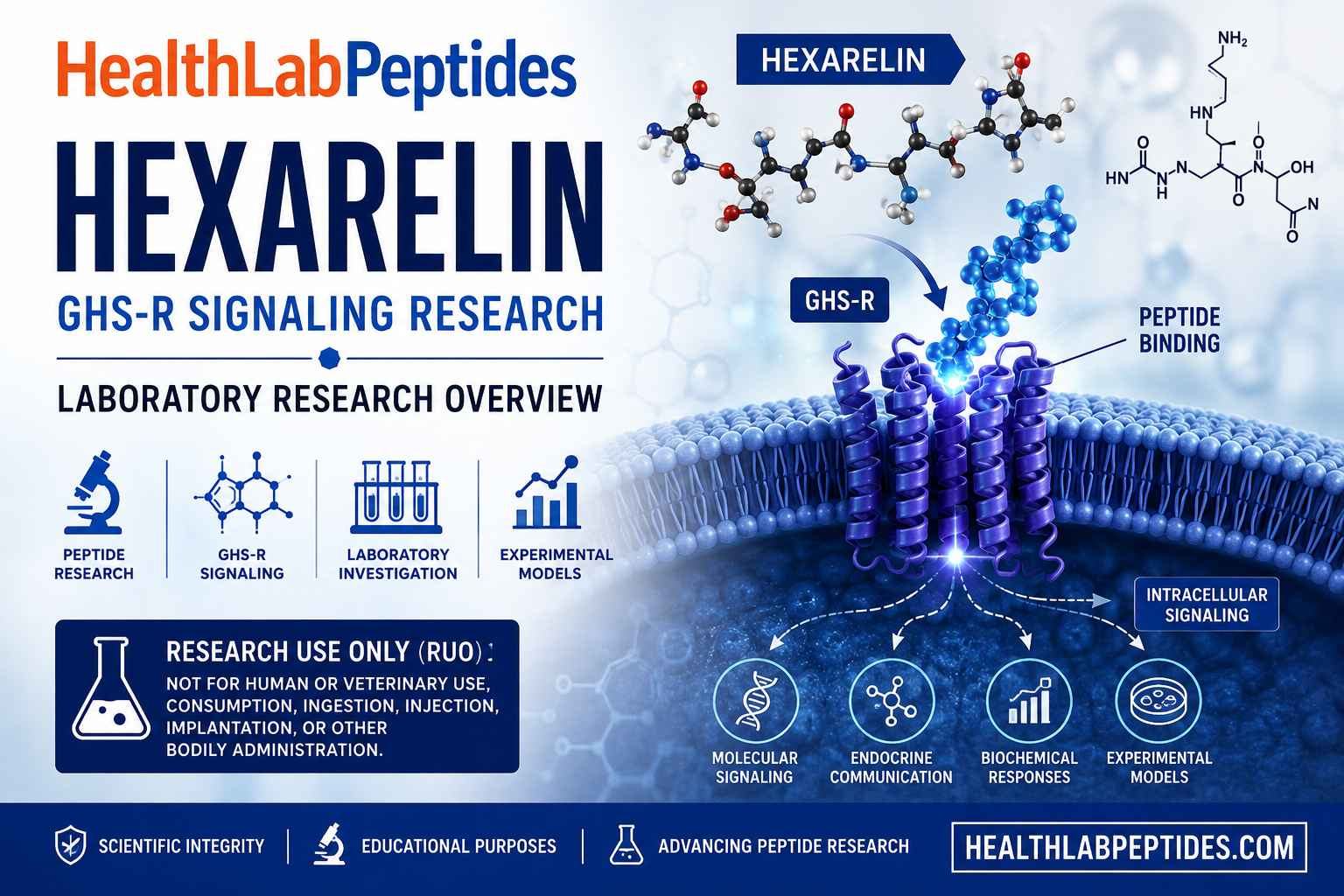
A product-centered review of Hexarelin research on growth-hormone secretagogue receptor expression, experimental models, and evidence limits.

A product-focused review of laboratory studies comparing GHRP-6 and GHRH signaling in pituitary cell models, without translating the findings into use directions.

A focused look at ARA-290’s peptide design and experimental research on erythropoietin-receptor complexes, with model-specific limits.
Research suggests that cell, animal, and clinical studies answer different questions. This guide offers a careful framework for reading peptide research without extending a finding beyond its model.

Research suggests that orthogonal readouts can help test whether a peptide-associated signal is robust across measurement methods. This guide explains the value and limits of complementary endpoints.
Research suggests that controls determine how confidently a cell-based peptide result can be interpreted. Learn how baseline, vehicle, positive, and negative controls answer different questions.
Research suggests that choosing a cell model is part of the scientific question. This guide covers receptor expression, species context, model limits, and transparent reporting in peptide research.
Research suggests that receptor binding and functional response answer different questions in peptide studies. This guide explains how researchers can interpret both without overstating cell-assay evidence.

Retatrutide research at GCGR, GIPR and GLP-1R: receptor-specific cAMP assays, potency, cryo-EM structures and evidence limits. RUO.