

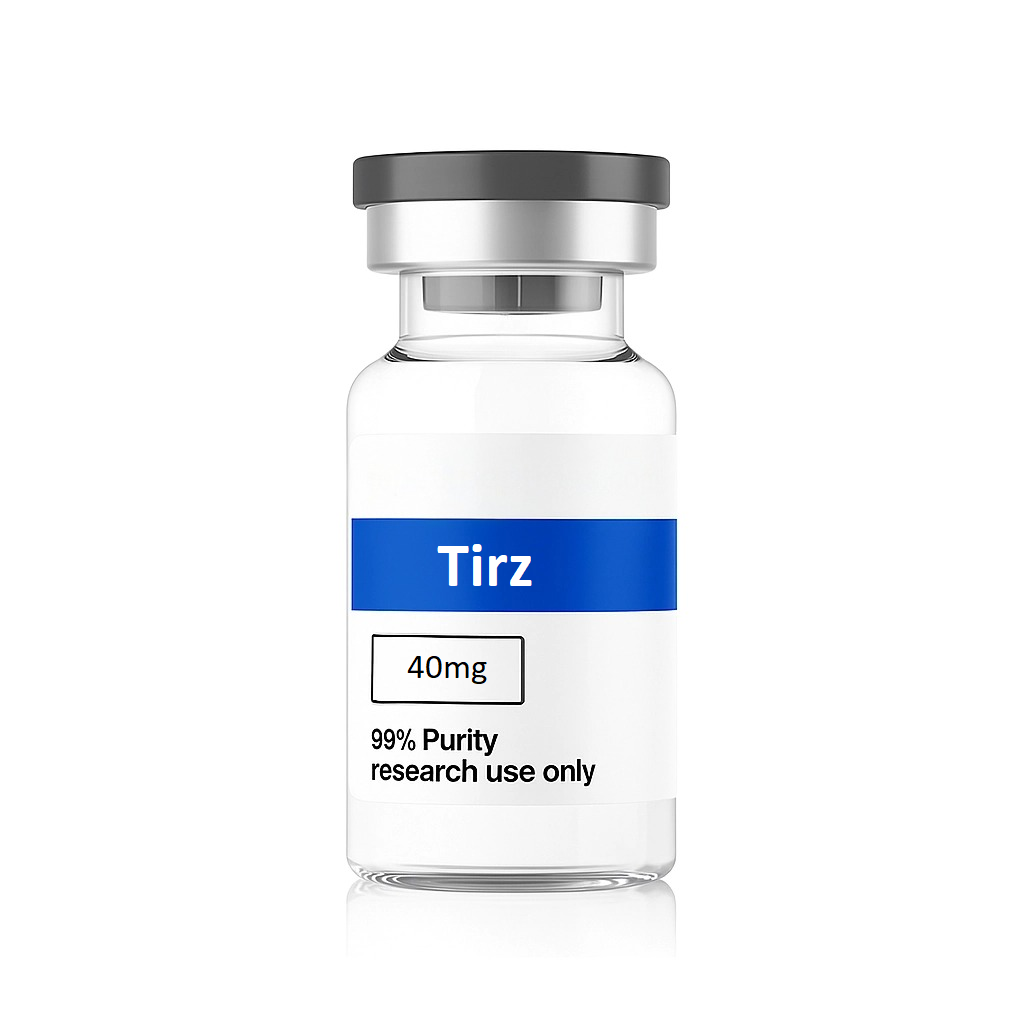
Tirzepatide has become one of the most studied peptides in modern metabolic research due to its dual-agonist activity at both GLP-1 and GIP receptors. Unlike traditional single-pathway peptides, Tirzepatide is designed to engage multiple biological signaling systems at once, making it a valuable compound in laboratory investigations focused on glucose dynamics, energy balance, and peptide-receptor interactions.
Researchers continue to explore how dual incretin signaling may influence cellular communication, metabolic pathways, and endocrine responses. Because of this, Tirzepatide has gained attention in controlled studies examining how peptides can modulate complex systems within the body at a molecular level.
What Is Tirzepatide?
Tirzepatide is a synthetic peptide analog engineered to mimic and activate two naturally occurring incretin hormones:
- GLP-1 (Glucagon-Like Peptide-1)
- GIP (Glucose-Dependent Insulinotropic Polypeptide)
These pathways are widely studied for their roles in:
- Glucose signaling
- Insulin-related mechanisms
- Appetite and satiety pathways
- Energy utilization
Because Tirzepatide targets both receptors, it provides a broader framework for research compared to peptides that focus on a single receptor pathway.
Why Researchers Are Studying Tirzepatide
In laboratory environments, Tirzepatide is being explored for its potential influence on:
1. Dual Receptor Activation
Most peptides target a single receptor. Tirzepatide’s dual action allows researchers to study combined pathway effects, which may offer insights into more complex biological systems.
2. Metabolic Signaling Models
Scientists use Tirzepatide to examine how peptides interact with metabolic signaling networks, particularly those related to energy balance and glucose response.
3. Hormonal Communication
Tirzepatide provides a model for studying how peptides influence communication between organs such as the pancreas, brain, and gastrointestinal system.
4. Peptide Stability and Design
Its structure is also studied for extended activity and stability, helping researchers better understand peptide modification and delivery mechanisms.
Tirzepatide in the Broader Peptide Research Space
Tirzepatide is often studied alongside other peptides to compare mechanisms and pathways. For example:
- GLP-1 analogs such as semaglutide are commonly used in comparative studies
- Growth hormone–related peptides like
CJC-1295 without DAC
and
Ipamorelin
are studied for entirely different signaling pathways - Metabolic research peptides like
5-Amino-1MQ
are often included in broader investigations of energy regulation
These comparisons help researchers better understand how different peptides interact within complex biological systems.
Laboratory Handling and Research Considerations
When working with Tirzepatide in a research setting, scientists focus on:
- Controlled environments
- Proper storage of lyophilized peptides
- Accurate measurement and handling procedures
- Consistent experimental conditions
These factors are critical for ensuring reproducibility and reliable research outcomes.
Quality Matters in Peptide Research
At HealthLab Peptides, all research compounds are produced with an emphasis on:
- High purity standards (typically 99%+)
- Third-party testing and verification
- Strict quality control processes
- Secure and efficient shipping
Researchers rely on consistency and verified quality when conducting peptide studies, making sourcing a critical component of any research protocol.
Explore Tirzepatide for Research
If you are conducting peptide-related studies, you can review Tirzepatide here:
👉 Tirzepatide 20mg Research Peptide
Browse the full catalog of compounds:
👉 Shop Research Peptides
Conclusion
Tirzepatide represents a significant advancement in peptide research due to its dual incretin receptor activity and broad applicability in metabolic studies. As research continues, it remains a key compound for scientists exploring how peptides influence complex biological systems.
RUO Disclaimer (Required)
All products from HealthLab Peptides are sold for research use only (RUO). Not for human or animal consumption. Not for medical, cosmetic, or diagnostic use. The statements provided are for educational and research purposes only and have not been evaluated by the FDA.
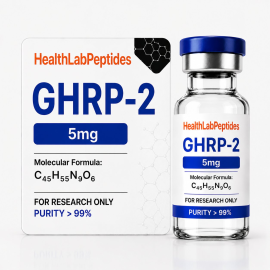 GHRP-2 5mg
 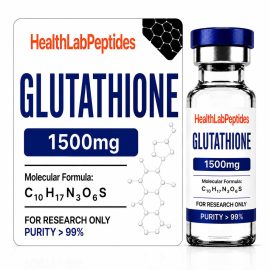 Glutathione 1500mg
 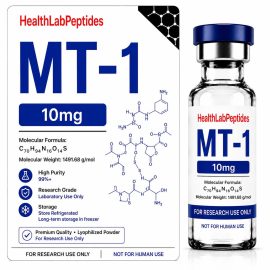 MT-1 10mg Peptide
 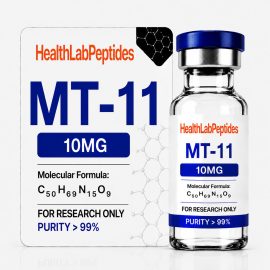 MT- 2 10mg (Melanotide)
  Sermorelin 5mg
N Engl J Med
. 2025 Jul 3;393(1):26-36. doi: 10.1056/NEJMoa2416394. Epub 2025 May 11.
Tirzepatide as Compared with Semaglutide for the Treatment of Obesity
Louis J Aronne 1, Deborah Bade Horn 2, Carel W le Roux 3 4, Wayne Ho 5 6, Beverly L Falcon 7, Elisa Gomez Valderas 7, Sagar Das 7, Clare J Lee 7, Leonard C Glass 7, Cagri Senyucel 7, Julia P Dunn 7; SURMOUNT-5 Trial Investigators
Collaborators, Affiliations Expand
PMID: 40353578 DOI: 10.1056/NEJMoa2416394
Abstract
Background: Tirzepatide and semaglutide are highly effective medications for obesity management. The efficacy and safety of tirzepatide as compared with semaglutide in adults with obesity but without type 2 diabetes is unknown.
Methods: In this phase 3b, open-label, controlled trial, adult participants with obesity but without type 2 diabetes were randomly assigned in a 1:1 ratio to receive the maximum tolerated dose of tirzepatide (10 mg or 15 mg) or the maximum tolerated dose of semaglutide (1.7 mg or 2.4 mg) subcutaneously once weekly for 72 weeks. The primary end point was the percent change in weight from baseline to week 72. Key secondary end points included weight reductions of at least 10%, 15%, 20%, and 25% and a change in waist circumference from baseline to week 72.
Results: A total of 751 participants underwent randomization. The least-squares mean percent change in weight at week 72 was -20.2% (95% confidence interval [CI], -21.4 to -19.1) with tirzepatide and -13.7% (95% CI, -14.9 to -12.6) with semaglutide (P<0.001). The least-squares mean change in waist circumference was -18.4 cm (95% CI, -19.6 to -17.2) with tirzepatide and -13.0 cm (95% CI, -14.3 to -11.7) with semaglutide (P<0.001). Participants in the tirzepatide group were more likely than those in the semaglutide group to have weight reductions of at least 10%, 15%, 20%, and 25%. The most common adverse events in both treatment groups were gastrointestinal, and most were mild to moderate in severity and occurred primarily during dose escalation.
Conclusions: Among participants with obesity but without diabetes, treatment with tirzepatide was superior to treatment with semaglutide with respect to reduction in body weight and waist circumference at week 72. (Funded by Eli Lilly; SURMOUNT-5 ClinicalTrials.gov number, NCT05822830.).
Copyright © 2025 Massachusetts Medical Society.
Aronne LJ, Horn DB, le Roux CW, Ho W, Falcon BL, Gomez Valderas E, Das S, Lee CJ, Glass LC, Senyucel C, Dunn JP; SURMOUNT-5 Trial Investigators. Tirzepatide as Compared with Semaglutide for the Treatment of Obesity. N Engl J Med. 2025 Jul 3;393(1):26-36. doi: 10.1056/NEJMoa2416394. Epub 2025 May 11. PMID: 40353578.
Some research currently available on Tirzepatide coming to this blog soon. All products sold by http://www.healthlabpeptides.com are strictly intended for laboratory research purposes only.
Products are not intended for human or animal consumption, medical treatment, diagnosis, prevention, or cure of any condition. Products are not to be used as supplements, Bodybuilding for weight loss, Lean muscle gain, Fat loss workout plans, Weight loss transformation, Strength training and fat loss, Building muscle while losing weight, Nutrition for bodybuilding and weight loss, Calories burned in weightlifting, Workout plans for muscle and fat loss, and Supplement stack for weight loss and muscle gain, drugs, medical devices, cosmetics, food, or additives under any circumstance. Only qualified, licensed professionals are permitted to handle, store, and utilize these materials in controlled research environments.
Any misuse, alteration, or unauthorized application of products is strictly prohibited and may violate federal law, including the Federal Food, Drug, and Cosmetic Act. Healthlab Peptides makes NO health or wellness claims about any of these products on this website or any other product.
HealthLab Peptides wishes to clarify that it does not endorse, review, or moderate any posts on this blog. The content shared here is intended solely for informational purposes and aims to showcase research conducted on peptides. However, it is important to note that the accuracy and reliability of the information presented in each post may vary, as HealthLab Peptides does not verify the claims made by contributors. Additionally, HealthLab Peptides makes no health or wellness claims regarding any of the products featured on the website. Readers are encouraged to exercise their discretion and consult qualified professionals or trusted sources for guidance regarding peptides and their applications. The blog serves as a platform for discussion and exploration of scientific Research only topics and should not be considered an authoritative resource.
https://healthlabpeptides.com/product/reta-5mg/
thanks for the post!!
helpful
article: https://pmc.ncbi.nlm.nih.gov/articles/PMC12394919/