
SEO Title: DSIP Peptide in 2026: Research, Mechanisms, Safety, and Latest Scientific Evidence
DSIP Peptide in 2026: Current Research on Delta Sleep-Inducing Peptide, Mechanisms, Safety, and Scientific Evidence
Research suggests that Delta Sleep-Inducing Peptide (DSIP) remains one of the more intriguing neuropeptides in laboratory research despite decades of scientific investigation. First identified in the 1970s, DSIP has been studied for its possible involvement in sleep regulation, circadian biology, stress adaptation, endocrine signaling, and neurological function. While early studies generated considerable interest, later research produced mixed findings, leaving several important questions unanswered.
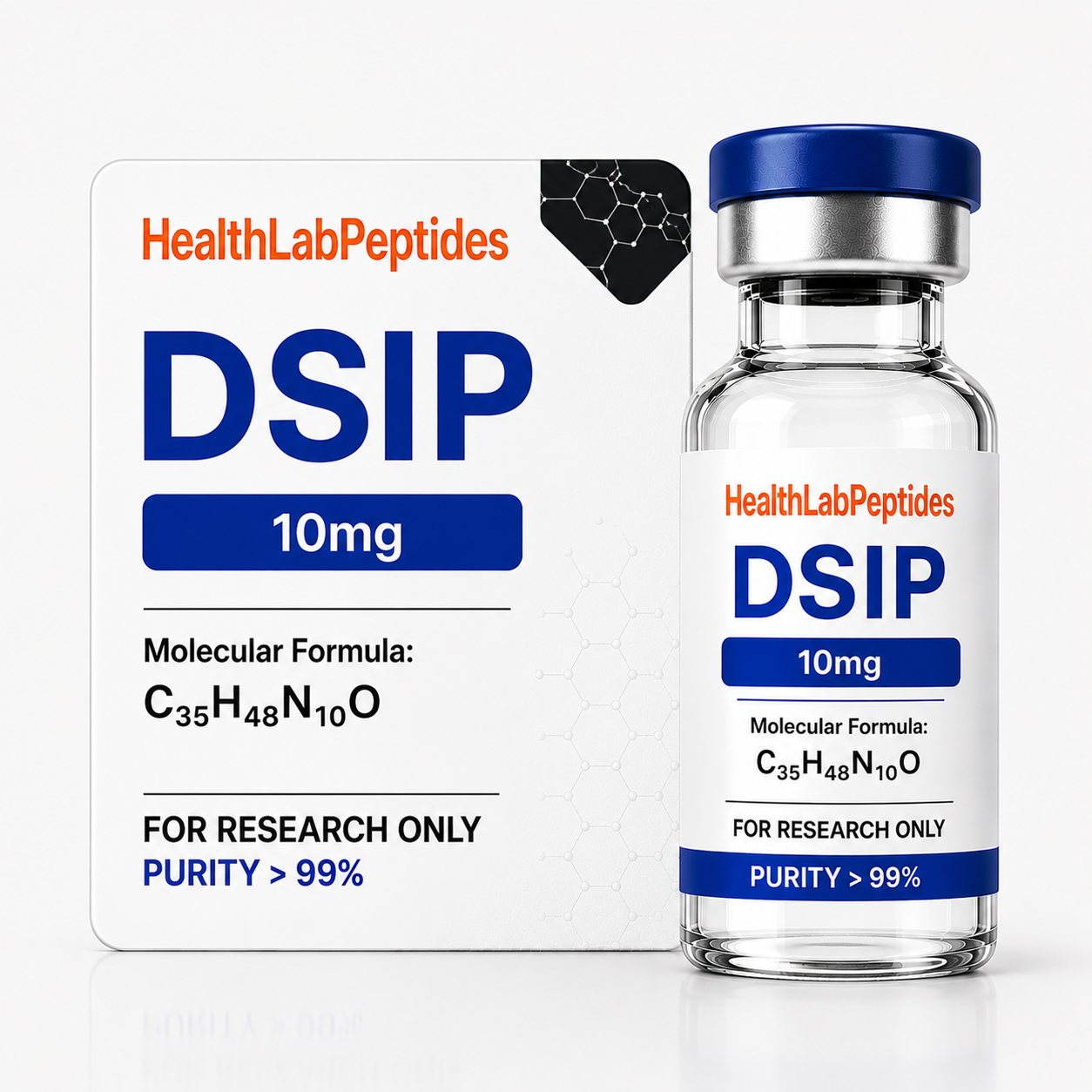
Today, DSIP continues to be investigated as a Research Use Only (RUO) peptide. Rather than viewing it as an established sleep therapy, researchers use DSIP to better understand the biological mechanisms that influence sleep architecture, stress responses, and neuroendocrine regulation.
What Is Delta Sleep-Inducing Peptide?
DSIP is a naturally occurring peptide consisting of nine amino acids. It was originally isolated during experiments involving sleep physiology after researchers observed peptide activity associated with slow-wave sleep.
Unlike many peptides that act through well-characterized receptors, DSIP’s precise biological target has never been fully identified. This uncertainty has made the peptide scientifically interesting because it appears to influence multiple physiological systems without a clearly defined receptor pathway.
Researchers continue studying DSIP because it may participate in communication between the nervous system and the endocrine system.
Why Scientists Still Study DSIP
Sleep is regulated by an extraordinarily complex network involving neurotransmitters, hormones, circadian rhythms, and environmental signals.
Rather than functioning like traditional sedative medications, DSIP appears to influence biological processes that contribute to normal sleep regulation. Several laboratory investigations suggest the peptide may affect slow-wave sleep, although findings across human studies have been inconsistent.
Because of these uncertainties, DSIP remains valuable as a research tool rather than an established therapeutic agent.
Proposed Biological Mechanisms
Although much remains unknown, researchers have proposed several mechanisms that may explain DSIP’s activity.
Current investigations focus on:
- Circadian rhythm regulation
- Neurotransmitter balance
- Hypothalamic signaling
- Endocrine communication
- Stress-response pathways
- Sleep architecture
- Mitochondrial energy metabolism
- Oxidative stress regulation
Rather than acting as a simple “sleep peptide,” DSIP may influence multiple systems involved in maintaining normal physiological balance.
Sleep Research
The peptide’s name naturally draws attention to sleep research.
Experimental studies have examined whether DSIP influences:
- Sleep onset
- Sleep efficiency
- Slow-wave sleep
- REM sleep organization
- Nighttime awakenings
- Recovery following sleep deprivation
Some small human studies reported modest improvements in sleep efficiency and reduced sleep latency, while others found only weak or inconsistent effects. Overall, the available evidence remains insufficient to establish DSIP as a proven treatment for insomnia.
Stress Biology
Researchers also investigate DSIP because stress and sleep are closely interconnected.
Laboratory studies have explored whether DSIP influences biological markers associated with:
- Cortisol regulation
- Stress adaptation
- Autonomic nervous system activity
- Psychological resilience
- Recovery from physiological stress
Animal experiments have suggested possible stress-protective effects, although larger human studies are needed to determine whether these findings translate into clinical significance.
Endocrine and Circadian Research
Another growing area of investigation involves the relationship between DSIP and endocrine signaling.
Researchers continue studying interactions involving:
- Growth hormone rhythms
- Circadian hormone release
- Melatonin signaling
- Hypothalamic regulation
- Neuroendocrine communication
Because hormone secretion naturally follows daily biological rhythms, DSIP may help scientists better understand how sleep and endocrine physiology interact.
Mitochondrial and Cellular Research
Beyond sleep, DSIP has appeared in studies examining cellular energy production.
Experimental models have investigated whether DSIP influences:
- ATP production
- Oxidative phosphorylation
- Cellular energy metabolism
- Mitochondrial efficiency
- Cellular resilience during stress
These laboratory findings remain preliminary but illustrate the peptide’s broad research potential.
Current Clinical Evidence
Despite decades of investigation, human evidence remains limited.
Current literature suggests:
- Laboratory research supports biological activity.
- Human trials have generally been small.
- Clinical findings are inconsistent.
- Larger randomized studies remain necessary.
For these reasons, scientists continue describing DSIP as an experimental peptide requiring additional investigation rather than an established medical therapy.
Safety Considerations
Published reports generally describe favorable short-term tolerability in research settings, but comprehensive long-term safety data remain limited.
Researchers continue evaluating:
- Neurological effects
- Hormonal responses
- Dose-response relationships
- Long-term exposure
- Laboratory reproducibility
Because DSIP has not received FDA approval for therapeutic use, its safety profile continues to be investigated.
Related Research Peptides
Scientists interested in DSIP frequently investigate additional Research Use Only peptides, including:
- Selank
- Semax
- NAD+
- SS-31
- MOTS-c
- Pinealon
- Epitalon
- Tesamorelin
- Ipamorelin
- CJC-1295
- BPC-157
- GHK-Cu
- TB-500
- LL-37
- KPV
Each peptide targets different biological pathways, making comparative research valuable across neuroscience, endocrinology, metabolism, and regenerative biology.
Frequently Asked Questions
What does DSIP stand for?
DSIP stands for Delta Sleep-Inducing Peptide, a naturally occurring peptide first identified during sleep research.
Is DSIP approved by the FDA?
No. DSIP is not approved by the U.S. FDA as a medication and is commonly supplied for Research Use Only.
Is DSIP proven to improve sleep?
Current evidence is mixed. Some small studies have reported improvements in sleep-related measures, while others have shown limited or inconsistent effects. Larger clinical trials are still needed.
Why is DSIP still studied?
Researchers continue investigating DSIP because it may help explain how sleep, stress, circadian rhythms, and endocrine signaling interact within complex biological systems.
Final Thoughts
Although DSIP has been studied for more than four decades, many aspects of its biology remain unresolved. Rather than reducing scientific interest, these unanswered questions have encouraged continued investigation into its possible role in sleep regulation, stress physiology, circadian biology, and neuroendocrine communication.
As research progresses, DSIP remains an important experimental peptide for laboratories seeking to better understand the biological systems that regulate restorative sleep and physiological adaptation.
Research Use Only (RUO) Disclaimer
Products sold by HealthLab Peptides are intended exclusively for laboratory and scientific research. They are not for human or veterinary use and are not intended to diagnose, treat, cure, or prevent any disease. Statements regarding these products have not been evaluated by the U.S. Food and Drug Administration (FDA). HealthLab Peptides makes no medical or therapeutic claims regarding its products. Researchers are responsible for complying with all applicable laws, regulations, and institutional policies.