
Peptide Drug Discovery: A Summary of the Scientific Efforts and Achievements That Changed Modern Medicine
Research suggests that peptide drug discovery has become one of the most successful areas of modern pharmaceutical science. What began with the isolation of naturally occurring hormones has evolved into an advanced field capable of producing highly targeted therapeutics for metabolic disorders, endocrine diseases, cancer, autoimmune conditions, and rare genetic illnesses.
Today, dozens of peptide-based medicines have received regulatory approval worldwide, while hundreds of additional peptide candidates continue moving through clinical development. Advances in synthetic chemistry, computational biology, structural biology, and drug delivery have transformed peptides from fragile laboratory molecules into an increasingly important class of medicines.
At the same time, peptide research continues to expand in academic and industrial laboratories. Scientists investigate naturally occurring signaling molecules alongside newly engineered analogs to better understand receptor biology, metabolism, tissue repair mechanisms, immune signaling, and numerous cellular pathways.
What Are Peptides?
Peptides are short chains of amino acids connected by peptide bonds. They are smaller than proteins but perform many essential biological functions throughout the human body.
Many peptides act as signaling molecules that help regulate communication between cells. Others function as hormones, neurotransmitters, growth factors, antimicrobial compounds, or immune modulators.
Examples include:
- Insulin
- Glucagon
- Oxytocin
- Vasopressin
- Calcitonin
- GLP-1
- Gastrin
- Somatostatin
Because peptides naturally interact with highly specific biological receptors, they have become attractive candidates for pharmaceutical development.
Early History of Peptide Drug Discovery
The modern era of peptide therapeutics began during the early twentieth century.
One of the greatest milestones occurred in 1921 with the discovery of insulin. Shortly afterward, purified insulin transformed the treatment of diabetes and demonstrated that naturally occurring peptides could become life-changing medicines.
Researchers then isolated numerous additional peptide hormones responsible for regulating:
- Blood glucose
- Growth
- Reproduction
- Digestion
- Stress responses
- Water balance
- Calcium metabolism
These discoveries created entirely new fields of endocrinology and molecular medicine.
As protein chemistry improved during the 1950s and 1960s, scientists learned how peptide sequences influenced biological activity, allowing increasingly sophisticated drug design.
The Rise of Synthetic Peptides
Natural peptides often degrade rapidly inside the body.
Early peptide medicines frequently suffered from:
- Short half-lives
- Poor oral absorption
- Enzymatic breakdown
- Frequent dosing requirements
Medicinal chemists responded by developing new strategies to improve peptide stability.
These innovations included:
- Amino acid substitutions
- Cyclization
- PEGylation
- Lipid conjugation
- Backbone modifications
- Long-acting depot formulations
Rather than changing how the peptides worked, many of these techniques simply helped the molecules remain active longer.
This dramatically expanded the therapeutic potential of peptide medicines.
Modern Technologies That Accelerated Discovery
Several technological breakthroughs transformed peptide drug development.
Solid-Phase Peptide Synthesis
Developed by Bruce Merrifield, solid-phase peptide synthesis revolutionized laboratory peptide production.
Scientists could rapidly build peptides one amino acid at a time with greater precision and reproducibility than ever before.
Today, this technology remains the foundation of peptide manufacturing worldwide.
High-Throughput Screening
Automation allows researchers to evaluate thousands of peptide candidates quickly.
Instead of studying only a handful of molecules, laboratories can now screen enormous peptide libraries for:
- Receptor binding
- Enzyme inhibition
- Cellular signaling
- Stability
- Selectivity
This significantly shortens early discovery timelines.
Structural Biology
Modern imaging methods—including X-ray crystallography and cryo-electron microscopy—allow scientists to visualize peptide-receptor interactions at near-atomic resolution.
These insights enable researchers to optimize peptide structures with greater accuracy than ever before.
Artificial Intelligence
Machine learning increasingly assists peptide discovery by predicting:
- Three-dimensional folding
- Stability
- Receptor interactions
- Toxicity risks
- Candidate optimization
Although laboratory validation remains essential, computational tools continue accelerating early-stage research.
Major Achievements in Peptide Drug Development
Over the past several decades, peptide medicines have become established treatments across numerous medical specialties.
Significant areas include:
Diabetes
GLP-1 receptor agonists transformed diabetes management by targeting incretin pathways involved in glucose regulation.
These medicines also stimulated substantial research into obesity and metabolic disorders.
Endocrinology
Synthetic analogs of growth hormone-releasing hormones, somatostatin, calcitonin, and related peptides have expanded treatment options for multiple endocrine conditions.
Oncology
Peptide-based therapies have contributed to cancer treatment through:
- Hormonal pathway modulation
- Targeted receptor therapies
- Peptide-drug conjugates
- Diagnostic imaging agents
Researchers continue investigating additional oncology applications.
Rare Diseases
Several peptide medicines now address rare endocrine and genetic disorders that previously had limited treatment options.
Cardiovascular Medicine
Certain peptide therapies influence blood pressure regulation, vascular function, and heart failure pathways, demonstrating the diversity of peptide pharmacology.
Why Peptides Continue to Attract Researchers
Peptides possess several characteristics that make them attractive research candidates.
High Specificity
Peptides often bind very selectively to their biological targets.
Greater selectivity may reduce interactions with unrelated receptors during drug development.
Natural Biological Roles
Because many peptides already exist within living organisms, researchers often begin with well-characterized biological pathways.
Broad Biological Activity
Scientists investigate peptides across numerous fields, including:
- Metabolism
- Immunology
- Neuroscience
- Endocrinology
- Oncology
- Tissue engineering
- Cardiovascular biology
- Aging research
Expanding Engineering Possibilities
Modern chemistry enables researchers to design peptides with improved:
- Stability
- Selectivity
- Duration
- Solubility
- Manufacturing efficiency
Current Areas of Peptide Research
Numerous peptide families remain active areas of scientific investigation.
Examples include laboratory studies involving:
- Growth hormone secretagogues
- GLP-1 pathway analogs
- Multi-receptor metabolic peptides
- Neuroactive peptides
- Mitochondrial peptides
- Immune-modulating peptides
- Tissue signaling peptides
- Antimicrobial peptides
Academic researchers continue exploring how these molecules influence complex biological systems.
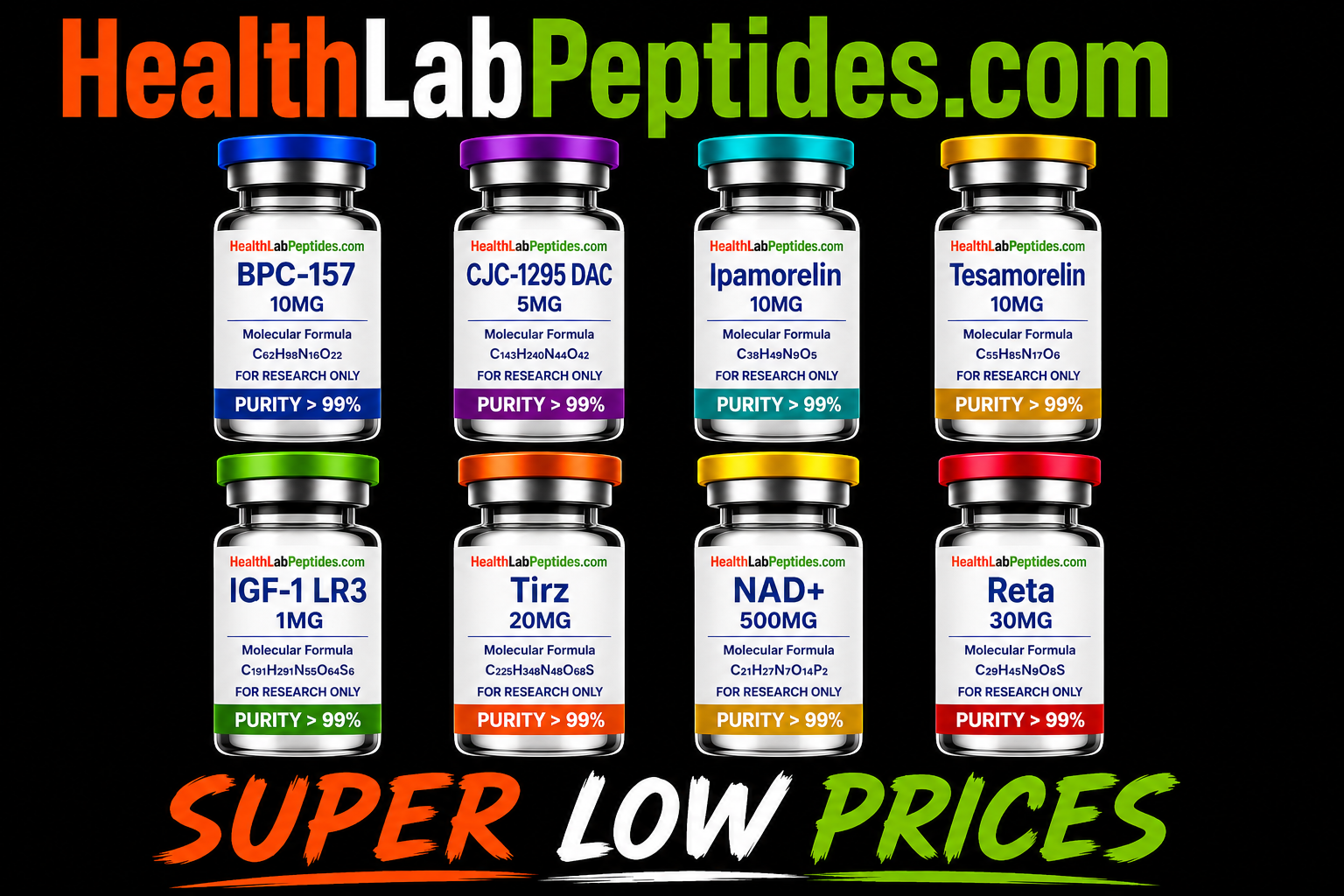
Laboratory-grade compounds such as BPC-157, TB-500, CJC-1295, Ipamorelin, Tesamorelin, IGF-1 LR3, GHK-Cu, Semax, Selank, MOTS-c, SS-31, AOD-9604, Hexarelin, Retatrutide, Tirzepatide, Semaglutide, NAD+, Epitalon, DSIP, Thymosin Alpha-1, Thymosin Beta-4, LL-37, AICAR, PEG-MGF, Kisspeptin-10, and Pinealon continue to appear in published laboratory literature investigating cellular signaling, receptor pharmacology, metabolism, neuroscience, mitochondrial biology, and other basic science disciplines. Their presence in research does not indicate approval for clinical use.
Researchers interested in laboratory-grade peptides can explore the available catalog at https://healthlabpeptides.com/. Individual research compounds, including https://healthlabpeptides.com/product/reta-research-peptide-40mg/ and https://healthlabpeptides.com/product/sermorelin-peptide-5mg/, are supplied strictly for research purposes only.
Challenges That Still Remain
Despite remarkable progress, peptide drug development presents ongoing challenges.
Researchers continue working to improve:
- Oral bioavailability
- Long-term stability
- Manufacturing costs
- Delivery technologies
- Large-scale production
- Cold-chain logistics
Nanotechnology, sustained-release formulations, oral delivery systems, and novel chemical modifications remain active areas of investigation.
The Future of Peptide Drug Discovery
Peptide science continues advancing rapidly.
Future innovations may include:
- AI-assisted peptide engineering
- Personalized peptide therapeutics
- Multi-target peptide medicines
- Improved oral peptide delivery
- Gene-guided peptide design
- Advanced targeted drug conjugates
- Precision oncology applications
As computational biology merges with synthetic chemistry and structural biology, researchers are discovering peptide candidates more efficiently than ever before.
The coming decade is expected to produce additional peptide medicines addressing diseases that currently have limited treatment options.
Conclusion
The history of peptide drug discovery reflects more than a century of scientific innovation. From the discovery of insulin to today’s sophisticated engineered peptides, researchers have continually expanded our understanding of how these molecules regulate biological systems.
Modern peptide medicines have already transformed several areas of healthcare, and ongoing laboratory research continues exploring new possibilities across endocrinology, neuroscience, oncology, immunology, cardiovascular biology, and metabolic science.
Although many experimental peptides remain under investigation, advances in chemistry, computational modeling, molecular biology, and pharmaceutical engineering suggest that peptide research will remain one of the fastest-growing areas of biomedical science for years to come.
Frequently Asked Questions
What is peptide drug discovery?
Peptide drug discovery is the process of identifying, designing, testing, and developing peptide molecules that may become therapeutic medicines after extensive laboratory and clinical evaluation.
Why are peptides attractive drug candidates?
Peptides often interact with highly specific biological receptors, making them useful tools for studying cellular signaling and developing targeted therapies.
What was the first major peptide medicine?
Insulin is widely regarded as the first major peptide therapeutic and remains one of the most important discoveries in medical history.
Are all peptides approved medicines?
No. Only a small percentage of studied peptides have received regulatory approval. Many remain experimental compounds used exclusively in laboratory research.
What technologies are driving peptide discovery?
Modern peptide discovery uses solid-phase peptide synthesis, structural biology, computational modeling, machine learning, high-throughput screening, and advanced medicinal chemistry.
Research Use Only (RUO) Disclaimer
HealthLab Peptides supplies laboratory-grade peptides strictly for Research Use Only (RUO). Products are not for human or veterinary use and are not intended to diagnose, treat, cure, or prevent any disease. Statements on this website have not been evaluated by the U.S. Food and Drug Administration. Any references to published scientific research are provided solely for educational purposes. HealthLab Peptides makes no claims regarding the safety or effectiveness of any research compound outside controlled laboratory settings.