
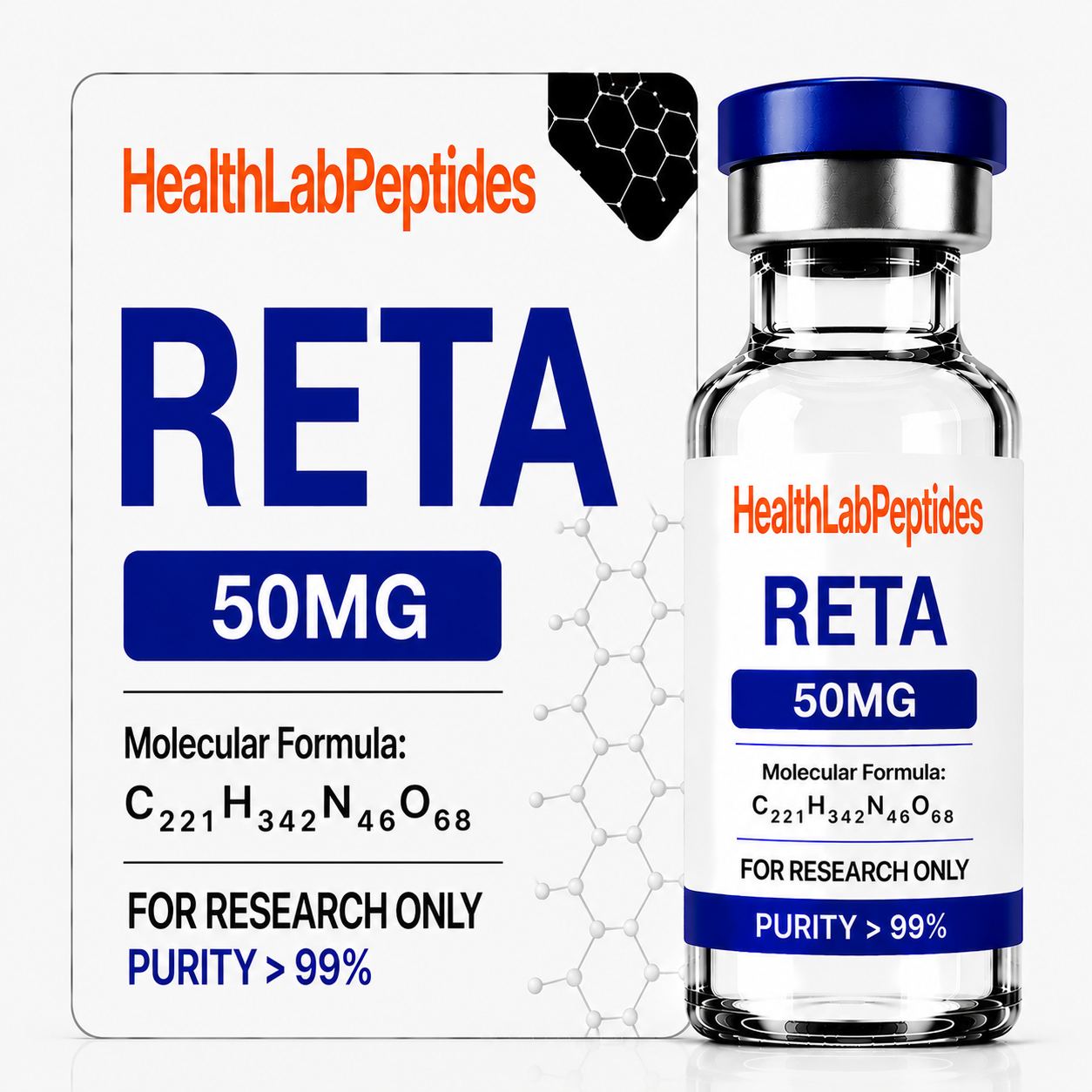
reta Reta has emerged as one of the most extensively studied investigational peptide therapeutics in metabolic research. Unlike earlier peptide-based compounds that target a single biological pathway, Reta was designed to activate three separate receptor systems involved in energy regulation and glucose metabolism. This “triple agonist” approach has made it an important focus of endocrinology, obesity, and metabolic disease research.
Although research findings have generated considerable scientific interest, Reta remains an investigational compound. Regulatory approval, availability, and approved uses vary by jurisdiction, and researchers continue to evaluate its long-term safety, effectiveness, and pharmacology through ongoing clinical studies.
This article summarizes the current scientific literature regarding Reta’s molecular design, biological mechanisms, clinical development, pharmacokinetics, safety considerations, and unanswered research questions.
What Is Reta?
Reta is an investigational synthetic peptide engineered to activate three hormone receptors involved in metabolic regulation:
Glucagon-like peptide-1 (GLP-1) receptor
Glucose-dependent insulinotropic polypeptide (GIP) receptor
Glucagon receptor
Because it targets all three pathways simultaneously, researchers classify Reta as a triple receptor agonist.
This design distinguishes it from earlier therapies that activate only one or two of these signaling systems.
Why Was Reta Developed?
Researchers have long recognized that appetite regulation, glucose control, and energy expenditure are controlled by multiple interconnected hormonal systems rather than a single biological pathway.
Earlier drug development focused primarily on GLP-1 receptor agonists. As knowledge of metabolic physiology expanded, investigators explored whether combining additional hormonal targets might produce different physiological effects.
Reta was developed to investigate whether coordinated activation of GLP-1, GIP, and glucagon receptors could influence multiple aspects of metabolic regulation simultaneously.
Understanding the Three Receptors
GLP-1 Receptor
GLP-1 is a naturally occurring incretin hormone released after food intake. It participates in several physiological processes, including regulation of insulin secretion, gastric emptying, and appetite signaling.
Researchers continue to investigate how GLP-1 receptor activation contributes to metabolic regulation and glucose homeostasis.
GIP Receptor
GIP is another incretin hormone produced in response to nutrient intake.
Current research examines how GIP signaling may influence:
Pancreatic hormone secretion
Lipid metabolism
Energy balance
Adipose tissue biology
Its interaction with GLP-1 pathways remains an active area of investigation.
Glucagon Receptor
Glucagon has traditionally been associated with increasing hepatic glucose production during fasting.
However, more recent research indicates glucagon signaling also participates in broader aspects of energy metabolism, including effects on lipid utilization and energy expenditure.
Balancing glucagon receptor activation with simultaneous GLP-1 and GIP receptor activation is a central feature of Reta’s design.
Mechanism of Action
Reta does not rely on a single molecular target. Instead, researchers describe its activity as the coordinated modulation of three hormone signaling pathways.
Current investigations focus on how this combined receptor activation influences:
Hormonal signaling networks
Glucose regulation
Energy balance
Lipid metabolism
Appetite-related neural pathways
Gastrointestinal physiology
Because these systems interact extensively, researchers continue to evaluate how individual receptor effects contribute to overall physiological responses.
Molecular Design
Reta is a synthetic peptide engineered for prolonged biological activity.
Like many modern peptide therapeutics, structural modifications were incorporated to increase stability and extend circulation time compared with naturally occurring hormones.
Researchers continue to investigate how these molecular modifications influence receptor binding, pharmacokinetics, and duration of action.
Clinical Development
Reta has progressed through multiple stages of clinical investigation.
Clinical studies have evaluated:
Pharmacokinetics
Pharmacodynamics
Dose escalation
Safety
Tolerability
Biomarker responses
Researchers also continue studying optimal dosing strategies and long-term safety outcomes.
Pharmacokinetics
Pharmacokinetic studies evaluate how a compound is absorbed, distributed, metabolized, and eliminated.
Investigators have examined:
Absorption following administration
Circulating half-life
Clearance mechanisms
Distribution within the body
Factors influencing steady-state concentrations
Understanding these characteristics is essential for interpreting clinical trial findings and designing future studies.
Pharmacodynamics
Pharmacodynamics examines how a compound influences biological systems after receptor binding.
For Reta, investigators continue to study changes in:
Hormone signaling
Glucose metabolism
Energy regulation
Biomarker profiles
Endocrine responses
Because multiple receptors are activated simultaneously, pharmacodynamic effects are more complex than those observed with single-target therapies.
Current Areas of Scientific Interest
Research continues across numerous disciplines, including:
Endocrinology
Obesity medicine
Metabolic physiology
Hepatology
Cardiometabolic health
Pharmacology
Molecular biology
Ongoing studies aim to improve understanding of both the therapeutic potential and limitations of triple receptor agonists.
Evidence to Date
Published clinical trials have provided important information regarding Reta’s pharmacology and physiological effects. However, as with any investigational therapy, individual studies should be interpreted within the broader scientific literature.
Researchers continue to evaluate:
Reproducibility across different populations
Long-term safety
Durability of observed effects
Comparative effectiveness
Mechanisms underlying clinical responses
Future peer-reviewed research will help clarify these questions.
Part 2 will cover published clinical trial findings, safety and adverse events, comparisons with GLP-1 and dual agonists, limitations of the current evidence, unanswered questions, frequently asked questions, and scientific references.
Educational Notice
This article is intended solely for educational and informational purposes. It summarizes findings from published scientific literature and does not constitute medical advice. Reta remains under ongoing scientific investigation, and readers should consult qualified healthcare professionals and current regulatory information for clinical guidance.
Here’s Part 2, continuing the educational cornerstone article.
Reta in 2026: A Comprehensive Scientific Review (Part 2)
Findings From Published Clinical Research
Clinical development of Reta has focused on evaluating its pharmacokinetics, pharmacodynamics, safety, tolerability, and effects on metabolic biomarkers. Early- and mid-stage clinical trials have provided valuable information about how triple receptor agonism differs from therapies that activate only one or two metabolic pathways.
Researchers have investigated outcomes including:
Body weight changes
Glycemic biomarkers
Lipid profiles
Blood pressure
Waist circumference
Liver-related biomarkers
Insulin sensitivity
Energy metabolism
While several studies have reported promising findings, interpretation should remain within the context of the available evidence. Longer-term follow-up and additional Phase 3 data are necessary to better characterize durability of response, long-term safety, and effectiveness across diverse patient populations.
Safety and Tolerability
Safety remains one of the most important areas of investigation for any investigational therapy.
Across published studies, the most frequently reported adverse events have generally been gastrointestinal in nature, including:
Nausea
Vomiting
Diarrhea
Constipation
Decreased appetite
Abdominal discomfort
These events have often occurred during dose escalation and, in many participants, lessened over time. Researchers continue to evaluate optimal dose-escalation strategies to improve tolerability while maintaining therapeutic activity.
Because Reta is still undergoing clinical development, its long-term safety profile has not yet been fully established.
Cardiovascular Research
Metabolic diseases are closely associated with cardiovascular risk, making cardiovascular outcomes an important area of ongoing research.
Current investigations examine changes in:
Blood pressure
Resting heart rate
Lipid concentrations
Inflammatory biomarkers
Cardiometabolic risk factors
Dedicated cardiovascular outcome studies are expected to provide additional information regarding long-term clinical effects.
Liver and Metabolic Health Research
Researchers are also studying whether triple receptor agonists influence biomarkers associated with metabolic dysfunction.
Areas under investigation include:
Liver fat content
Liver enzyme concentrations
Insulin resistance
Glucose regulation
Energy expenditure
Lipid metabolism
Although early findings have generated scientific interest, additional controlled trials are needed before firm conclusions can be drawn.
How Reta Differs From Single and Dual Agonists
One of the defining characteristics of Reta is its simultaneous activation of three hormone receptors.
Compared with earlier investigational approaches, researchers continue to examine whether triple agonism offers differences in:
Receptor signaling
Energy balance
Glucose homeostasis
Hormonal regulation
Metabolic adaptation
Importantly, differences observed in one clinical trial may not necessarily apply across all populations or treatment settings.
Pharmacological Challenges
Developing peptide therapeutics presents several scientific challenges.
Researchers continue working to optimize:
Receptor selectivity
Molecular stability
Duration of action
Dose titration
Long-term adherence
Safety monitoring
Balancing efficacy with tolerability remains a central objective in peptide pharmacology.
Remaining Questions
Although Reta has become one of the most closely studied investigational metabolic peptides, several important questions remain.
Researchers continue to investigate:
Long-term safety beyond currently available follow-up periods
Cardiovascular outcomes
Effects in different age groups
Responses across diverse populations
Optimal maintenance strategies
Biological mechanisms underlying individual variability
Predictive biomarkers of response
These questions will likely be addressed through ongoing and future clinical trials.
Frequently Asked Questions
What is Reta?
Reta is an investigational synthetic peptide that activates the GLP-1, GIP, and glucagon receptors simultaneously. Researchers classify it as a triple receptor agonist.
Is Reta approved everywhere?
Regulatory status varies by country and continues to evolve. Readers should consult their national regulatory authority for the most current information.
Why is Reta considered different?
Unlike therapies that activate only one receptor pathway, Reta was engineered to interact with three interconnected hormone signaling systems involved in metabolic regulation.
Is additional research still underway?
Yes. Multiple ongoing clinical studies continue to evaluate safety, efficacy, pharmacokinetics, cardiovascular outcomes, and other long-term clinical endpoints.
Does current research answer every question?
No. Although published evidence has expanded considerably, additional peer-reviewed research is required to better understand long-term outcomes and optimal clinical use.
Future Directions
The field of metabolic peptide research continues to advance rapidly.
Future investigations are expected to focus on:
Larger Phase 3 clinical trials
Long-term safety monitoring
Comparative effectiveness studies
Precision medicine approaches
Biomarker-guided therapy
Combination treatment strategies
Mechanistic studies using advanced molecular biology techniques
Advances in these areas will improve understanding of how triple receptor agonists interact with complex endocrine and metabolic systems.
Conclusion
Reta represents a significant area of investigation within metabolic and endocrine research because of its unique triple receptor agonist design. Rather than targeting a single hormonal pathway, it simultaneously activates GLP-1, GIP, and glucagon receptors, providing researchers with an opportunity to study coordinated metabolic signaling.
Published clinical research has expanded scientific understanding of its pharmacology and biological activity. At the same time, important questions remain regarding long-term safety, durability of response, cardiovascular outcomes, and broader clinical application.
As additional high-quality clinical trials are completed, researchers will gain a more comprehensive understanding of Reta’s pharmacological profile and its potential role within metabolic medicine.
Research Status
Reta remains an investigational compound in many jurisdictions. Scientific understanding continues to evolve as new peer-reviewed evidence becomes available.
References
Jastreboff AM, et al. Peer-reviewed publications describing the clinical development of Reta.
Articles indexed in PubMed examining triple receptor agonists for metabolic disease.
National Center for Biotechnology Information (NCBI) resources related to incretin biology and metabolic pharmacology.
Reviews covering GLP-1, GIP, and glucagon receptor signaling.
Peer-reviewed endocrinology and pharmacology literature discussing investigational peptide therapeutics.
Reta in 2026: A Comprehensive Scientific Review
The Biology Behind Triple Receptor Agonism
One of the defining characteristics of Reta is that it was designed to engage three distinct hormonal signaling pathways that help regulate energy balance and metabolic homeostasis. Rather than relying on a single biological mechanism, researchers are investigating how coordinated activation of these pathways influences physiology.
GLP-1 Signaling
Glucagon-like peptide-1 (GLP-1) is released from intestinal L cells following nutrient intake. It functions as part of the incretin system, a network of hormones that coordinates metabolic responses after eating.
Research has shown that GLP-1 receptor activation influences:
Glucose-dependent insulin secretion
Gastric emptying
Glucagon regulation
Appetite signaling
Neural pathways involved in satiety
These physiological effects have made GLP-1 biology one of the most extensively studied areas in metabolic medicine.
GIP Biology
Glucose-dependent insulinotropic polypeptide (GIP) is another incretin hormone secreted after food intake.
Historically, GIP received less attention than GLP-1. More recent research, however, has demonstrated that GIP signaling may contribute to broader aspects of metabolic regulation.
Current investigations examine its potential role in:
Insulin secretion
Lipid metabolism
Adipose tissue biology
Energy balance
Cross-talk with GLP-1 signaling
Understanding how GLP-1 and GIP pathways interact remains an active area of endocrinology research.
Glucagon Signaling
Glucagon is traditionally associated with maintaining blood glucose during fasting by stimulating glucose production in the liver.
Researchers now recognize that glucagon biology is considerably more complex.
Experimental studies continue to evaluate its influence on:
Hepatic metabolism
Fat oxidation
Energy expenditure
Amino acid metabolism
Whole-body metabolic regulation
Balancing glucagon receptor activation alongside GLP-1 and GIP receptor activation is one of the scientific concepts underlying Reta’s development.
Why Combine Three Hormonal Pathways?
Human metabolism is regulated through interconnected hormonal networks rather than isolated signaling molecules.
Because these systems influence one another, researchers have explored whether engaging multiple pathways simultaneously may produce different physiological responses than targeting only one receptor.
Current investigations evaluate whether coordinated receptor activation affects:
Hormonal feedback loops
Energy utilization
Metabolic flexibility
Endocrine signaling
Nutrient handling
Tissue-specific responses
These interactions remain the subject of ongoing clinical and laboratory research.
Peptide Engineering
Reta belongs to a growing class of engineered peptide therapeutics designed to improve upon naturally occurring hormones.
Peptide engineering often focuses on:
Increasing molecular stability
Extending circulating half-life
Improving receptor selectivity
Reducing enzymatic degradation
Optimizing pharmacokinetic properties
These modifications are intended to allow researchers to study sustained receptor activation over longer periods while maintaining predictable pharmacological behavior.
Pharmacokinetic Considerations
Pharmacokinetics describes how a compound moves through the body after administration.
Investigators continue to characterize:
Absorption rates
Bioavailability
Distribution into tissues
Protein binding
Metabolism
Elimination pathways
Understanding these parameters helps researchers interpret clinical trial outcomes and informs the design of future studies.
Pharmacodynamics
Pharmacodynamics focuses on the biological responses that occur after receptor activation.
Because Reta interacts with three receptors simultaneously, pharmacodynamic responses involve multiple endocrine systems.
Researchers continue investigating changes in:
Hormone secretion
Glucose regulation
Energy metabolism
Lipid metabolism
Biomarker profiles
Physiological adaptation over time
These responses are measured using laboratory biomarkers, imaging studies, metabolic testing, and other research tools.
Biomarkers Used in Clinical Studies
Modern clinical trials frequently monitor biomarkers to better understand treatment responses.
Examples include:
Glycated hemoglobin (HbA1c)
Fasting plasma glucose
Fasting insulin
Lipid profiles
Liver enzyme measurements
Blood pressure
Body composition assessments
Waist circumference
Researchers analyze these data alongside safety outcomes to evaluate the overall biological effects observed during clinical development.
Ongoing Areas of Investigation
Reta continues to be studied across several scientific disciplines.
Current research explores questions such as:
How do individual receptor pathways contribute to overall metabolic responses?
Which biomarkers best predict treatment response?
How durable are observed effects over extended follow-up?
What factors explain variability among participants?
How do age, genetics, and baseline metabolic status influence outcomes?
Answering these questions will require continued clinical investigation and long-term follow-up.
Limitations of the Current Evidence
Although the evidence base has grown substantially, important limitations remain.
Researchers continue to note:
Ongoing collection of long-term safety data
The need for additional Phase 3 and post-approval evidence where applicable
Limited information for some patient populations
Variability in study designs
Differences in trial inclusion and exclusion criteria
These factors underscore the importance of interpreting findings within the broader context of peer-reviewed evidence.
Looking Ahead
Research into triple receptor agonists represents a rapidly evolving field. Advances in molecular biology, endocrinology, and clinical trial methodology are expected to provide a clearer understanding of how these compounds influence complex metabolic systems.
Future publications may further clarify:
Long-term safety
Cardiovascular outcomes
Effects in diverse populations
Mechanistic pathways
Predictors of response
Optimal treatment strategies within approved clinical settings, if regulatory authorizations expand
Educational Summary
Reta has become an important focus of metabolic research because of its unique triple receptor agonist design. By engaging GLP-1, GIP, and glucagon receptors, it provides researchers with an opportunity to study coordinated hormonal signaling rather than isolated receptor activation.
While published studies have expanded scientific understanding of its pharmacology and physiology, research continues to evolve. Ongoing clinical trials and future peer-reviewed publications will be essential for answering remaining questions about long-term safety, effectiveness, and biological mechanisms.
This article is intended for educational purposes and reflects the current state of published scientific knowledge at the time of writing.