
The field of peptide research is expanding fast, but finding clear, reliable information can be difficult. With so many compounds being studied—ranging from BPC-157 to IGF-1 LR3—it’s easy to get lost in technical details and scattered resources.
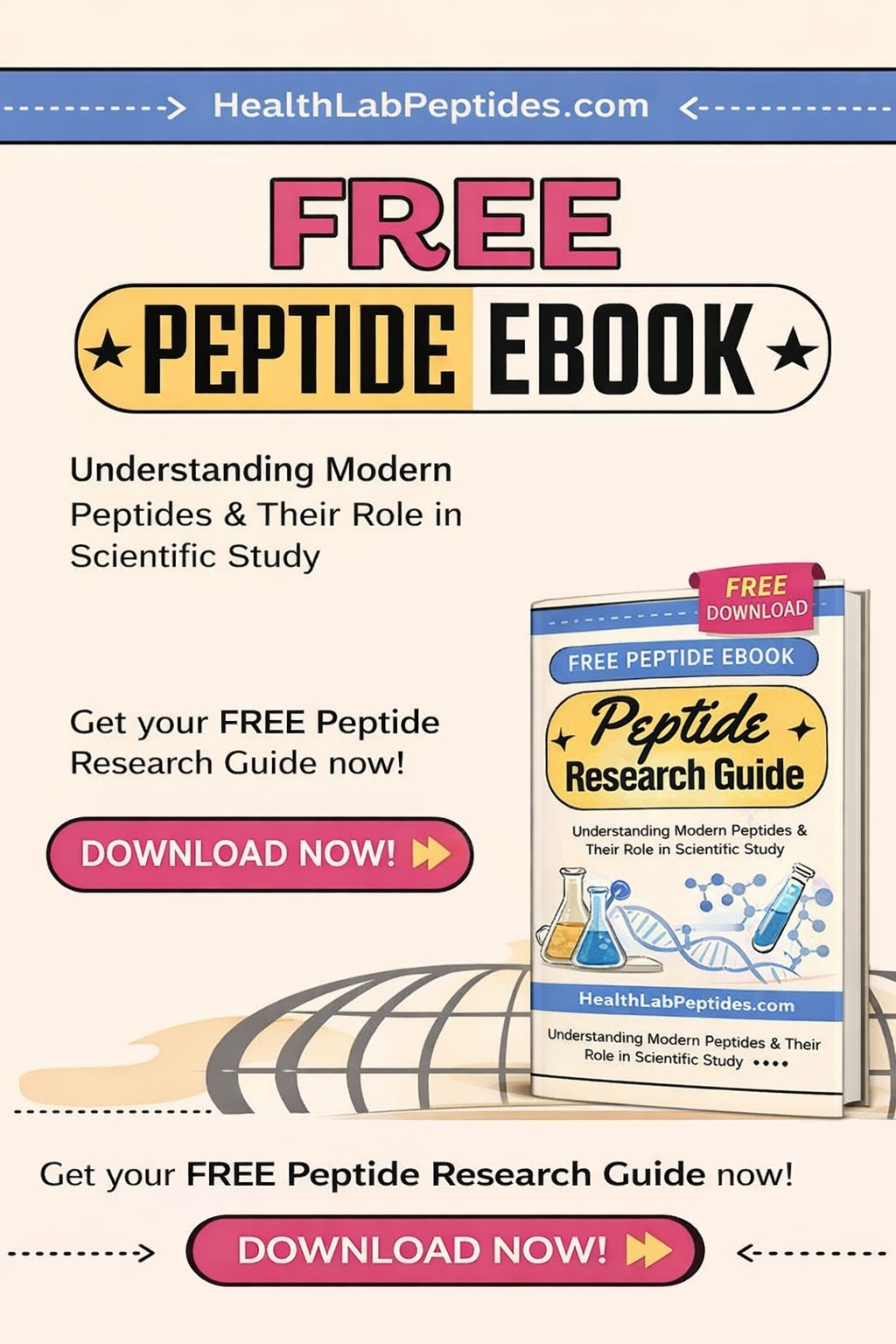
To simplify things, we created a Free Peptide Research eBook designed to give you a clean, structured overview of how peptides are studied and why they matter in modern research.
What This Free Peptide eBook Covers
This guide was built to remove confusion and provide straightforward insights into peptide science.
Inside, you’ll learn:
- The fundamentals of peptides and how they function
- Key differences between natural and synthetic peptides
- How peptides are handled and studied in research settings
- An overview of widely researched compounds
- Where peptide science is heading next
It’s designed for both beginners and those already familiar with peptide research.
A Closer Look at Peptides
Peptides are short amino acid chains that act as messengers in biological systems. Researchers focus on peptides because they can interact with specific receptors, making them highly useful for studying targeted biological processes.
Their smaller size compared to proteins allows for more precise investigation of functions such as:
- Cellular repair signaling
- Hormonal communication pathways
- Metabolic activity
- Brain and neurological responses
This level of precision is a major reason peptides are becoming central in research environments.
Key Peptides Featured in the Guide
The eBook highlights several commonly studied compounds, including:
- BPC-157 – researched for its role in tissue-related pathways
- TB-500 – studied for cellular movement and repair processes
- CJC-1295 & Ipamorelin – explored in growth hormone signaling research
- IGF-1 LR3 – investigated for cell growth and anabolic pathways
- Semax & Selank – examined for cognitive and neurochemical research
Each section provides a simple breakdown so you can quickly understand their relevance.
Why Peptide Research Is Gaining Attention
Advances in science and technology have made it easier to study peptides with greater precision than ever before.
Researchers are increasingly focused on peptides for areas such as:
- Regenerative science models
- Metabolic pathway research
- Cognitive and neurological studies
- Immune system signaling
As interest continues to grow, peptides are becoming a major focus in scientific exploration.
Get Your Free Peptide eBook
If you’re looking for a straightforward, informative starting point, this guide delivers exactly that.
👉 Access your free peptide research guide here:
https://healthlabpeptides.com/shop/
Important Disclaimer (RUO)
All compounds mentioned in this content are intended strictly for RUO (Research Use Only) purposes.
HealthLab Peptides products are not intended for human consumption, medical use, or therapeutic application. They are supplied exclusively for laboratory research.
Final Takeaway
Peptides are quickly becoming one of the most important tools in modern research due to their ability to target specific biological systems.
This free eBook helps simplify complex concepts and provides a solid foundation for anyone interested in understanding peptide research.