

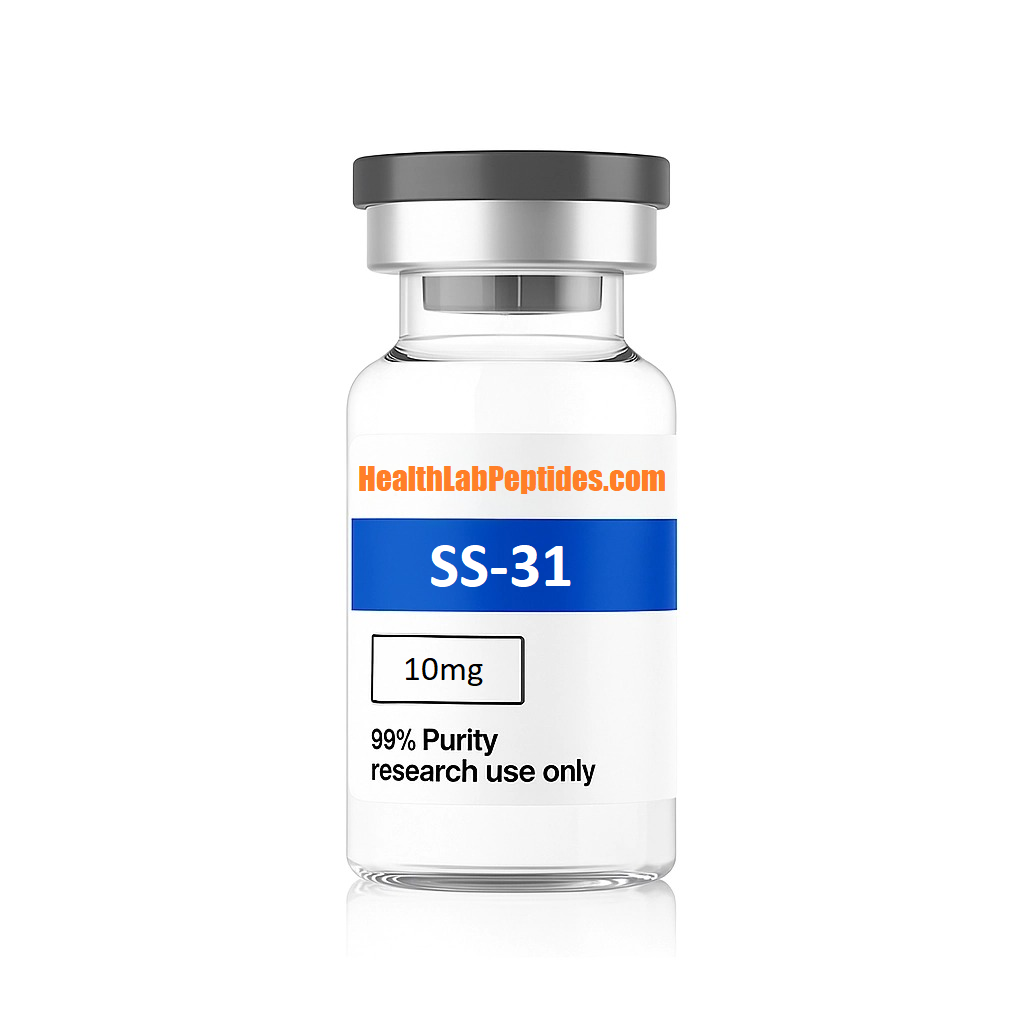
SS-31 (Elamipretide): Research Overview + Questions & Answers
SS-31, also known as elamipretide, is a synthetic peptide designed to target mitochondria. In research environments, it is commonly studied for its interaction with mitochondrial membranes, particularly cardiolipin, and its role in cellular energy dynamics.
SS-31 is frequently discussed alongside compounds such as MOTS-C, NAD+, BPC-157, TB-500, GHK-Cu, IGF-1 LR3, CJC-1295, Ipamorelin, AOD-9604, Retatrutide, Tirzepatide, Semax, and Selank, due to shared interest in metabolic and cellular signaling pathways.
For researchers exploring peptide compounds, laboratory-grade materials can be found at https://healthlabpeptides.com/shop/ and https://repeatpeptides.com, where a range of research peptides are cataloged.
What Is SS-31?
SS-31 is a short synthetic peptide developed to:
- Target mitochondrial membranes
- Interact with cardiolipin, a key lipid in mitochondrial structure
- Influence mitochondrial signaling pathways
- Support studies related to cellular energy production (lab context only)
Its ability to localize within mitochondria makes it distinct from many other peptides.
Why Is SS-31 Studied?
SS-31 is of interest in research because of its:
- Mitochondrial targeting capability
- Interaction with membrane lipids like cardiolipin
- Role in cellular energy and metabolic studies
- Consistency in controlled experimental models
It is often compared with:
- MOTS-C – mitochondrial-derived signaling peptide
- NAD+ – central coenzyme in energy metabolism
- AOD-9604 – metabolic pathway research peptide
SS-31: Questions & Answers
Q1: Is SS-31 naturally occurring?
No. SS-31 is a synthetic peptide developed specifically for research purposes.
Q2: How is SS-31 different from MOTS-C?
- SS-31 is a synthetic peptide that targets mitochondrial membranes
- MOTS-C is a naturally occurring peptide encoded by mitochondrial DNA
Both are studied for mitochondrial function but differ in origin and mechanism.
Q3: How is SS-31 studied?
SS-31 is typically examined in:
- Cell culture (in vitro) studies
- Animal models
- Mitochondrial and metabolic pathway research
Researchers focus on how it interacts with mitochondrial membranes and influences cellular energy systems.
Q4: How is SS-31 related to NAD+?
- SS-31 is studied for mitochondrial membrane interactions
- NAD+ is essential for energy production within mitochondria
They are often studied together to better understand cellular energy processes.
Q5: Is SS-31 used with other peptides?
Yes. SS-31 is frequently studied alongside:
- MOTS-C
- BPC-157
- TB-500
- CJC-1295 & Ipamorelin
This allows researchers to explore how mitochondrial and signaling pathways interact.
Q6: What other peptides are commonly discussed with SS-31?
SS-31 is often grouped with:
- MOTS-C – mitochondrial peptide
- NAD+ – metabolic coenzyme
- IGF-1 LR3 – growth factor analog
- GHK-Cu – copper peptide
- Semax & Selank – neurological peptides
- Retatrutide & Tirzepatide – multi-receptor peptide research
Q7: Why is mitochondrial research important?
Mitochondria are responsible for:
- Cellular energy production (ATP)
- Metabolic regulation
- Signaling between cellular systems
Studying peptides like SS-31 helps researchers better understand these processes.
Q8: Is SS-31 regulated?
In most contexts, SS-31 is:
- Available strictly for research purposes
- Not approved for human or veterinary use
- Not evaluated by the FDA for therapeutic applications
Additional research materials and peptide options can be explored at https://healthlabpeptides.com/shop/ for expanded study resources.
Final Thoughts
SS-31 is a key peptide in mitochondrial research due to its ability to target and interact with mitochondrial membranes. Its unique mechanism makes it especially valuable in studies focused on cellular energy and metabolic function.
While often discussed alongside compounds like MOTS-C, NAD+, BPC-157, TB-500, IGF-1 LR3, and CJC-1295, SS-31 plays a distinct role in membrane-level mitochondrial research.
RUO Disclaimer:
Research Use Only (RUO). Not for human or veterinary use. HealthLab Peptides products are intended strictly for laboratory research purposes.
 KissPeptin-10 10mg
  BPC - 157 5mg
  Snap-8 10mg